
 Presentation
We are in the golden age for exoplanets studies, with currently several thousands of exoworlds discovered. Because of their low brightness and their large number, M-dwarfs (~70% of stars) represent privileged targets to look for exoplanets. By essence, those objects are also cool objects, emitting significant fraction of their light in the infrared. When detectable, exoplanets atmosphere signatures are predominantly observed in the IR, particularly for the smallest ones. It is because of those physical constrains that high-resolution spectrograph in the IR have been developed (e.g. the Spanish funded CARMENES, but also GIANO hosted in Roque de los Muchachos observatory), which science objectives are primarily driven by the detection and the characterization of exoplanets. Subsequent to the development of such cutting edge technology, raised the questions related to the optimal analysis of such exquisite data.
While accurate parameters of the host star spectrum represent a fundamental output of the analysis and from which the planet parameters themselves are inferred (mass, equilibrium temperature, habitable zone), the detailed chemical analysis chemical of the host stars also provide interesting constrains regarding the conditions of formation of exoplanet systems. In addition, the cross-correlation technique against a model template allow to detect the planet by radial velocity variations. Moreover, a similar technique can be used during the transit of a planet to recover the spectrum of the planet atmosphere itself. Consequently, all aspects and techniques related to exoplanets spectral studies rely on the accuracy of model spectra. Such modelling heavily depends on the quality of their input: atomic and molecular line lists.
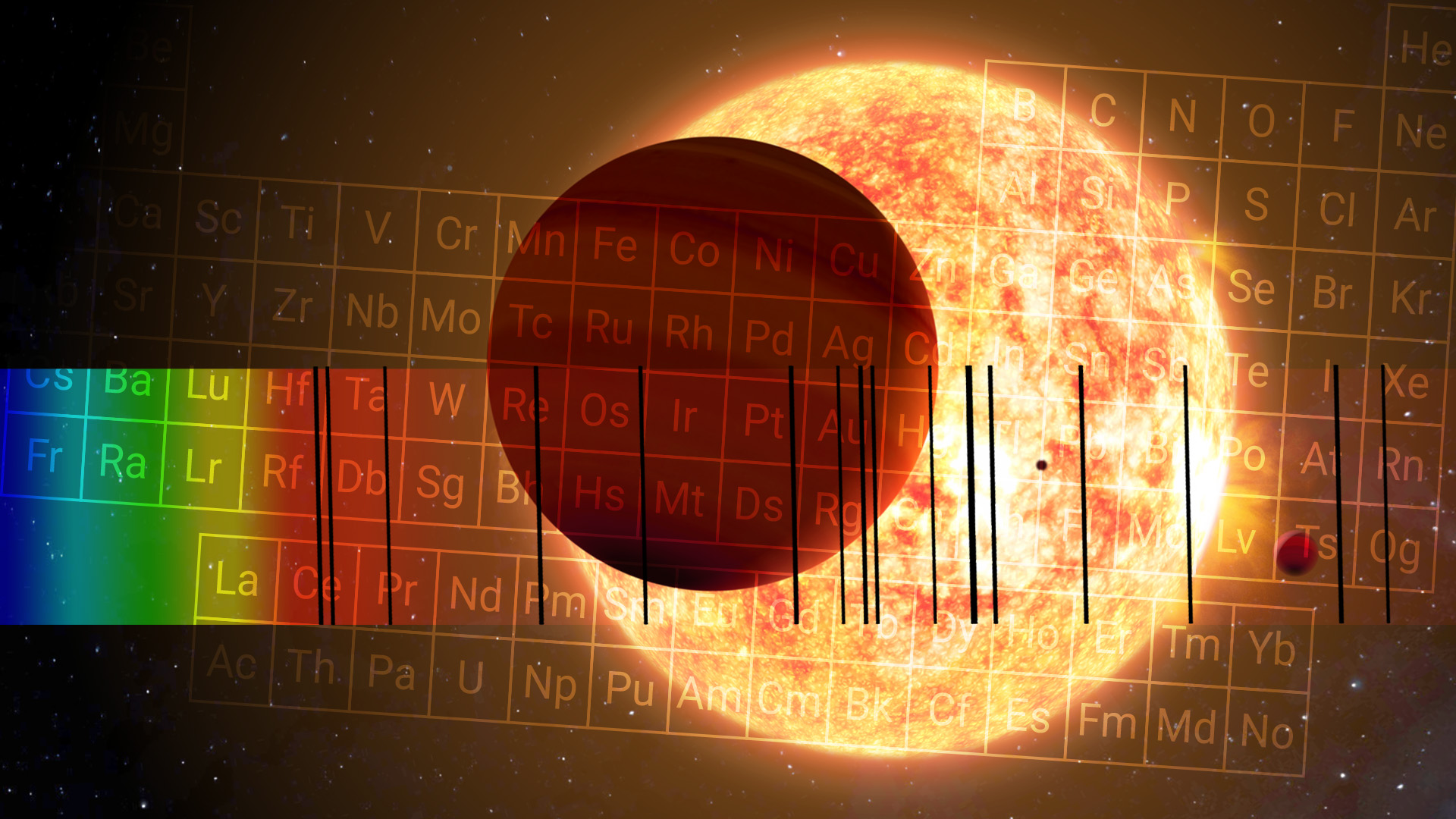
We propose here to improve those line lists, taking advantage of astronomical data. In contrast to what is existing in the optical, the line lists in the infrared provided by laboratories experiments are rare while the theoretical ones suffer from large uncertainties, especially regarding the atomic data. Unfortunately, laboratory experiments are particularly complex and expensive to implement, and thus require long lasting efforts. Nevertheless, extreme thermodynamic conditions occurring in stellar atmospheres and as observed in their emerging spectra can also reveal the details of atomic transitions and structures. Consequently, we plan to use the spectral signatures from high-resolution infrared spectra of well-known stars (such as the solar spectrum) to improve the atomic line lists data which are not yet available in laboratories. It is worth mentioning that such technique involving stellar spectra to recover atomic data has recently been successfully achieved within the framework of the American stellar spectroscopic survey SDSS/APOGEE, but which only concerned the H band of the spectrum. What we propose here is to adopt and improve a similar methodology, but for the whole infrared covered by current astronomical missions and spectrographs.
Once improved line lists are obtained, accurate determination of exoplanets characteristics and its host stars will be achievable. Moreover, even if a line list has been built within specific thermodynamical conditions of a given star, it is valid for all stellar types. This implies that beyond exoplanet studies, the line lists can be used in other astronomical fields and notably derive chemical compositions of stars on large scale, and thus infer nucleosynthetic processes in stellar interior or even Galactic chemical evolution.
For this innovative and ambitious project, we have assemble experts in all various fields (i.e. atomic data, stellar atmosphere modelling, high resolution spectroscopy, automatic procedures development, big data handling as well as an optimal publication and diffusion of the results) such that it will guaranty the success of this project.
