Presentation

Substellar Science with the Euclid Space Mission (SUBSTELLAR) is a project aimed at mining the Euclid surveys for pushing the frontier of knowledge in substellar science.

SUBSTELLAR is an Advanced Grant awarded to Prof. Eduardo L. Martín (Instituto de Astrofísica de Canarias) by the European Research Council. 

The primary science goal of SUBSTELLAR is to reveal and investigate the faint objects that lurk in the darkness beyond the limits of stellar engines, using mainly the new data arriving from the ESA Euclid space mission.

Euclid is a space mission led by the European Space Agency (ESA) to conduct a deep, single-epoch survey of 15,000 deg2 of sky with visible and near-infrared photometry and spectroscopy, and 40 deg2 multi-epoch very deep surveys. Euclid was launched at July 1st 2023.

The unprecedented combination of sensitivity, areal coverage, spatial resolution, data homogeneity and spectral information will naturally be of tremendous benefit to other areas of astrophysics. Two Euclid Independent Legacy Science (ILS) programs have been designated by ESA to develop and pursue independent science programs that capitalize on the unique data products of the Euclid surveys. SUBSTELLAR will re-use existing ground-based and space-based multiwavelength data to complement the new data obtained with the Euclid space mission.  


LATEST NEWS
Mar 13 2025, 11:37

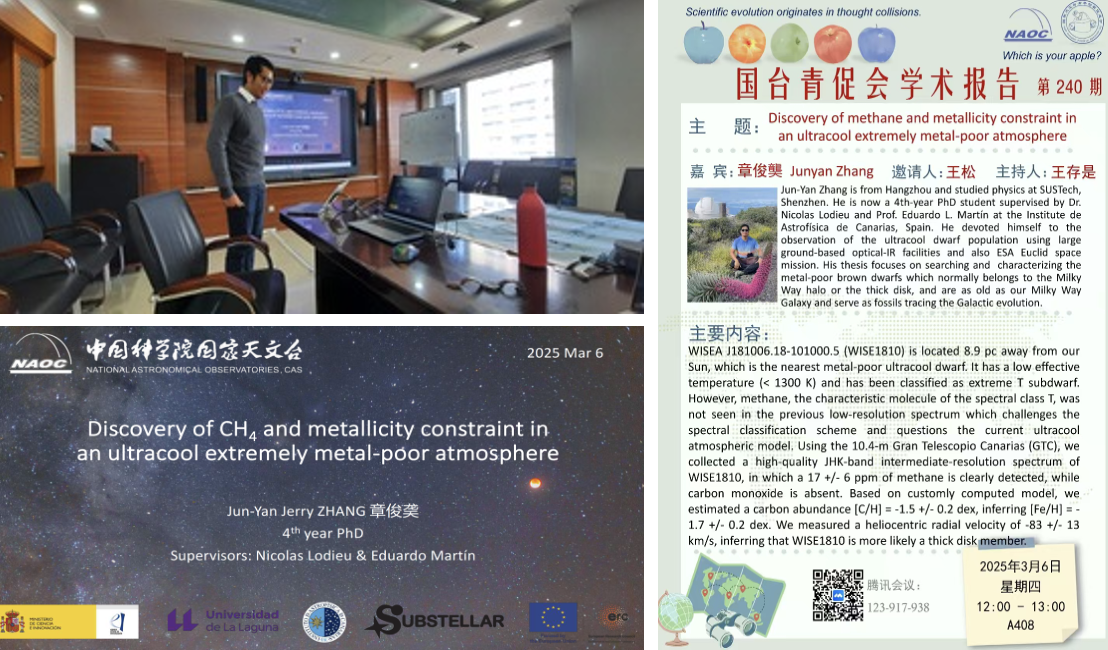
Jerry Zhang invited by NAOC to present his research results

Jun-Yan Zhang (aka Jerry) was invited by the National Astronomical Observatories of Chinese Academy Of Sciences  (NAOC), Beijing, China, on 6th March 2025 to present his recent research result about the metallicity constraints of the closest metal-poor brown dwarf using the GTC.

Jerry in NAOC

More details on Jerry's presentation at  Discovery of CH4 and metallicity constraint in an ultracool extremely metal-poor atmosphere.


Jan 15 2025, 08:51

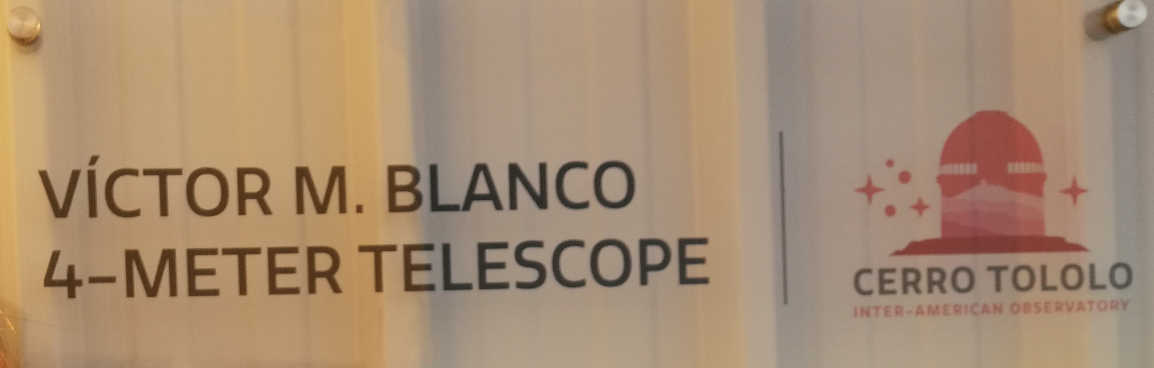
SUBSTELLAR project had been granted two observing runs in Cerro Tololo Inter-American Observatory, Chile

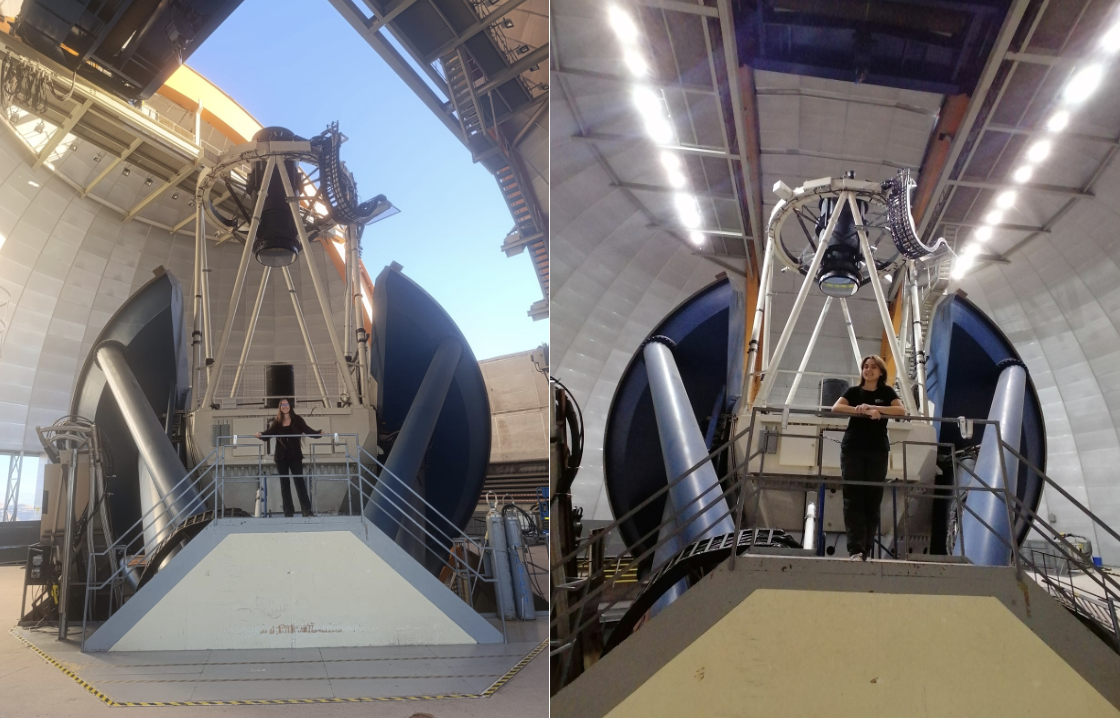
Observing time to use the NEWFIRM instrument mounted on the 4-meter Víctor M. Blanco telescope at Cerro Tololo Interamerican Observatory in Chile was awarded via a competitive process carried out NOIR Lab time allocation committee that is funded by the National Science Foundation of the United States of America.

Two observing runs were awarded to our team. The observing were carried out by SUBSTELLAR predoctoral researchers Sara Muñoz (November 15-18, 2024) and Stella Tsilia (December 11-15, 2024) respectively.

Sara Muñoz: "Thanks to the opportunity of this observations, I have been able to learn in more detail about how an observatory, the 4-meter Victor M. Blanco telescope, and ground-based infrared instruments work, facing the possible difficulties that are usually encountered during a night of in-situ observation. I also took the opportunity to meet with colleagues in the field from different Chilean institutions." 

Stella Tsilia: "I could not have thought of a better opportunity to gain observing experience than spending those five  nights in Cerro Tololo. Under the magnificent sky of the southern hemisphere, I had the chance to use the 4-meter Victor M. Blanco telescope to make observations that will support my own PhD project and the SUBSTELLAR team."


Nov 18 2024, 09:17

SUBSTELLAR representatives visited the High School where Jun-Yan Zhang studied in China!

During 202 Visiting Jerry former high school in China4 Annual Meeting of the Chinese Astronomical Society, Prof. Eduardo Martin and Jun-Yan Zhang, SUBSTELLAR project principal investigator and predoctoral researcher respectively, visited the High School affiliated to Zhejiang University, where Jun-Yan studied during 2012 to 2015 and created an astronomical club.

Prof. Martin presented a popular science talk entitled “Free Floating Planets: Worlds Without Twilights" for a group including more than 200 students, their teachers and few amateur astronomers from local astronomical association.

Prof. Martin started the talk showing the SUBSTELLAR video, and Jun-Yan was assisting with interpretation. 

The audience responded with endless applauses, and countless questions regarding from specific techniques to the connection between our humanity and astronomy.