
White Dwarfs
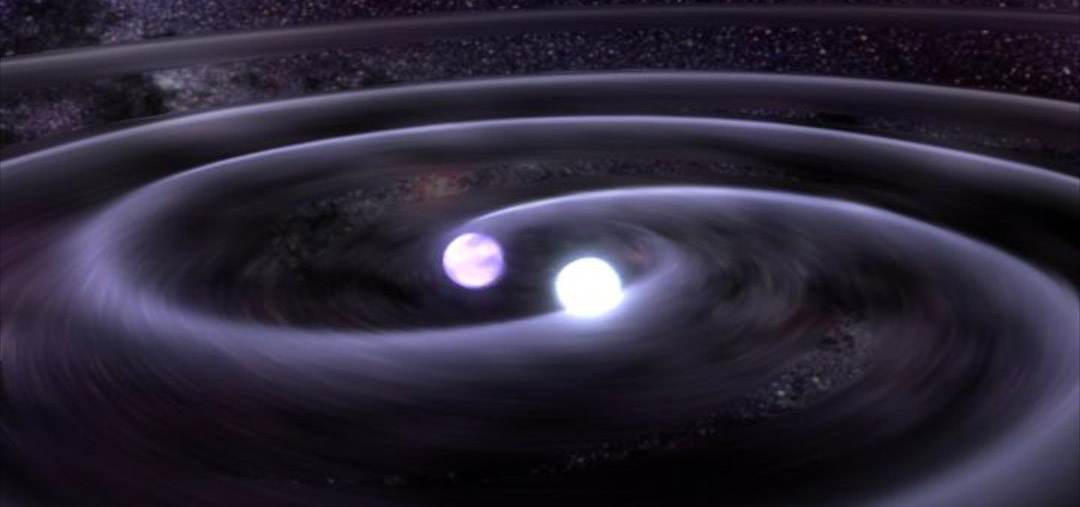
Credit: Tod Strohmayer (GSFC), CXC, NASA, Illustration: Dana Berry (CXC)
Team
Pablo Rodríguez-Gil (PI)
Manuel Ángel Perez Torres
Tariq Shahbaz
Roi Alonso
Vik Dhillon
Ignacio González Martínez-Pais
Virginia Cúneo
Accreting white dwarfs are binary systems where material from a companion star, filling its Roche lobe, is transferred onto the primary white dwarf. These systems serve as strategic instruments for investigating the physical properties of the Universe and testing fundamental physical theories, including general relativity. They are responsible for the occurrence of Type Ia supernovae, that have become the fundamental yardsticks on cosmological distance scales, contributing to the discovery of dark energy. The most compact systems with orbital periods under one hour are some of the most luminous sources of low-frequency gravitational waves, making them important verification sources for the space-based gravitational wave mission LISA. Hence, it is of utmost significance to cultivate a comprehensive and precise understanding of the evolution and final destiny of accreting white dwarfs.
Nearly all confirmed planetary hosts are expected to evolve into white dwarfs. A significant number of the planets will endure the post main-sequence evolution of their host stars. The gravitational interactions among the surviving planets may disperse asteroids, moons, and even some of the planets, propelling them deep into the gravitational field of the white dwarf. This process leads to their tidal disruption and eventual accretion. Metal-rich planetary material can therefore pollute the photosphere of the white dwarf, which then reflects the composition of the accreted planetary debris. This research line delves into the structures of evolved planetary systems and how they can serve as tools for determining the bulk chemical composition of exo-planetesimals.
Scientific goals
-
Solve a number of significant discrepancies between population synthesis models and the observed properties of accreting white dwarfs. We will explore poorly studied regions of the parameter space where major discrepancies are found. Combining high-quality HST ultraviolet data with the parallaxes from Gaia, we will accurately measure effective temperatures, masses and accretion rates for enough accreting white dwarfs to homogeneously sample the entire physical parameter space.
-
Dynamical mass measurements of cataclysmic variables in the orbital period range between 3 and 4.5 hours during phases of null or significantly diminished accretion (known as low states). This period interval reflects major discrepancies between theory and observed properties. Space-based telescopes and the largest Earth-based optical-infrared facilities such as GTC and VLT are used.
-
Dynamical studies of intermediate polar cataclysmic variables, where the magnetic field of the white dwarf has a primary role in the accretion process. The white dwarf masses provided by the modelling of X-ray spectra largely differ from the dynamical masses. We aim to obtain more precise white dwarf masses in intermediate polars to stringently test the current X-ray models and fine-tune them so they are eventually able to deliver accurate masses.
-
High-speed photometry with GTC+HiPERCAM of very short orbital period binaries (P < 60 min), which mainly consist of double-white dwarf systems that will be detectable by LISA. We will accurately constrain the mass ratio, the stellar radii, the inclination, and notably, the time of superior conjunction, T0. Over continuous monitoring, T0 enables the measurement of Ṗ due to orbital decay caused by the emission of gravitational radiation, and potentially even P̈, that will enable us to probe the predicted contribution of tides to the orbital evolution.
-
Intermediate and high resolution spectroscopy of metal-polluted white dwarfs to measure the chemical abundances and infer the bulk composition of the accreted planetary debris. We anticipate a substantial enhancement of this research line when the GTC high-resolution spectrograph starts operating.
Highlights
-
Dynamical mass of the white dwarf in XY Ari: a test for intermediate polar X-ray spectral models
Monthly Notices of the Royal Astronomical Society, Volume 524, Issue 3, pp. 3314-3323 (2023) -
A dense 0.1-solar-mass star in a 51-minute-orbital-period eclipsing binary
Nature, Volume 610, Issue 7932, p. 467-471 (2022) -
A transmission spectrum of the planet candidate WD 1856+534 b and a lower limit to its mass
Astronomy & Astrophysics, Volume 649, id. A131, 12 pp. (2021) -
GD 424 - a helium-atmosphere white dwarf with a large amount of trace hydrogen in the process of digesting a rocky planetesimal
Monthly Notices of the Royal Astronomical Society, Volume 501, Issue 3, pp. 4276-4288 (2021) -
Single magnetic white dwarfs with Balmer emission lines: a small class with consistent physical characteristics as possible signposts for close-in planetary companions
Monthly Notices of the Royal Astronomical Society, Volume 499, Issue 2, pp. 2564-2574 (2020) -
When the disc's away, the stars will play: dynamical masses in the nova-like variable KR Aur with a pinch of accretion
Monthly Notices of the Royal Astronomical Society, Volume 494, Issue 1, pp. 425-441 (2020) -
A planetesimal orbiting within the debris disc around a white dwarf star
Science, Volume 364, Issue 6435, pp. 66-69 (2019)