News related to UNDARK
UNDARK presents “SUPERNOVAE”, an illustrated journey through the death of stars
3 November 2026
Communication activity of the EU-funded UNDARK project (Horizon Europe – WIDERA).
The illustrated publication “SUPERNOVAE. How stellar deaths shape our universe” explores stellar explosions and their connection to the elements that make life possible, neutrinos and the great mysteries of the cosmos.
How do stars die? What remains after a supernova? How are these explosions connected to the matter we are made of? UNDARK, a project funded by the European Union through the WIDERA programme of Horizon Europe and coordinated by the Instituto de Astrofísica de Canarias (IAC), brings these questions to the public through SUPERNOVAE, an illustrated publication whose Spanish-language edition is available to download free of charge.
With texts by Jorge Martin Camalich and Pasquale Dario Serpico, and illustration and design by Ève Barlier, SUPERNOVAE combines scientific explanations and visual storytelling in a 16-page journey through some of the Universe’s most extraordinary phenomena.
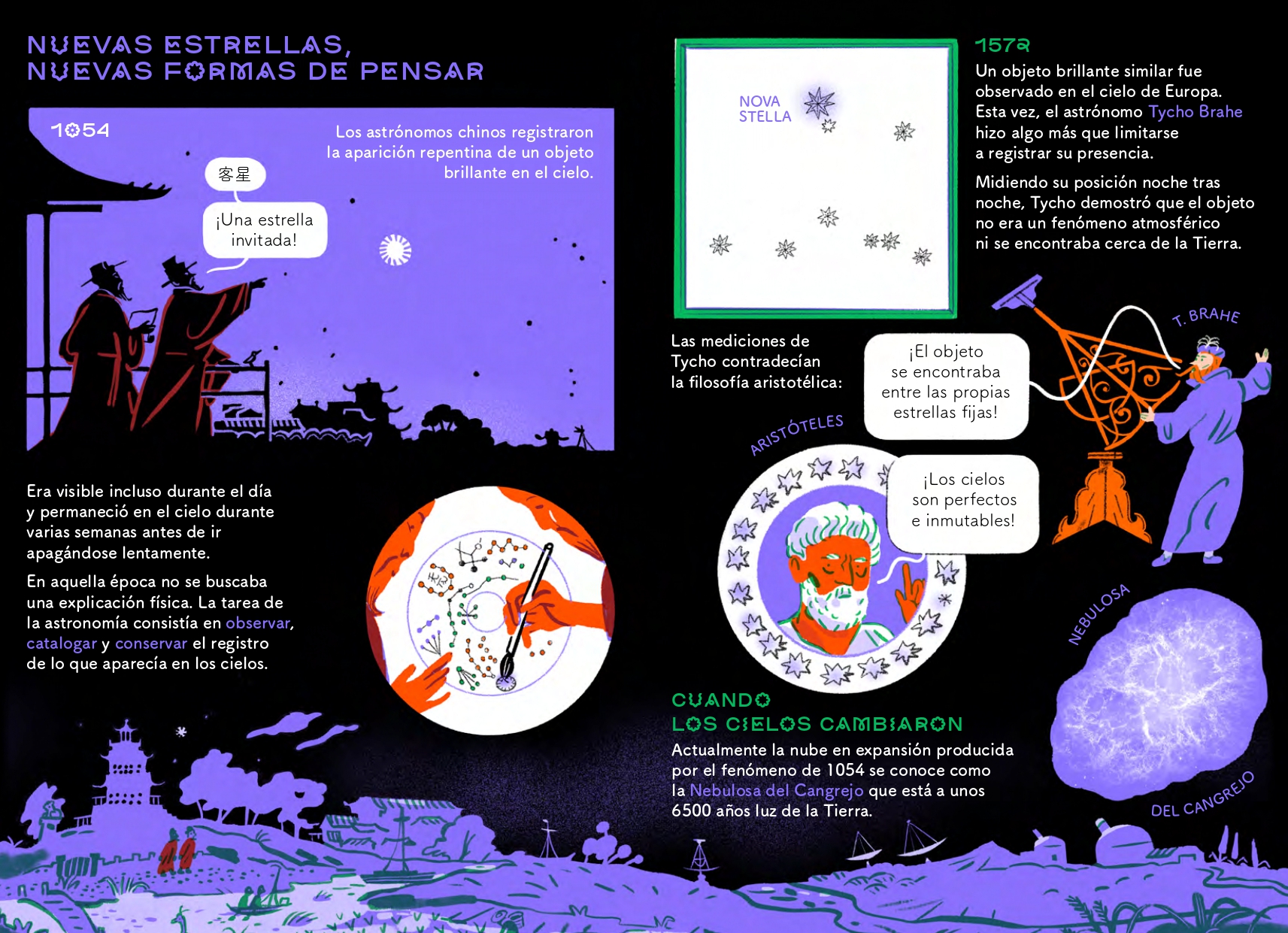
The journey begins with observations of a “guest star” recorded by Chinese astronomers in 1054 and the supernova studied by Tycho Brahe in 1572, whose measurements helped challenge the idea of unchanging heavens. From these historical episodes, the publication introduces the physical processes that keep stars in equilibrium and the mechanisms that can trigger their collapse.
Neutrinos play a prominent role. These particles allow scientists to probe the interiors of stellar explosions and are fundamental to models explaining how massive stars explode. Supernova SN 1987A provides an example of how combining light and neutrinos opened a new window onto the cosmos.
The publication also explains the formation and dispersal of chemical elements, neutron stars, pulsars, and black holes. The journey connects these objects to gravitational waves, cosmic rays, and the possibility of discovering previously unknown particles in a future supernova in our Galaxy.
With accessible language and a visual approach that invites readers to explore every page, SUPERNOVAE offers a resource for discovering stellar physics and understanding how the death of stars helps transform the Universe.
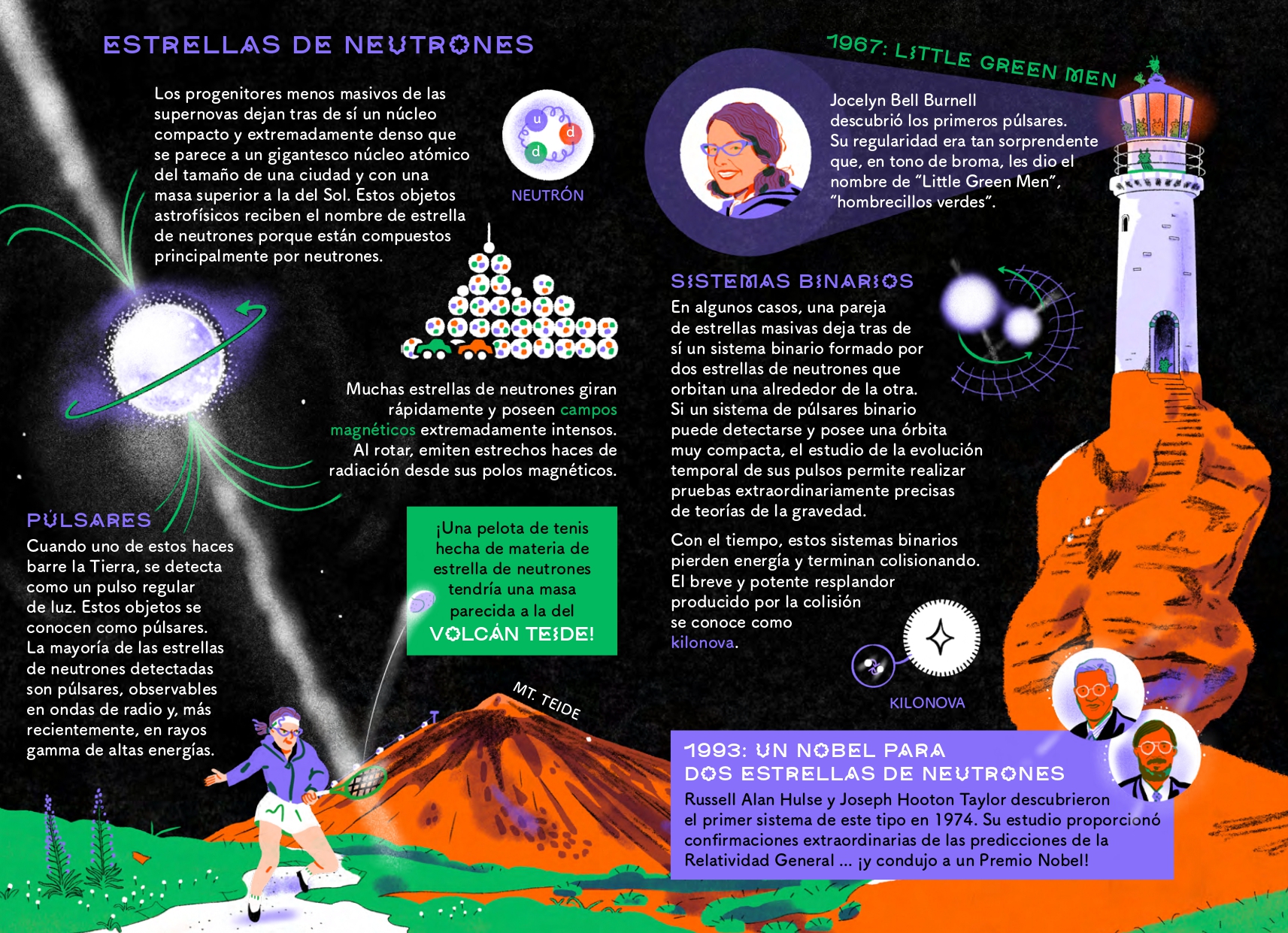
News article: Raquel Conde Viera / UNDARK–IAC
The ghosts passing through us: UNDARK explores neutrinos and their connection to our existence
3 November 2026
Communication activity of the EU-funded UNDARK project (Horizon Europe – WIDERA).
The second microdocumentary in the MIRADAS series, featuring physicist Anatael Cabrera, introduces particles that are as elusive as they are fundamental to understanding the Universe.
Invisible, almost impossible to confine and capable of passing through our planet without leaving a trace. Neutrinos seem to possess all the qualities of ghosts, yet they belong to the world of physics. They pass through our bodies continuously, without us noticing. Their story is intertwined with some of the most extraordinary processes in the cosmos and the origins of the matter we are made of.
With the release of “PERSPECTIVES 2 | Anatael Cabrera | Neutrinos, the ghost particles”, the European UNDARK project offers a seven-minute journey into a Universe beyond our senses. Released to coincide with Halloween, the second microdocumentary in the MIRADAS series combines science, imagery and sound to explore a compelling question: how can we study something that barely leaves a trace?
“Much of our existence is linked to the role of the neutrino,” Cabrera explains in the film. The journey begins with the death of stars: events that also make way for new beginnings. In core-collapse supernovae, neutrinos participate in processes that help drive the explosion and eject stellar material into space. This material can later become part of new stars, planets and, eventually, living beings.
From this connection to our existence, the documentary turns to a major experimental challenge: detecting particles that pass through enormous amounts of matter and interact with it only exceptionally rarely.
Cabrera explains how researchers build large detectors to increase their chances of recording these scarce interactions. In certain liquids, the particles produced by a neutrino interaction generate flashes of light that specialised sensors can capture. A signal imperceptible to our eyes thus becomes scientific information.
The film also introduces LiquidO, a technique that uses opaque liquids and a network of optical fibres to collect light close to where it is produced. This approach aims to reconstruct what happens inside the detector in greater detail and distinguish the signals left by different particles.
The journey also connects fundamental research with potential applications. Cabrera describes the development of antineutrino detectors that could provide complementary information about the operation of nuclear reactors, a possibility his team is investigating.
MIRADAS explores the dark Universe through the people who study it. In this second instalment, sound is part of an invitation to pause, pay attention and explore the invisible.
Put on your headphones: will you be able to “hear” the neutrinos?
The microdocumentary is available on the Instituto de Astrofísica de Canarias YouTube channel , in Spanish with English subtitles.
UNDARK, Unravelling the Dark Universe from the Canary Islands Observatories , is funded by the European Union through the WIDERA programme under Horizon Europe and coordinated by the Instituto de Astrofísica de Canarias (IAC).
Directed by: Raquel Conde Viera / UNDARK
UNDARK celebrates the 2026 Nobel Prize in Physics with a seminar on neutrinos and IceCube
26 October 2026
Communication activity of the EU-funded UNDARK project (Horizon Europe – WIDERA).
The European project UNDARK, funded by the European Union and coordinated by the Instituto de Astrofísica de Canarias (IAC), organised a special seminar to celebrate the award of the 2026 Nobel Prize in Physics to Francis Halzen for his decisive contributions to the IceCube Neutrino Observatory and the discovery of high-energy neutrinos of astrophysical origin.
Taking the opportunity of a visit by Daniele Gaggero, a specialist in cosmic rays and multimessenger astronomy, UNDARK organised this event to honour the laureate and explore the science behind this recognition.
During the seminar “Cosmic-ray physics and the Galactic Neutrino Discovery”, held on 8 October, Gaggero explained how the neutrino emission from the Galactic plane detected by IceCube helps us understand the propagation and interactions of cosmic rays in the Milky Way.
He also discussed how to combine the information provided by neutrinos and gamma rays, as well as the role of future observations by CTAO in advancing the study of the most energetic phenomena in our galaxy.
UNDARK, Unravelling the Dark Universe from the Canary Islands Observatories
, is a project funded by the
European Union
through Horizon Europe – WIDERA and coordinated by the Instituto de Astrofísica de Canarias (IAC).
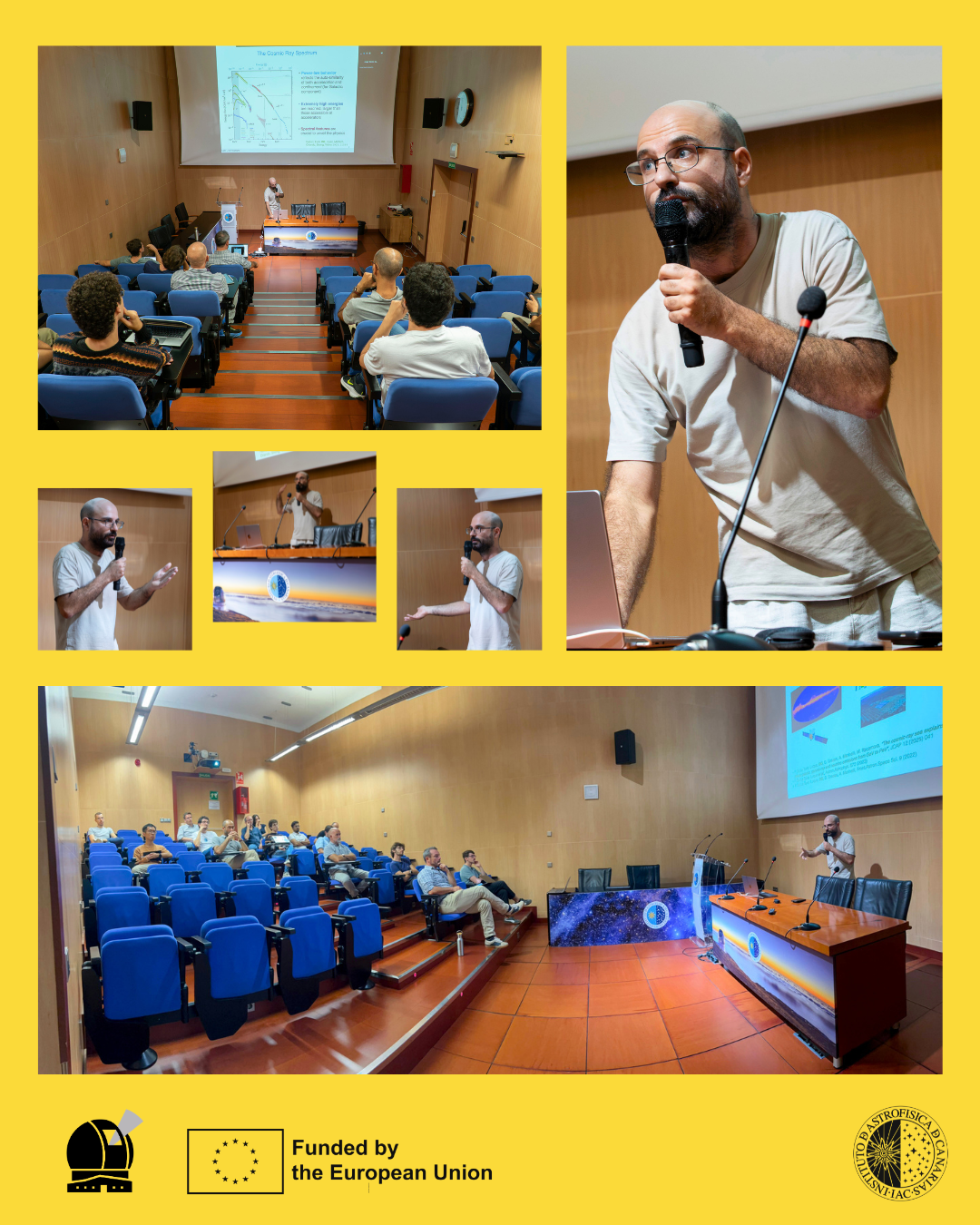
Daniele Gaggero during his talk at IAC
Photos: Inés Bonet / IAC
Text: Raquel Conde Viera / UNDARK
What can gamma rays teach us about dark matter?
24 October 2026
Communication activity of the EU-funded UNDARK project (Horizon Europe – WIDERA).
Tracy Slatyer (MIT), an internationally renowned researcher in the search for dark matter through high-energy astrophysical signals, visited the Instituto de Astrofísica de Canarias (IAC) as part of UNDARK.
During her seminar, Slatyer discussed how gamma-ray observations can help us search for potential signals of dark matter, focusing particularly on the intriguing excess of emission observed towards the centre of our galaxy.
What could lie behind these signals? And how far could new telescopes and new analysis techniques, including artificial intelligence, take us?
Her work shows how studying the sky at the highest energies can open new windows onto one of the great mysteries of contemporary physics: the nature of dark matter.
UNDARK, Unravelling the Dark Universe from the Canary Islands Observatories
, is a European project led by the Instituto de Astrofísica de Canarias (IAC) and funded by the
European Union
through Horizon Europe – WIDERA, to promote scientific excellence and international collaboration in the study of the dark Universe.
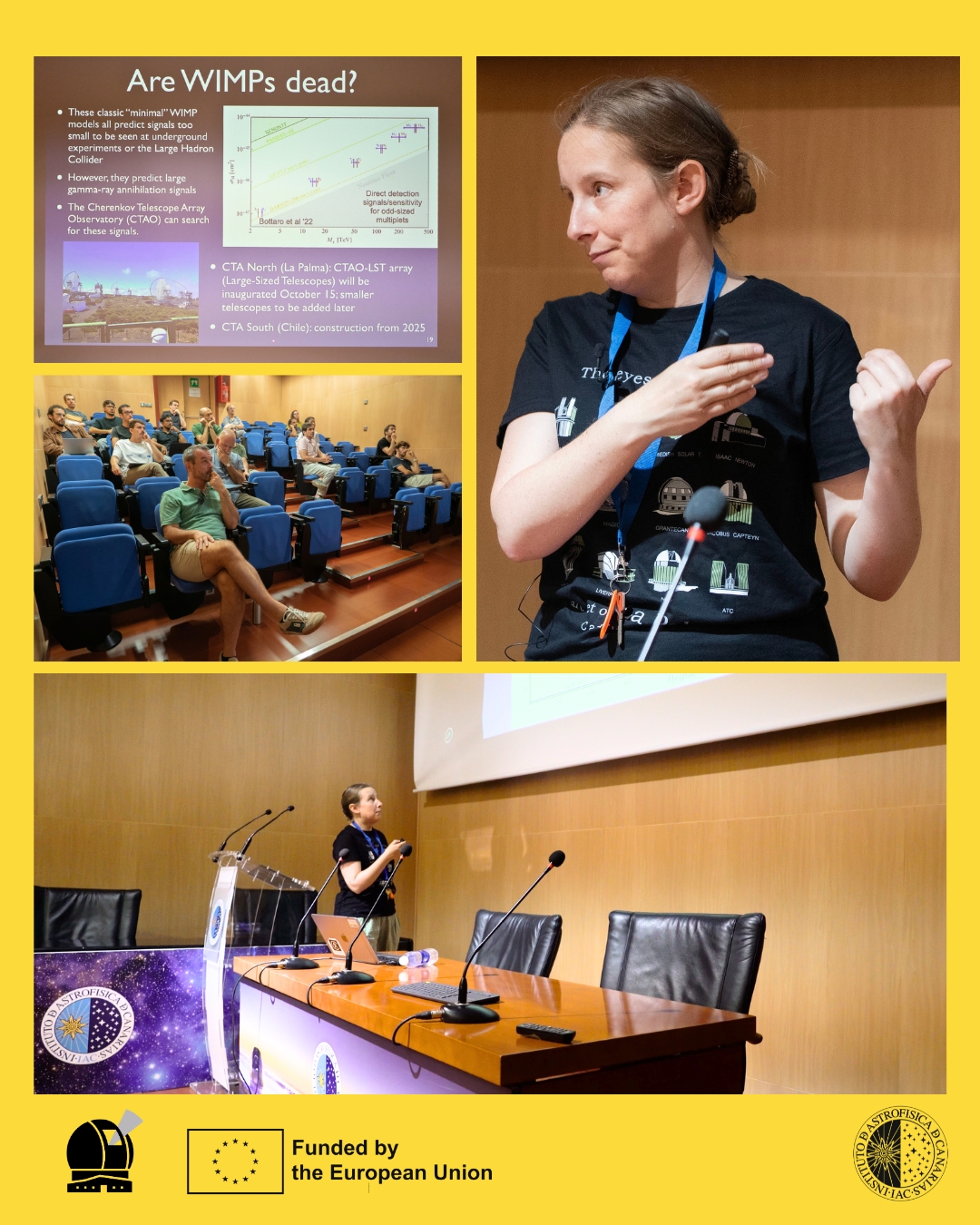
Trcy Slatyer during her talk at IAC
Text and photos: Raquel Conde Viera / UNDARK
Dark matter lurks this Halloween at the Museum of Science and the Cosmos
22 October 2026
Communication activity of the EU-funded UNDARK project (Horizon Europe – WIDERA).
The invisible side of the Universe sends shivers down our spines this Halloween at the Museum of Science and the Cosmos .
The IAC, through the UNDARK project, and the Museum of Science and the Cosmos are organising “The Battle of Dark Matter. Three Theories, One Mystery”, a spine-chilling gathering featuring scientific debate and interactive questions from the audience.
This eerie encounter will take place on 29 October at 17:30 at the Museum of Science and the Cosmos, to mark Dark Matter Day, celebrated internationally on 31 October.
A mysterious web of unanswered questions surrounds the nature of dark matter, a component as essential as it is enigmatic, which helps hold the Universe’s large-scale structures together. Stars, planets and everything we can observe make up only a small fraction of our Universe, with dark matter and dark energy accounting for the vast majority.
This Halloween, the Instituto de Astrofísica de Canarias (IAC), through UNDARK, Unravelling the Dark Universe from the Canary Islands Observatories , funded by the European Union under the Horizon Europe programme, and the Museum of Science and the Cosmos invite the public to follow the traces of the invisible in “The Battle of Dark Matter. Three Theories, One Mystery”, an event open to all audiences on 29 October at 17:30.
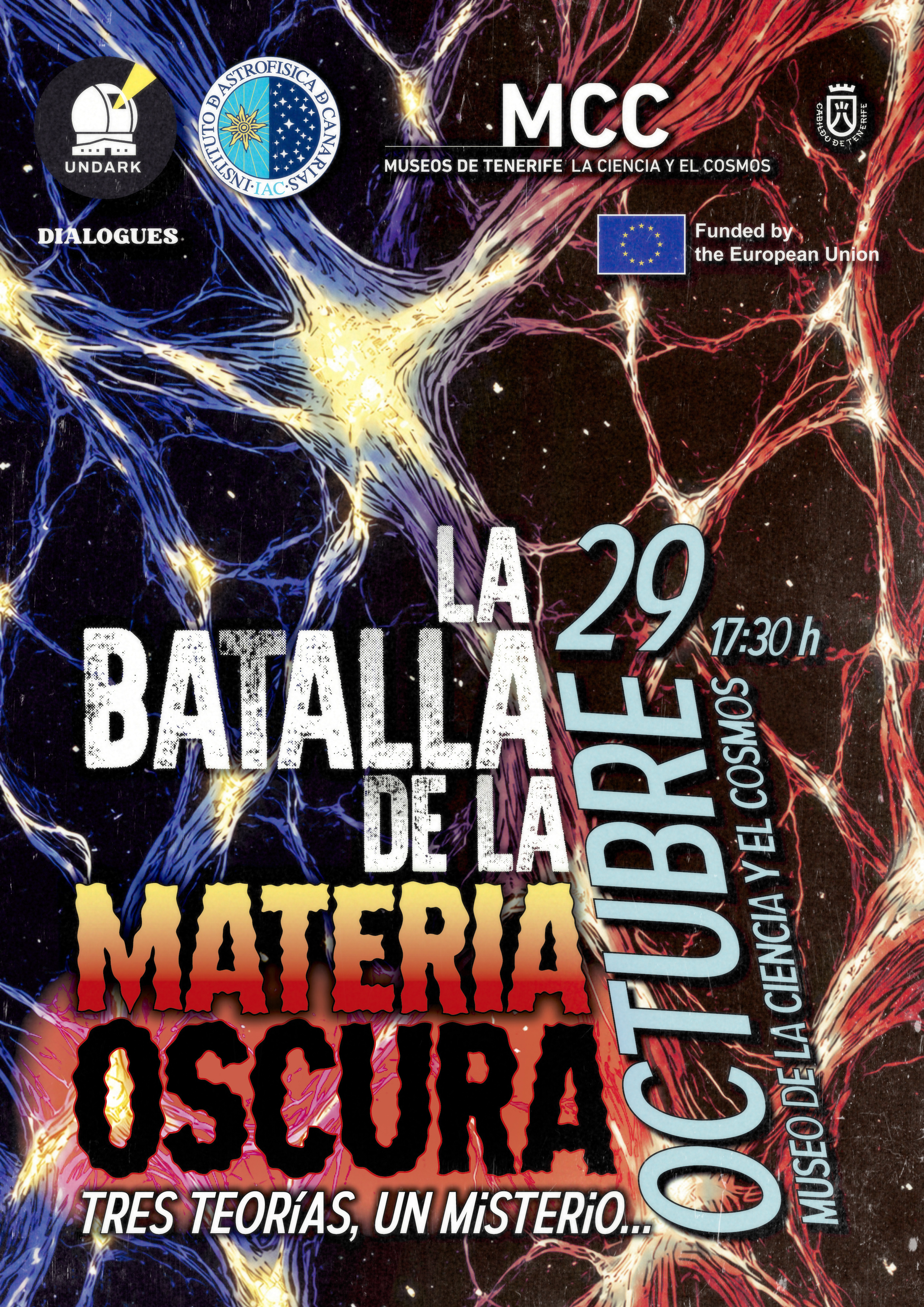
Poster designed by Inés Bonet Márquez.
A date to summon curiosity
The alliance between Halloween and dark matter was deliberate. In 2017, Interactions Collaboration, an international network of communications professionals from particle physics laboratories, launched Dark Matter Day on 31 October. The fascination with shadows associated with Halloween offered the perfect setting to introduce the public to a cosmic enigma that has challenged science for decades.
Long before pumpkins and costumes, Halloween’s European roots evoked an unsettling encounter with the invisible. Among its antecedents is Samhain, an ancient Celtic festival particularly associated with Ireland, which marked the arrival of winter and was traditionally linked to a thinning boundary between the living and the spirits. In Spain, All Saints’ Day and All Souls’ Day bring us closer to those who are no longer with us: loved ones who inhabit our memories, giving substance to the invisible just as dark matter holds galaxies together.
In the Canary Islands, this encounter with remembrance has its own tradition: Los Finados, popularly known as “Finaos”. Around All Saints’ Day and All Souls’ Day, families and neighbours gather to remember those who have passed away, sharing stories and anecdotes over chestnuts, walnuts, almonds and figs. Through these stories and recollections, the unseen presence of our loved ones comes alive in our memories. This image invites us to turn towards another mystery, also invisible, that remains hidden in the Universe: dark matter.
In the cosmos, the dark traces of the invisible are investigated through physical effects we can measure.
The gravity of a shadowy, hidden presence
The cosmic enigma begins with a figure: according to the current cosmological model, around 85% of the matter in the Universe is dark matter. It has not been observed to emit, absorb or reflect light, yet its gravitational influence leaves clues in the motion of galaxies and the bending of light. Like an invisible glue, it helps hold large cosmic structures together and explain how they formed.
Yet the suspect has still not shown its face. Almost a century after the first evidence emerged, we still do not know what dark matter is made of. To uncover its identity, scientists combine astronomical observations, computer simulations and experiments searching for signals of its possible constituents. There are plenty of clues on the table, but the case remains open.
Three proposals confront one unsettling mystery
The first to shed light on this darkness will be María Benito Castaño, a researcher at the IAC, who will explain what dark matter is and how we infer its presence. Her research connects astrophysics with particle physics and uses observations of the Milky Way and nearby galaxies to investigate the nature of this elusive component of the Universe.
The battle of arguments will then begin: three researchers will venture into the realm of dark matter with different proposals for interpreting its secrets. Each contribution will open a door to the mystery and show which observations can put the different explanations to the test.
Isabel Santos Santos, a researcher at the Leibniz Institute for Astrophysics Potsdam (AIP, Germany), will champion cold dark matter, one of the pillars of the standard cosmological model. Her research focuses on dwarf galaxies: small cosmic hideouts whose properties may reveal secrets about dark matter. To interrogate them, she compares observations with simulations that recreate the formation and evolution of galaxies.
Jorge Sánchez Almeida, a research professor at the IAC, will explore alternative dark matter models. What if the hidden presence had properties different from those we expect? Lighter particles or different interactions could leave signals capable of challenging the conventional picture. His recent work seeks precisely these clues: patterns of behaviour that could help unmask the physical nature of dark matter.
Guillaume Thomas, a researcher at the University of La Laguna (ULL), will introduce an unsettling plot twist: what if part of the mystery attributed to dark matter required us to revise our description of gravity? In the debate, he will argue the case for modified gravity. A specialist in galactic archaeology, he studies the motion of stars and the remnants of other galaxies to reconstruct the Milky Way’s past.
In this investigation of dark matter, the proposals will face an unforgiving judge: the evidence. Cold dark matter is the reference scenario in contemporary cosmology; examining its limits and testing alternatives helps reveal what each model explains and where unanswered questions still lurk.
The audience joins the spine-chilling battle
Those attending will also be able to follow the trail of dark matter. Using their mobile phones, they will take part in an interactive quiz with prizes from the IAC and vote for the proposal they find most convincing. Each question will offer a new clue to guide them through the shadows of the enigma.
The audience’s verdict will enliven the gathering, although dark matter will not reveal its secrets by majority vote. Theories are tested through observations and experiments: the event offers an opportunity to explore that process from within, share questions and discover which findings could transform the investigation.
This Halloween, the mystery takes on cosmic dimensions. On 29 October at 17:30, the Museum of Science and the Cosmos invites the public to cross the threshold of the visible and follow the ghostly traces of dark matter. Three proposals, a battle of ideas and a Universe that still harbours an unsettling secret.
Text: Raquel Conde Viera / UNDARK
UNDARK explores the dark Universe through its most energetic signals
30 September 2026
Communication activity of the EU-funded UNDARK project (Horizon Europe – WIDERA).
From 28 September to 2 October 2026, the Instituto de Astrofísica de Canarias (IAC) hosts the 2nd UNDARK Workshop, “Astrophysical Probes of Dark Sectors Using Gamma-Ray Observations”, bringing together researchers to explore how some of the most energetic phenomena in the Universe can provide new clues about dark matter and other hidden components of the cosmos.
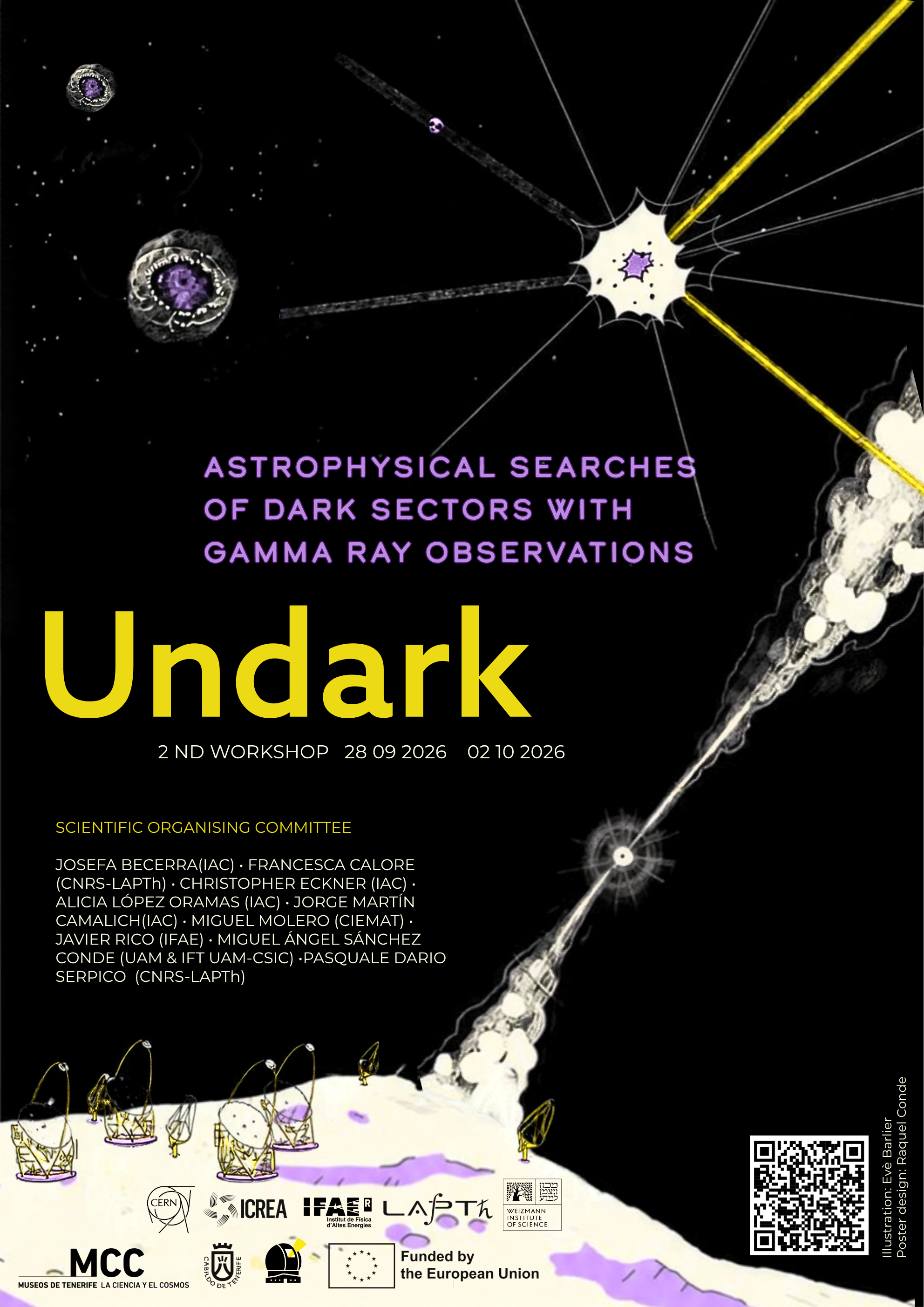
Poster of the 2nd UNDARK Workshop, “Astrophysical Probes of Dark Sectors Using Gamma-Ray Observations”.
Organised within the framework of UNDARK – Unravelling the Dark Universe from the Canary Islands Observatories, the meeting approaches the search for dark-sector physics from a broad multimessenger perspective, connecting gamma rays, cosmic rays, antimatter, multiwavelength observations and neutrinos. Throughout the week, theoretical developments, observational results and new analysis techniques are being brought together to address some of the major open questions in high-energy astrophysics and dark matter research.
The workshop opened on 28 September with a welcome by Jorge Martín Camalich, Principal Investigator of UNDARK. The first scientific session introduced the gamma-ray perspective through contributions including Alicia López-Oramas, with an introduction to Cherenkov telescopes at the Canary Islands Observatories, and Daniela Hadasch, who presented an observational review of the TeV domain.
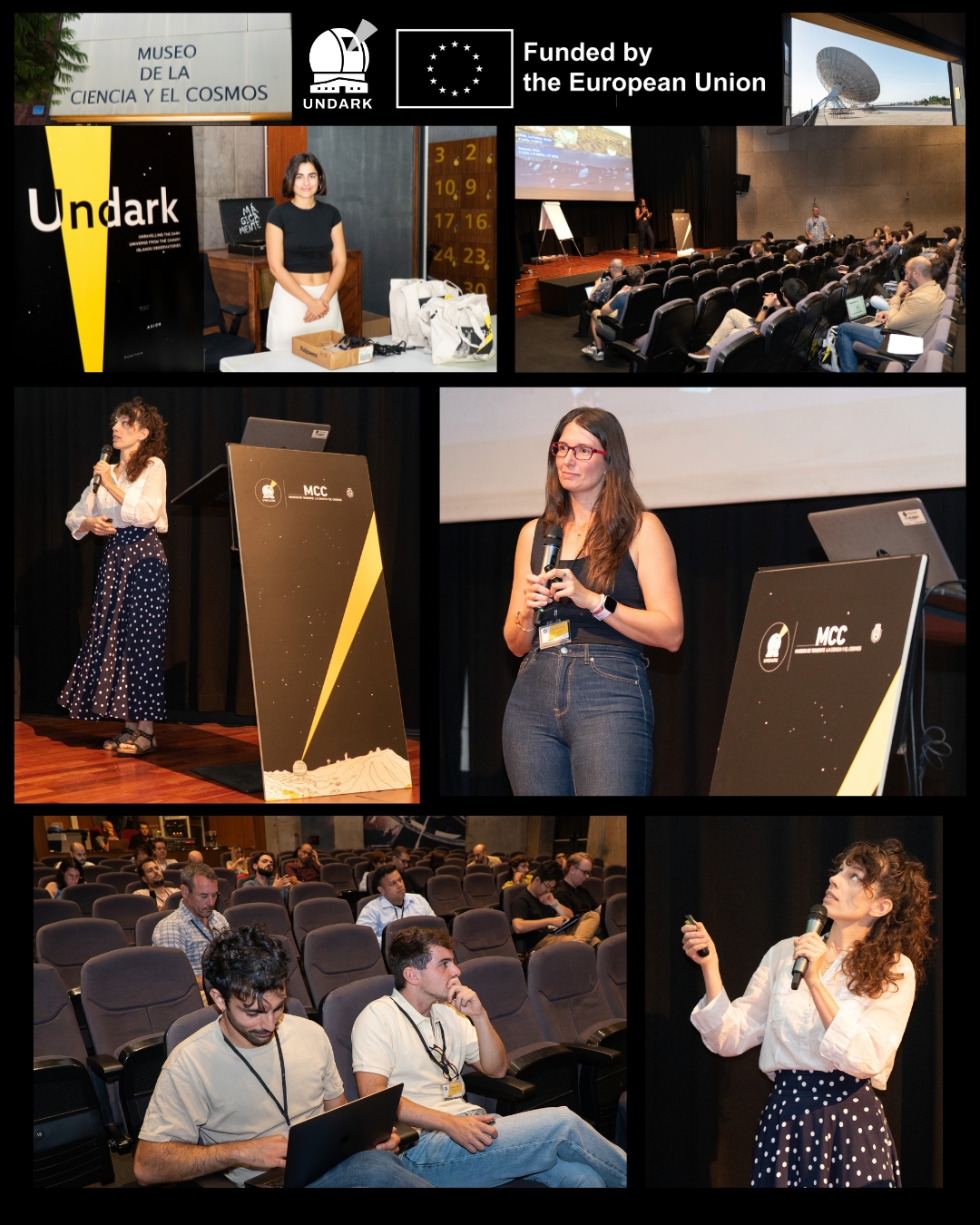
Opening of the 2nd UNDARK Workshop at the Instituto de Astrofísica de Canarias (IAC).
The scientific discussion then moved towards different approaches to dark matter searches using gamma-ray observations, including WIMP model building, the potential of the Cherenkov Telescope Array Observatory (CTAO), indirect dark matter searches, observations at multi-TeV and PeV energies, axion-photon conversion and multimessenger signatures from high-energy electromagnetic cascades.
On 29 September, the programme broadened its multimessenger perspective, connecting dark matter searches with cosmic rays and antimatter. The sessions addressed indirect dark matter searches with space-based cosmic-ray experiments, cosmic-ray transport, the potential of large neutrino experiments to search for sub-GeV dark matter, antinuclei and the connection between antimatter in cosmic rays and the dark Universe. The afternoon also explored new analysis strategies for gamma-ray astronomy, including simulation-based inference and machine-learning techniques.
On 30 September, the third day of the workshop, attention turned to one of the most intriguing open questions in high-energy astrophysics: the Galactic Center gamma-ray excess. The sessions brought together observational, theoretical and statistical approaches aimed at improving our understanding of this still-debated signal and its possible connection to dark matter.
Deirdre Horan opened the day with an observational review of the GeV domain, followed by Tracy Slatyer, who presented a status update on the Galactic Center excess. Sri Sankari Alias Sowmiya Balan addressed gamma-ray source-count distributions as a probe of the excess. The discussion continued with contributions from Jordan Koechler, Sam Cheng-Tse Huang and Fernando Valenciano, exploring dark-matter interpretations, spatial and spectral modelling, and constraints from unidentified Fermi-LAT sources.
Beyond the individual presentations, the workshop provides a framework for scientific exchange between researchers working from complementary perspectives. By bringing different observational channels, theoretical models and analysis methodologies into the same discussion, the meeting seeks to strengthen connections between approaches that are often studied separately and to identify new directions for investigating the dark Universe.
The scientific programme is complemented on 30 September by an excursion to the Teide Observatory, connecting the questions discussed during the meeting with the astronomical infrastructure of the Canary Islands.
The workshop will continue with sessions devoted to multiwavelength probes, dark matter and neutrino astronomy, followed by a round-table discussion. The programme concludes with an excursion to the Roque de los Muchachos Observatory on La Palma, reinforcing the connection between the scientific discussions and the Canary Islands Observatories at the heart of the UNDARK project.
Through meetings such as this, UNDARK fosters an interdisciplinary and international scientific environment in which astrophysics, cosmology and particle physics converge on one of the fundamental challenges of contemporary science: understanding the invisible components that shape the structure and evolution of our Universe.
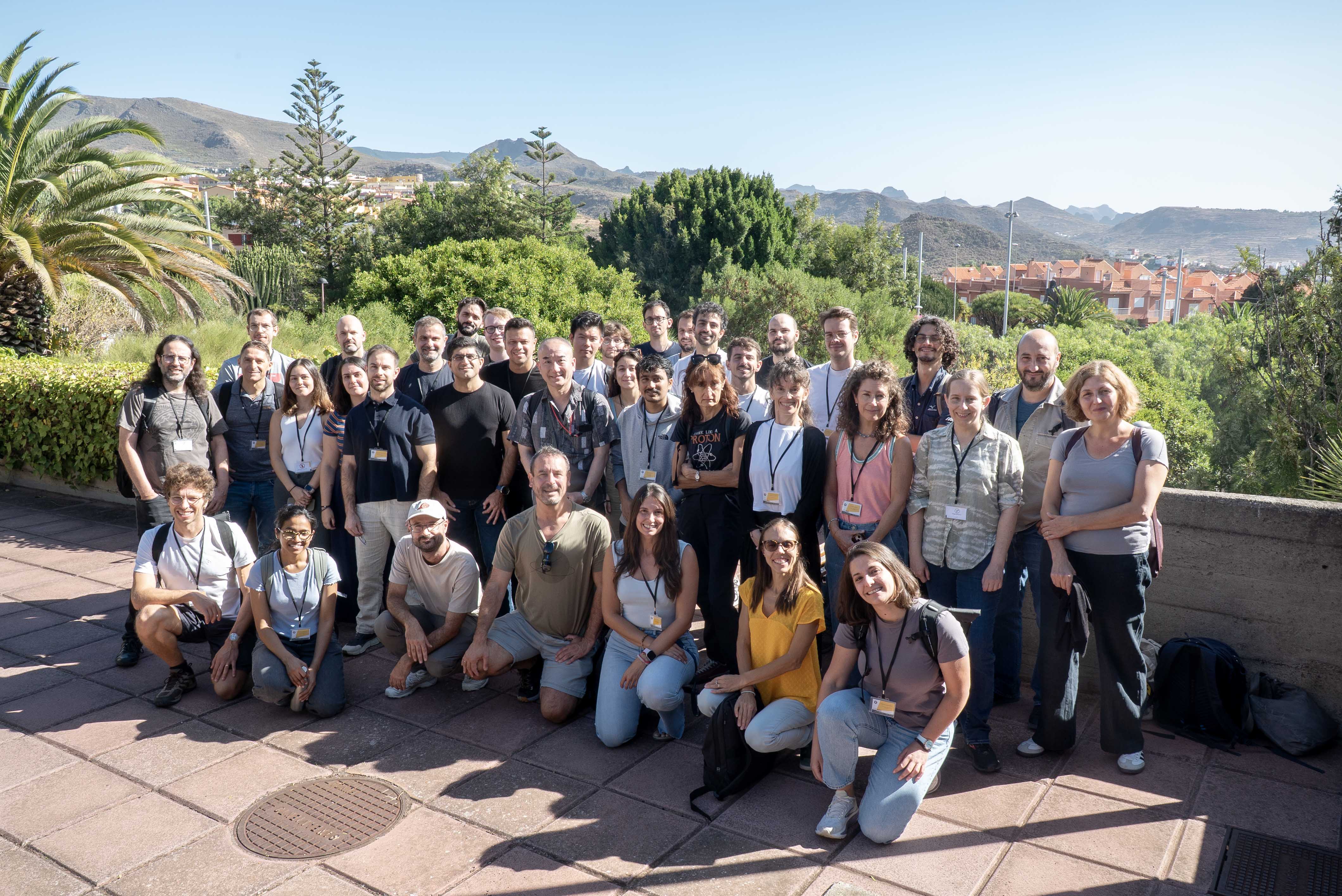
Participants in the 2nd UNDARK Workshop at the Instituto de Astrofísica de Canarias (IAC).
UNDARK – Unravelling the Dark Universe from the Canary Islands Observatories is coordinated by the Instituto de Astrofísica de Canarias (IAC) and funded by the European Union through the Horizon Europe WIDERA programme (Project 101159929).
Text and images: Raquel Conde Viera / UNDARK
UNDARK brings international experts together at CERN to shed light on the discrepancies in our current model of the Universe
21 September 2026
Communication activity of the EU-funded UNDARK project (Horizon Europe – WIDERA).
If we know so much about the Universe, why do some measurements still disagree?
The international workshop “UNDARK 2026: Illuminating Cosmic Discord”, held at CERN from 7 to 11 September, brought together experts in cosmology, astrophysics and theoretical physics to confront some of the major open questions raised by the latest observations of the Universe. Discrepancies in measurements of its expansion rate, the nature of dark energy, the surprising observations made by the James Webb Space Telescope, and the potential role of artificial intelligence in science shaped five days of scientific discussion and exchange of perspectives.
Cosmology is going through a remarkable moment. The standard cosmological model, ΛCDM, has succeeded in describing the evolution of the Universe over nearly 14 billion years with extraordinary precision, using just six fundamental parameters. As Licia Verde, ICREA Professor at the Institute of Cosmos Sciences of the University of Barcelona, highlighted, some of these parameters are now measured with a precision of around 1%. Yet it is precisely this level of precision that allows us to subject the model to increasingly stringent tests and search for possible signs of phenomena that we still do not understand, from the nature of dark matter and dark energy to the mass of neutrinos.
And this is where the discrepancies emerge.
Two ways of measuring the expansion of the Universe
One of the central topics of the workshop was the so-called Hubble tension. The Hubble constant, H₀, describes the current expansion rate of the Universe, but measurements inferred from the early Universe and those obtained by observing relatively nearby objects do not yield exactly the same result.
Verde presented the issue as the story of “two cosmic speedometers.” On the one hand, we can infer H₀ by observing the cosmic microwave background and adopting a cosmological model. On the other, we can build a cosmic distance ladder using objects such as Cepheids, supernovae or masers and measure the expansion of the nearby Universe.
If both approaches led to exactly the same result, ΛCDM would have passed an extraordinarily demanding test. The persistence of the discrepancy, however, means that both the model and the observations must continue to be scrutinised.
Mickael Rigault focused his contribution on Type Ia supernovae, a particular type of stellar explosion whose brightness allows astronomers to use them as reference points for measuring enormous distances across the Universe and studying how cosmic expansion has changed over time.
But increasingly precise measurements require more than simply observing these explosions. Rigault showed how subtle details, from instrument calibration to the properties of the supernovae themselves and the galaxies in which they occur, can influence the results. Indeed, some effects related to the environments in which these stars explode may be more important than previously thought.
Cosmological tensions therefore raise a fundamental question: are they telling us that there is something new in the Universe, or is there still something we are not measuring correctly?
Is dark energy changing?
The same caution emerged in another of the workshop’s major debates. Recent results from DESI have raised a fascinating possibility: dark energy, responsible for the accelerated expansion of the Universe, may not be constant but could instead evolve over time.
George Efstathiou, from the University of Cambridge, focused on a key question: is dark energy really changing with time? DESI (Dark Energy Spectroscopic Instrument) data on their own are consistent with the standard cosmological model. However, when combined with some supernova observations, hints emerge that dark energy could be evolving. Interestingly, those hints change depending on which supernova datasets are used, meaning that there is still no definitive answer.
Are we seeing signs that our model of the Universe needs to change, or do we simply need better measurements?
JWST opens a window onto objects we did not expect to find
The surprises are not coming only from cosmological measurements. Observations from the James Webb Space Telescope (JWST) are revealing an early Universe more complex than expected.
Rohan Naidu, from the University of Hawai‘i, presented one of JWST’s most surprising discoveries: the so-called Little Red Dots, small and mysterious red sources that appear frequently in images of the distant Universe. What makes them particularly intriguing is that scientists did not expect to find so many objects of this kind, and they are still trying to understand exactly what they are. Naidu explained that some may be associated with supermassive black holes surrounded by large amounts of gas, objects he refers to as “Black Hole Stars.” Studying them could also help us better understand how the first galaxies in the Universe formed.
This brings us to one of the most fascinating ideas discussed during the workshop: new telescopes are not only helping us answer the questions we already had; they are discovering things we did not even know existed.
Listening to the subtle imprints hidden in the Universe’s oldest light
Another way to search for clues about the history of the Universe is to study its oldest light with extraordinary precision.
José Alberto Rubiño-Martín, researcher at the Instituto de Astrofísica de Canarias (IAC), presented work being carried out from the Teide Observatory to study the Cosmic Microwave Background (CMB), radiation that began travelling when the Universe was only around 380,000 years old and that we can observe today as a kind of echo of the early Universe. His presentation focused particularly on TMS (Tenerife Microwave Spectrometer), a new instrument installed at the Teide Observatory and designed to measure the microwave sky with high precision at frequencies between 10 and 20 GHz.
One of its most interesting targets is the search for CMB spectral distortions: tiny deviations from the almost perfect spectrum of this radiation. Put simply, if the cosmic microwave background is a photograph of the Universe when it was very young, these subtle alterations may preserve information about physical processes that occurred throughout its history. Detecting and understanding them could open a new window onto questions ranging from the formation of the first structures to dark matter, primordial black holes and processes in the early Universe.
Patricia Diego-Palazuelos addressed cosmic birefringence, a possible rotation of the polarisation of the cosmic microwave background as it travels through the Universe. If this effect were confirmed and shown to have a cosmological origin, it could provide a window onto fundamental physics that is still unknown, potentially involving axion-like particles or certain models of dark energy.
But her presentation once again highlighted an essential idea running through the workshop: a hint is not a discovery. Reaching that point will require consistent results across independent experiments, careful control of calibration strategies, and a physical model capable of explaining the signal while making new predictions that can be tested. There are currently hints from experiments such as Planck (the European space mission), WMAP (the microwave space probe) and ACT (the Atacama Cosmology Telescope), while new observations will be needed to clarify their nature.
Reading the vast cosmic web
From the IAC and the University of La Laguna, Francisco-Shu Kitaura focused his presentation on the cosmic web, the enormous structure formed by matter throughout the Universe. Galaxies are not distributed randomly; instead, they form a vast network of filaments, concentrations of matter and enormous empty regions. Studying how this network is organised and how galaxies move within it provides information about how the Universe formed and evolved. Kitaura presented new methods for reconstructing this structure more accurately and extracting more of the information it contains.
Carlos Hernández-Monteagudo (IAC) presented a strategy based on ARF (Angular Redshift Fluctuations), which makes it possible to extract additional information from galaxy maps by combining where galaxies are located, how far away they are and how they move. By cross-correlating these data with the CMB (Cosmic Microwave Background), researchers obtain a complementary way of measuring the Universe and testing whether current cosmological tensions persist. This provides an additional route for testing some of today’s cosmological tensions and helping to determine whether the discrepancies arise from the measurements themselves or could be signalling that something is still missing from our understanding of the cosmos.
Artificial intelligence enters the discovery process
The workshop also opened up a question that extends beyond cosmology itself: what will happen when part of the scientific process can be carried out by artificial intelligence systems?
Francisco Villaescusa-Navarro, researcher at the Simons Foundation and Princeton University, presented the potential of AI agents applied to science. These systems can already participate in tasks ranging from searching and synthesising scientific literature to generating hypotheses, designing experiments, analysing and interpreting data, programming and critically reviewing results. Villaescusa-Navarro presented Denario, a system designed not to replace researchers but to accelerate different stages of the scientific process through the collaboration of multiple specialised agents.
His presentation offered an ambitious vision: AI could help address extraordinarily complex problems, reduce certain human biases, accelerate discoveries and democratise access to some scientific tools. But he also introduced an essential ethical dimension. Among the principles discussed was the idea that artificial intelligence should enhance human capabilities rather than replace them, that research should remain guided by truth and knowledge, and that scientists must take responsibility for how these technologies are used.
At CERN, therefore, AI emerged not only as a new tool for studying the Universe, but also as a question about how science itself will be conducted in the future.
Science also happens between the talks
Scientific exchange did not end when the presentation screens went dark. Breakfast and lunch breaks, as well as informal meeting spaces, were an essential part of the workshop’s dynamics, creating spontaneous conversations among researchers from different fields, institutions, and scientific approaches.
Over coffee and croissants, the breaks became a natural continuation of the sessions. Questions raised during the talks continued to be discussed, interpretations were compared, and ideas and perspectives emerged naturally. It was fascinating to watch science being done through dialogue and through the exchange of different perspectives shaped by each researcher’s field of expertise.
This connects directly with UNDARK’s objective. When the challenge is to determine whether the apparent discrepancies in our picture of the Universe conceal new physics or effects in the data that are not yet fully understood, bringing different observations, methods, and viewpoints face to face is just as important as increasing the precision of any single experiment.
CERN, an epicentre of fundamental physics
The location itself also made the meeting special.
Holding UNDARK 2026: Illuminating Cosmic Discord at CERN, one of the world’s leading centres for physics research, meant being surrounded by people who work every day to answer some of the deepest questions about the Universe. And that could be felt — in the conversations, in the lectures, and even in the scientists walking deep in thought through the carpeted corridors of this small scientific citadel. The same question seemed to be ever-present:
What is our Universe really made of?
One of the most memorable moments of the week was the visit to LHCb, one of CERN’s major experiments. Descending around 100 metres underground and entering the facilities where some of the deepest questions in physics are being investigated was an unforgettable experience. LHCb investigates what happens when particles collide at extremely high energies and focuses particularly on the differences between matter and antimatter. Behind these enormous detectors lies a surprisingly simple question: why do we live in a Universe made primarily of matter?
The scale of CERN’s facilities and the daily interaction among scientists from many different countries made the workshop much more than a succession of lectures. For one week, CERN became a true hub of scientific exchange, a place where thousands of people work on questions that have accompanied us for generations:
What is the Universe made of, and what laws govern it?
Perhaps the main conclusion of UNDARK 2026 is not that cosmology has already found a definitive answer to its discrepancies, but precisely that we are living through an exceptional moment for asking the right questions. The discrepancies may disappear as measurements improve, or they may become the first clues pointing towards physics that is still unknown. Distinguishing between these possibilities is one of the great challenges of contemporary cosmology. And for five days, UNDARK turned CERN into a place for doing exactly that: bringing data, ideas and, above all, scientists into dialogue.
For a shorter media and outreach version of this article, visit the Instituto de Astrofísica de Canarias (IAC) website: IAC media article
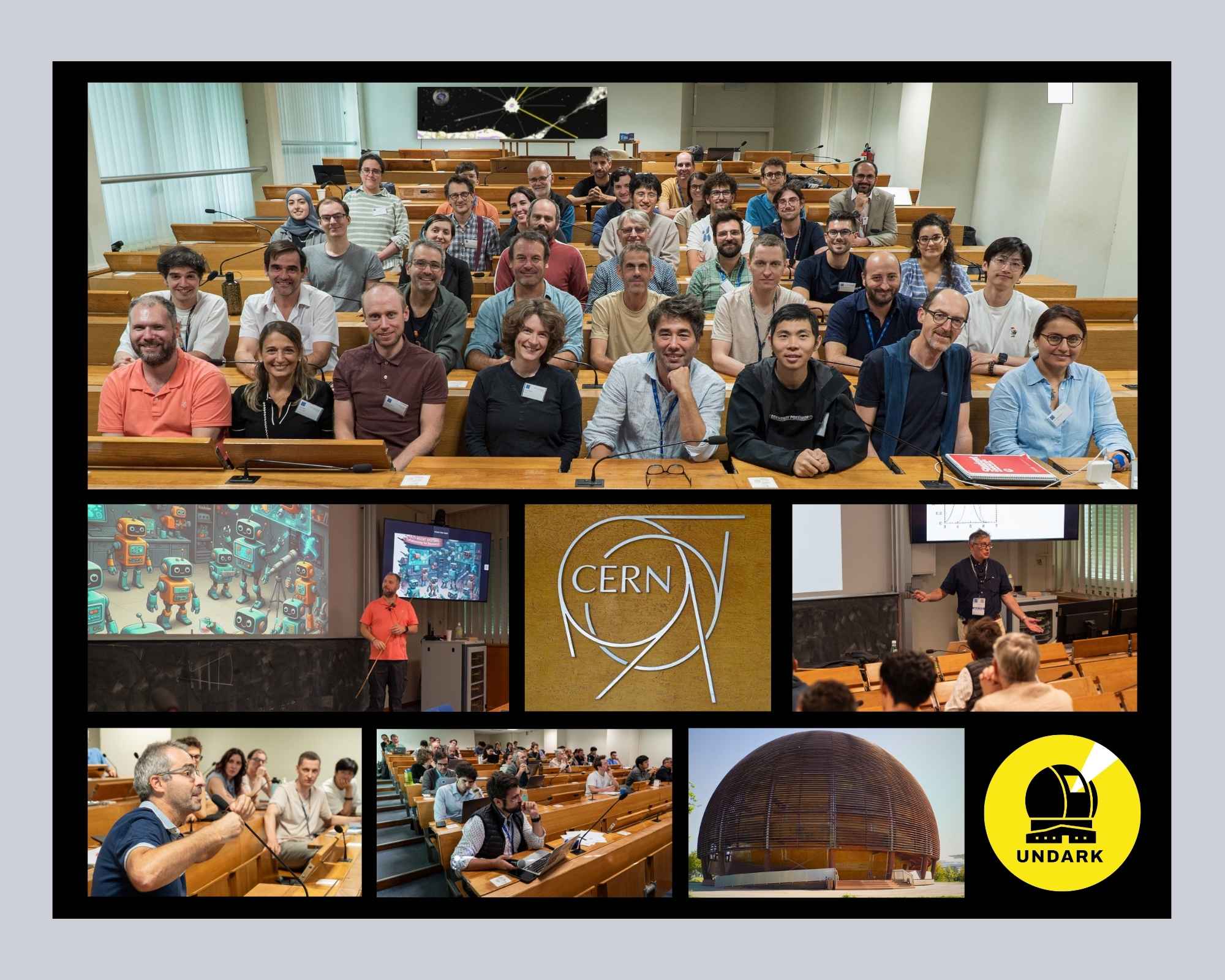
Participants and highlights from the scientific sessions at UNDARK 2026: Illuminating Cosmic Discord, CERN, Geneva.
Image and text: Raquel Conde Viera/ UNDARK–IAC
UNDARK Makes the Cover!
11 September 2026
Communication activity of the EU-funded UNDARK project (Horizon Europe – WIDERA).
The European project led by the Instituto de Astrofísica de Canarias (IAC) is featured on the cover of issue 327, the September 2026 edition of Astronomía magazine , with an extensive feature exploring the search for answers about the dark universe.
We’re on the cover! And for UNDARK, this is a wonderful opportunity to bring some of the most fascinating questions in science today beyond laboratories and observatories and closer to society.
Under the title “Shedding Light on the Dark Cosmos,” Astronomía dedicates its cover and an extensive eight-page feature to UNDARK – Unravelling the Dark Universe from the Canary Islands Observatories, the project coordinated by the Instituto de Astrofísica de Canarias (IAC), which brings together particle physics, cosmology and astrophysics to better understand the nature of dark matter and dark energy. The magazine itself presents the UNDARK feature as the main article of its September issue.
The article is built around an in-depth conversation with Jorge Martín Camalich , Principal Investigator of UNDARK, exploring one of the great unknown territories of contemporary physics: we know dark matter is there because of its gravitational effects, yet we still do not know its true nature.
The story is told through the perspective of Thomas Villa , a science and cultural journalist with an international career, who works between Italy and Spain and contributes to leading publications including Astronomy Magazine, Astronomía, Muy Interesante, Focus and Artribune. His work brings together science and culture, making complex subjects accessible to broad audiences without sacrificing scientific rigour. Villa also has extensive experience communicating astrophysics projects and major scientific infrastructures. On this occasion, his work finds in Astronomía an ideal platform for bringing UNDARK’s research closer to society.
From the Canary Islands to the Dark Universe
Throughout the feature, Villa explores some of the leading dark matter candidates and search strategies, from WIMPs and axions to ultralight dark matter, showing how the Canary Islands Observatories provide an exceptional environment in which to approach these questions from very different perspectives.
Instruments and experiments such as MAGIC, CTAO, ASTRI and QUIJOTE, together with studies of the structure and dynamics of galaxies, are among the research areas that UNDARK aims to connect with fundamental physics. The project also seeks to build bridges between scientific communities that have traditionally worked with different tools and languages.
As Martín Camalich explains in the interview, UNDARK aims to act as a kind of “translator between fields,” bringing together particle physicists, cosmologists, theorists and observational astrophysicists to examine the same fundamental questions from complementary perspectives.
Science Is Also About Learning to Live With What We Still Don’t Know
But the article goes beyond experiments and theories. It also addresses something deeply human: our relationship with the unknown.
Dark matter is a remarkable example of how science works. We have strong evidence for its existence, we build hypotheses, develop new instruments and search for new ways to observe it, but we still do not have the definitive answer.
The feature concludes precisely with this idea: doing science also means developing better questions, better instruments and stronger bridges between disciplines, gradually expanding the map of what we know.
Having this story now featured on the cover of Astronomía is an opportunity to bring UNDARK’s work, and the research being carried out from the Canary Islands, to new audiences.
Because the Universe still holds enormous mysteries, and at UNDARK we continue trying to shed light on them.
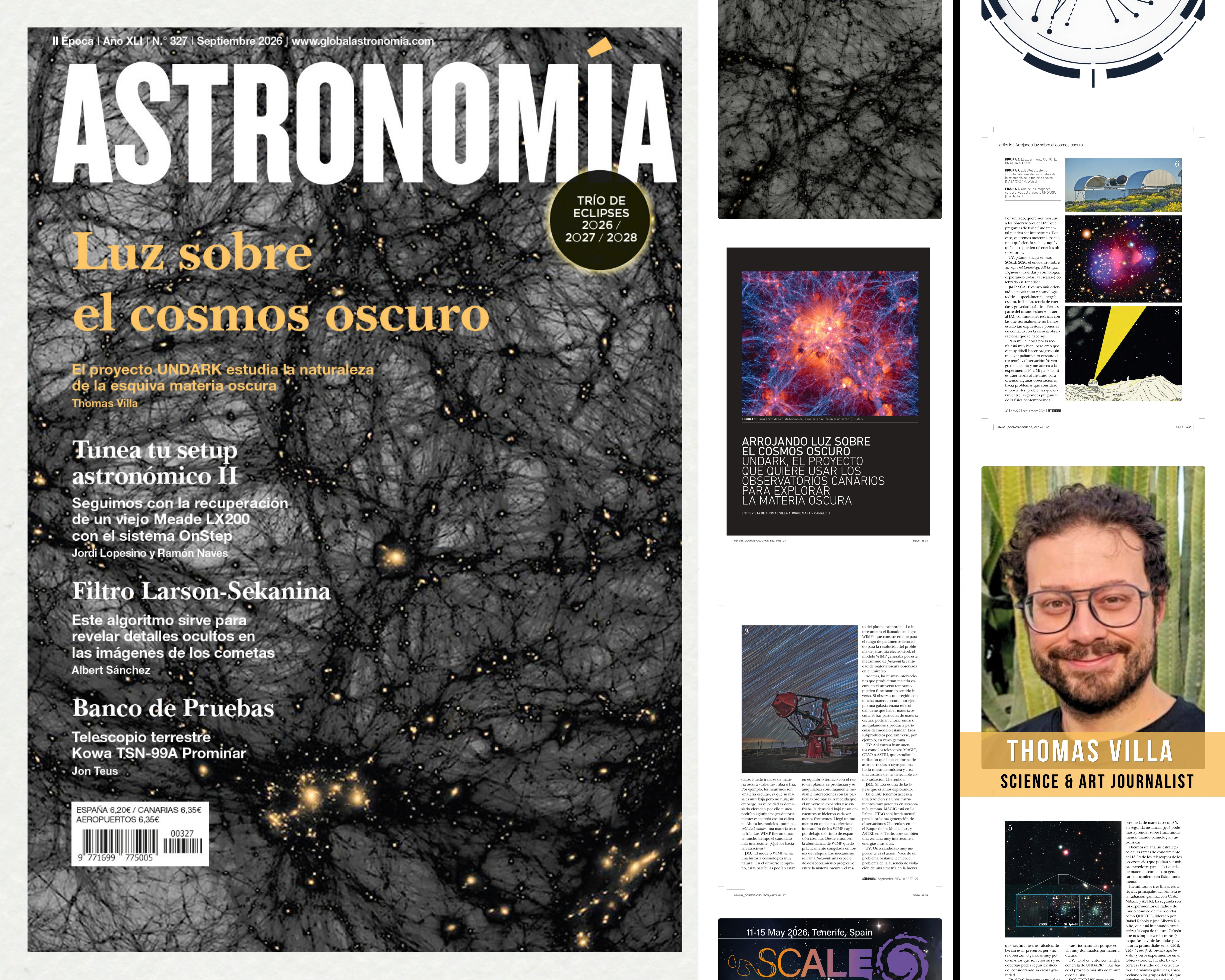
Cover of Astronomía magazine, September 2026, dedicated to UNDARK;
pages from the feature article and a photograph of science journalist Thomas Villa.
Image and text: Raquel Conde Viera / UNDARK–IAC
DALI Passes Preliminary Design Review and Advances the Search for Dark Matter
5 August 2026
Communication activity of the EU-funded UNDARK project (Horizon Europe – WIDERA).
The experiment, developed at the Instituto de Astrofísica de Canarias (IAC) and led by a researcher from the European UNDARK project network, has received the endorsement of an international review committee to build a next-generation detector for the direct search for high-frequency dark matter.
The DALI experiment , led by Javier de Miguel, has successfully passed its Preliminary Design Review (PDR), an international evaluation that certifies the scientific and technological maturity of the project. Following the review, an independent panel of international experts recommended moving forward to the next stage through the development of a more powerful and sensitive prototype, reinforcing DALI's potential to become a leading experiment in the search for high-frequency dark matter.
Developed within the scientific ecosystem of the Instituto de Astrofísica de Canarias (IAC), DALI represents a major step forward in the experimental search for one of the greatest mysteries of modern physics: the nature of dark matter.
A Major Milestone for the Experiment
Between 2 and 4 June 2026, an international panel of specialists assessed the project's scientific excellence, detector design, technical feasibility, programme planning, and its ability to achieve its scientific objectives. Passing a Preliminary Design Review is one of the most significant milestones in the development of a large scientific infrastructure, as it validates the experiment's conceptual design and authorizes its progression to the next phase of development.
The review committee identified DALI as one of the most promising projects for exploring high-frequency dark matter and recommended the construction of a new-generation detector with enhanced sensitivity and discovery potential.
Searching for the Invisible Component of the Universe
Astronomical observations indicate that approximately 85% of the matter in the Universe consists of an invisible substance known as dark matter, whose fundamental nature remains one of the greatest unsolved problems in physics. Although dark matter has never been directly detected, its existence is inferred from the gravitational effects it exerts on galaxies and galaxy clusters. To address this challenge, DALI is developing technologies capable of detecting two of the most compelling dark matter candidates: axions and dark photons.
The experiment's unique strength lies in its exploration of a largely uncharted high-frequency region, where the expected signals are extraordinarily weak and require exceptionally precise instrumentation. Detecting either of these particles would rank among the most significant discoveries in fundamental physics in recent decades.
Strengthening International Dark Matter Research
The successful completion of the PDR reinforces the IAC's role in international dark matter research and brings DALI closer to becoming one of the world's reference experiments for the direct detection of dark matter. The DALI experiment is led by Javier de Miguel, a researcher within the network of the European project UNDARK – Unravelling the Dark Universe from the Canary Islands Observatories , coordinated by Jorge Martín Camalich at the Instituto de Astrofísica de Canarias (IAC) and funded by the European Union through the Horizon Europe programme.
DALI is also supported by the "la Caixa" Foundation, the Spanish Ministry of Science, Innovation and Universities, the Spanish State Research Agency (AEI), the Severo Ochoa Programme for Technological Projects and Large Scientific Infrastructures (2020–2023), the Recovery, Transformation and Resilience Plan, and the European Regional Development Fund (ERDF/FEDER).
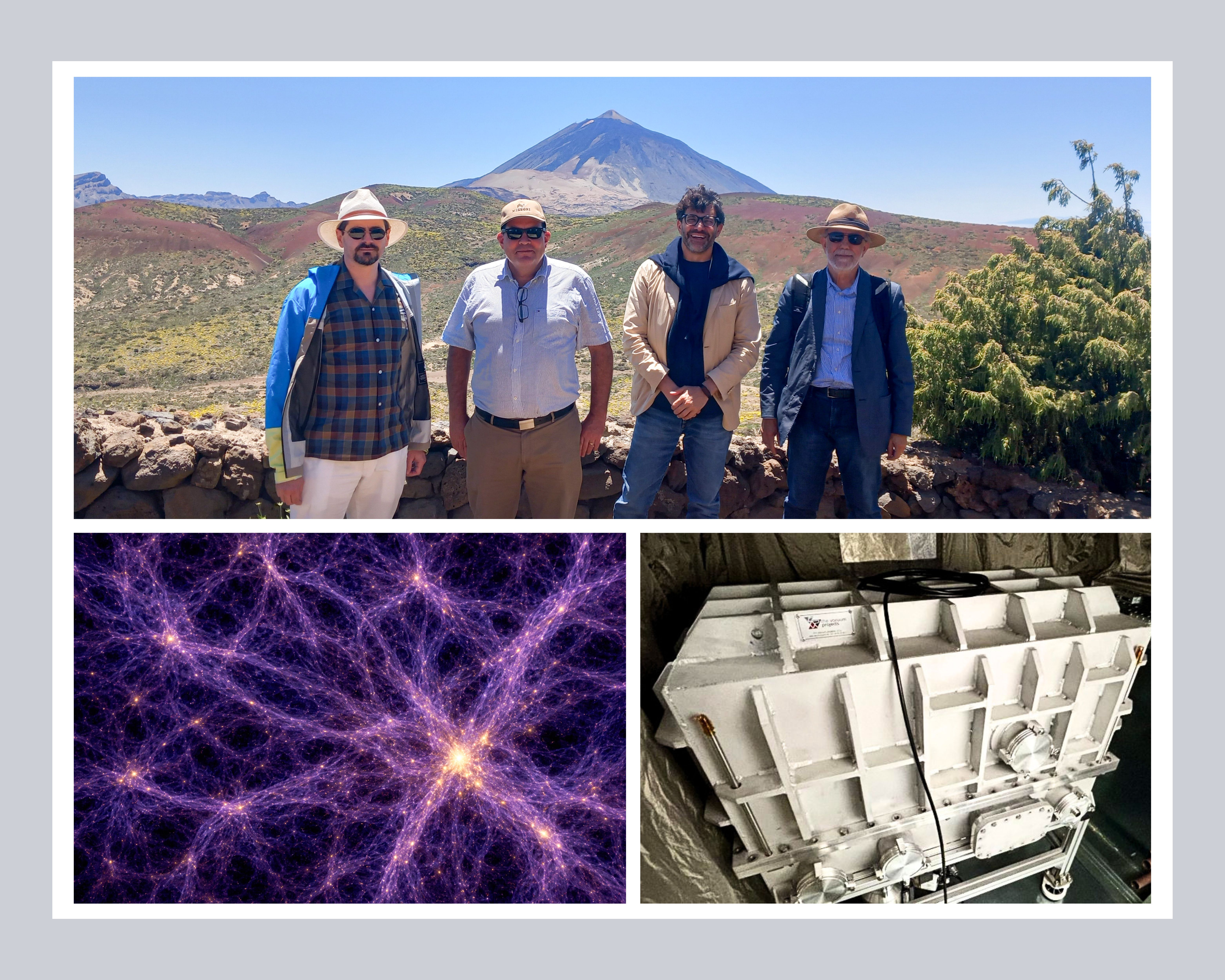
Top: Members of the international review committee that evaluated the Preliminary Design Review (PDR) of the DALI experiment. From left to right: Gray Rybka (University of Washington), Michael Tobar (University of Western Australia), Claudio Gatti (INFN Frascati), and Yannis Semertzidis (Brookhaven National Laboratory). Bottom left: Simulation illustrating the distribution of dark matter in the Universe. Bottom right: Prototype of the DALI detector developed at the Instituto de Astrofísica de Canarias (IAC).
Image and text: Raquel Conde Viera / UNDARK–IAC
Can Gamma Rays Reveal Dark Matter?
July 20, 2026
Communication activity of the EU-funded UNDARK project (Horizon Europe – WIDERA).
Although dark matter does not emit the light we can see, some models predict that it could produce gamma rays, the most energetic form of light in the Universe.
In this interview, Francesca Calore, Research Director at the Annecy Laboratory of Theoretical Physics (LAPTh-CNRS) , explains how scientists search for these elusive signals in the sky to get closer to solving one of the greatest mysteries of modern physics.
Every detected photon, every unidentified gamma-ray source, and every new observation help rule out hypotheses and narrow down the places where dark matter could be hiding.
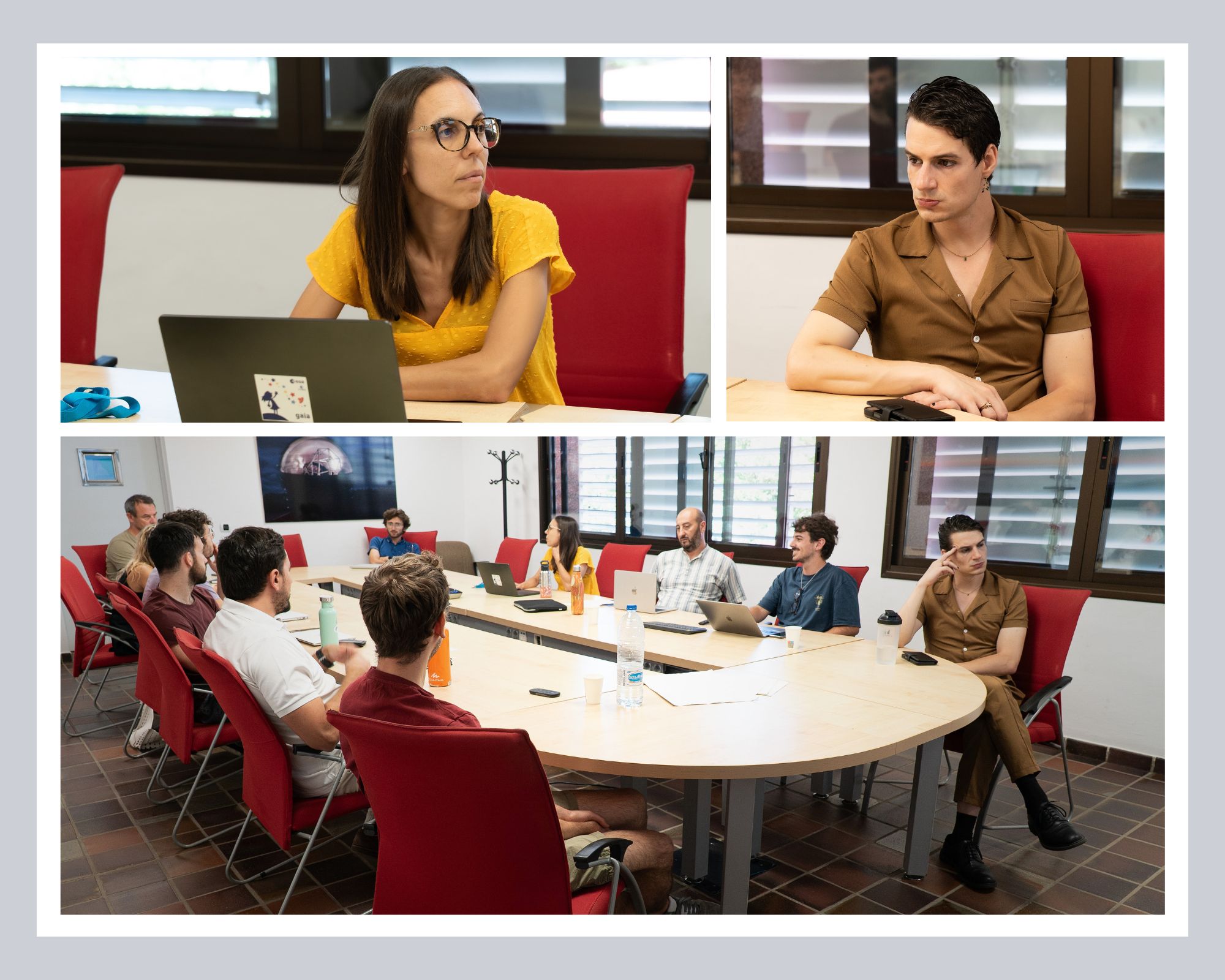
The UNDARK Mission with Francesca Calore, Julen Expósito, UNDARK coordinator Jorge Martín Camalich, and other researchers.
Her research uses gamma-ray observations to search for the possible signatures that dark matter particles would leave behind if they annihilated or decayed, bringing us one step closer to understanding what makes up the 85% of matter in the Universe.
This interview is part of UNDARK, the European research project coordinated by the Instituto de Astrofísica de Canarias (IAC) and funded by the European Commission through the Horizon Europe programme. UNDARK brings together leading international institutions and experts to uncover the nature of the dark Universe.
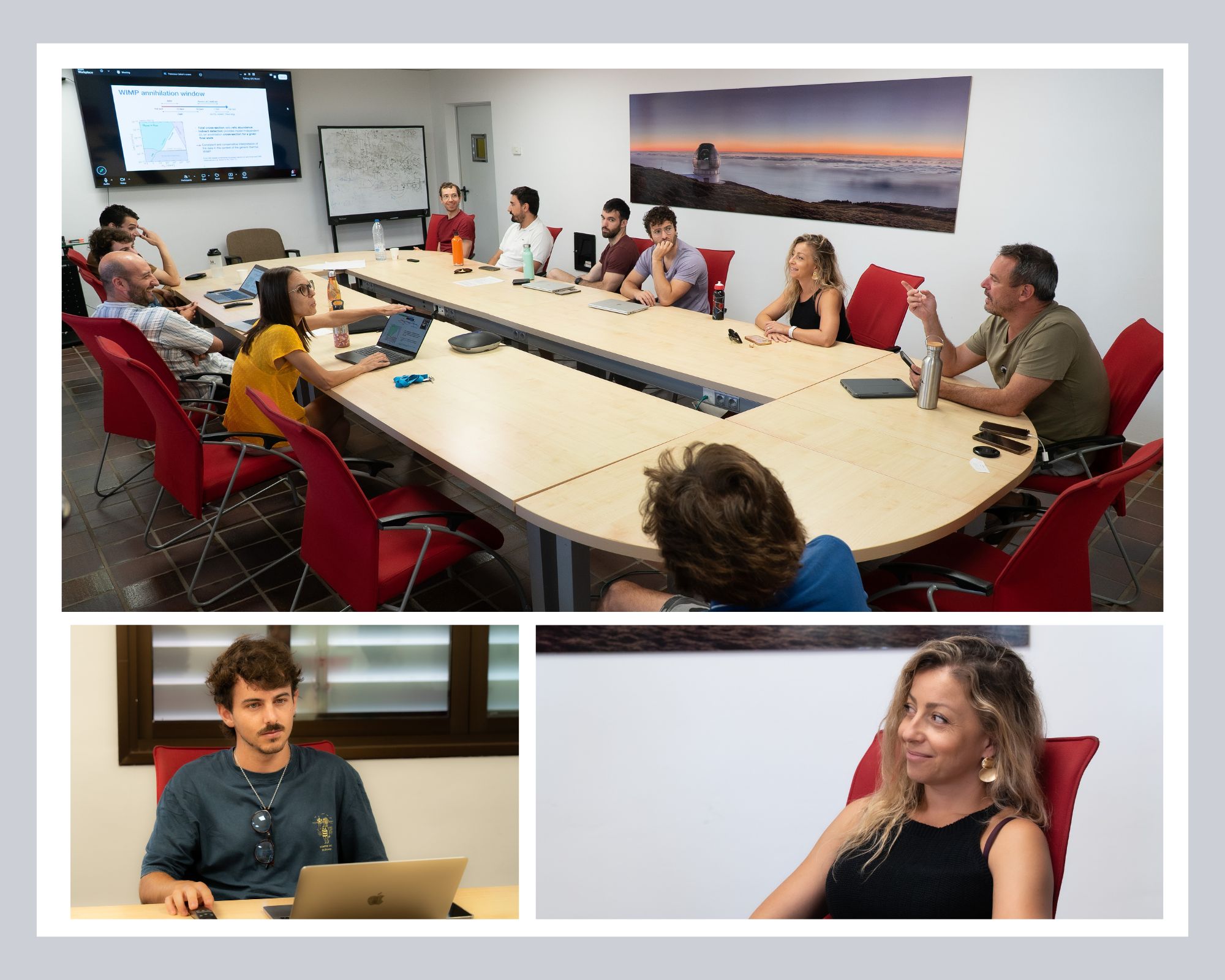
The UNDARK Mission meeting with Arianna Di Cintio, Fernando Valenciano, and other researchers.
Watch the full reel here: Could Gamma Rays Reveal Dark Matter?
Image and text: Raquel Conde Viera / UNDARK–IAC
Could a Black Hole Be Sleeping Inside a Star?
July 13, 2026
Communication activity of the EU-funded UNDARK project (Horizon Europe – WIDERA).
Surprisingly, the answer is yes, at least in theory.
During an UNDARK Mission at the Instituto de Astrofísica de Canarias (IAC) , Pascale Dario Serpico ( LAPTh–CNRS , France) presented one of the most fascinating ideas in modern cosmology: tiny primordial black holes, formed in the earliest moments of the Universe, could become trapped inside neutron stars and slowly consume them from within.
UNDARK Missions are scientific exchange visits in which researchers from one project partner visit another institution within the consortium. On this occasion, the LAPTh–CNRS team visited the IAC to strengthen collaboration and share their latest research on dark matter, primordial black holes, and the physics of the dark Universe.
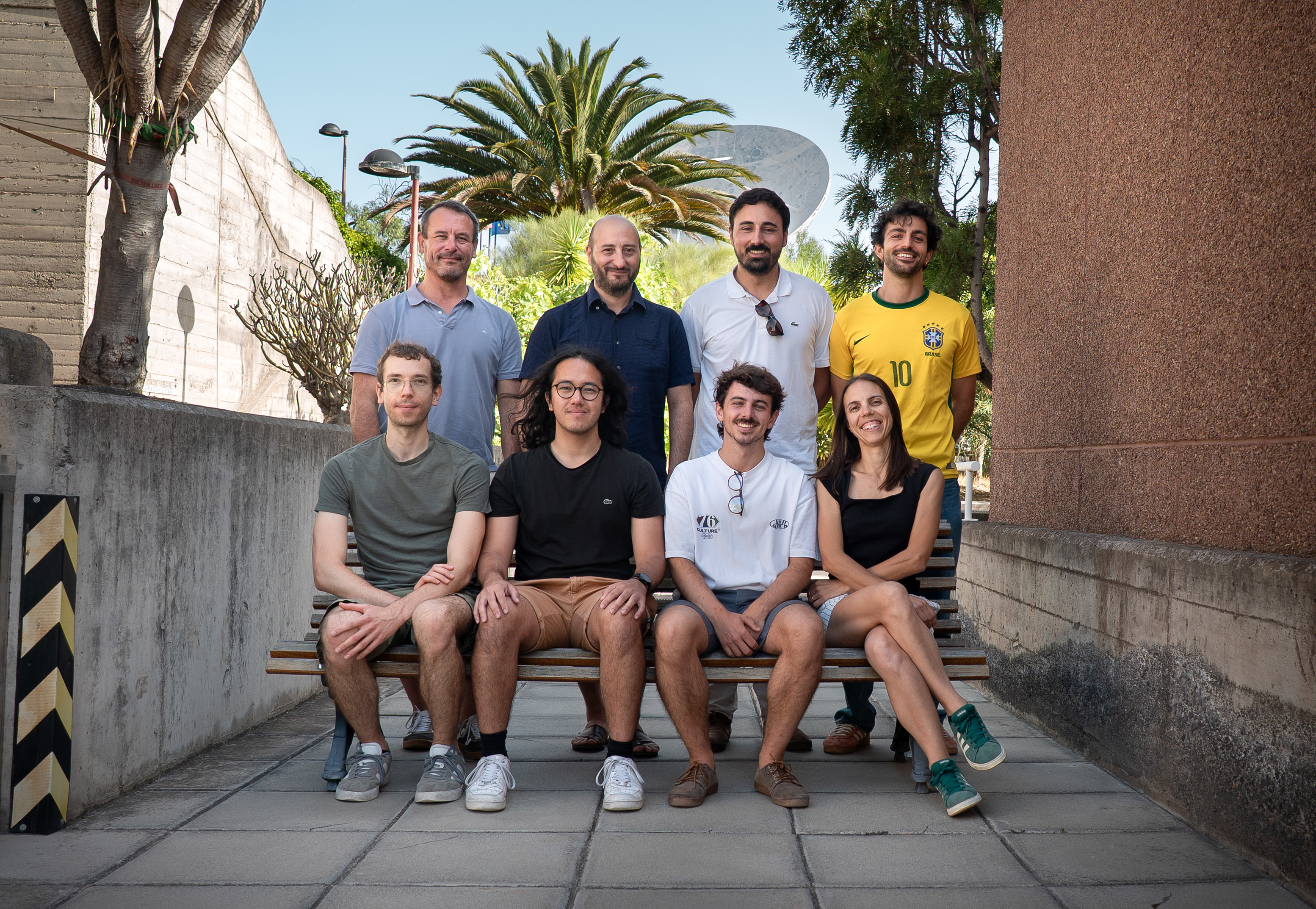
The UNDARK Mission, including Francesca Calore, Pascale Dario Serpico and Leo Lam Kong Seng, during their scientific visit to the Instituto de Astrofísica de Canarias (IAC).
Unlike conventional black holes, these objects would have formed shortly after the Big Bang. If they exist, they could make up part, or even all, of dark matter, one of the greatest mysteries in modern physics.
His research also shows that the gravity of a companion star—or even a planet—could increase the probability of capturing these tiny black holes through tidal effects.
One of the most striking results suggests that a primordial black hole could consume a star without emitting any electromagnetic signal, leading to a truly silent death. In other cases, the process could generate phenomena similar to a gamma-ray burst.
This research is part of UNDARK – Unravelling the Dark Universe from the Canary Islands Observatories, a project funded by the European Union that fosters international collaboration to understand the nature of dark matter and other major mysteries of the dark Universe.
Could primordial black holes help us solve the mystery of dark matter?
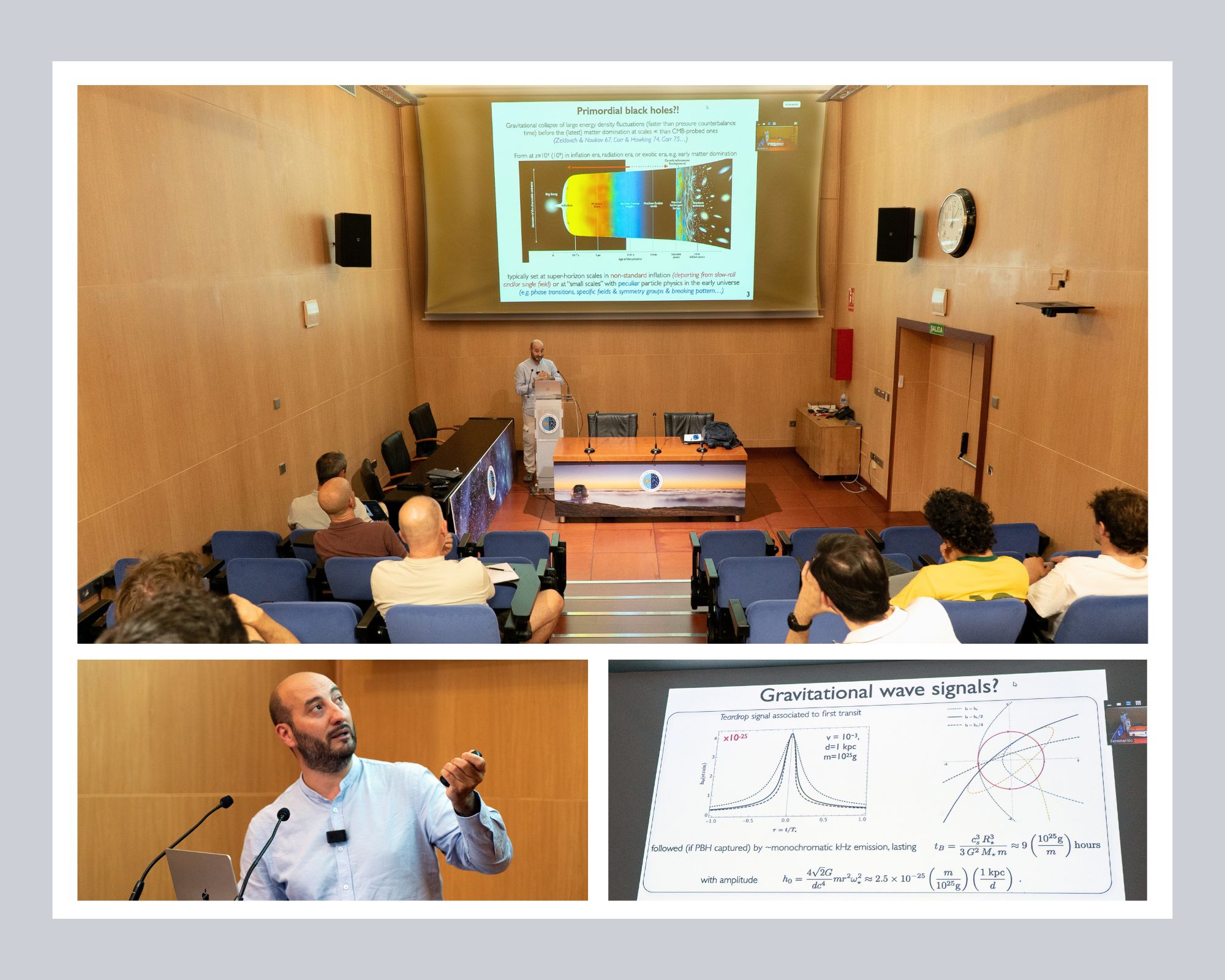
Pascale Dario Serpico during his seminar at the Instituto de Astrofísica de Canarias (IAC), presenting his research on primordial black holes and their capture by neutron stars.
Watch the full reel here: Could a Black Hole Be Hidden Inside a Star?
Image and text: Raquel Conde Viera / UNDARK–IAC
The 23rd MultiDark Meeting strengthens collaboration to unravel the mystery of dark matter
June 26, 2026
Communication activity of the EU-funded UNDARK project (Horizon Europe – WIDERA).
For three days, the Instituto de Astrofísica de Canarias (IAC) became a meeting point for Spain's leading dark matter researchers as it hosted the 23rd MultiDark Meeting, bringing together experts in particle physics, astrophysics and cosmology to discuss the latest advances in one of the greatest challenges in modern science: understanding the nature of dark matter.
The meeting was organised by the IAC's cross-disciplinary research line "Dark Matter: Observations, Models and Detection" and received partial support from the DarkMaps project, funded by the Ministry of Science, Innovation and Universities (MICINN). Hosted by the Instituto de Astrofísica de Canarias (IAC), the meeting was coordinated by Jorge Martín Camalich, IAC researcher and Principal Investigator of UNDARK – Unravelling the Dark Universe from the Canary Islands Observatories, a project funded by the European Union.
Although the Standard Models of particle physics and cosmology successfully describe the evolution of the Universe with remarkable precision, the nature of the invisible matter that makes up around 85% of all cosmic matter remains unknown. Solving this mystery requires a multidisciplinary approach that combines astronomical observations, particle physics, cosmology and advanced data analysis.
The MultiDark network has spent more than fifteen years bringing together theoretical and experimental groups from fifteen Spanish universities and research centres to address this challenge from complementary perspectives. The 23rd MultiDark Meeting continued this collaborative effort by providing a forum for researchers to exchange ideas, discuss new results and establish future collaborations.
Throughout the three-day programme, scientists presented the latest developments across five major research areas: direct dark matter detection, indirect searches through gamma rays and cosmic rays, neutrino astronomy, particle physics and collider experiments, and cosmology.
Several contributions explored new strategies to detect dark matter through gamma-ray observations, including studies of dwarf galaxies, stellar streams, dark matter subhaloes and all-sky analyses using instruments such as Fermi-LAT and the future Cherenkov Telescope Array Observatory (CTAO). Other presentations focused on light dark matter candidates—including axions, axion-like particles and dark photons—and the potential of future space- and Moon-based radio observatories to open entirely new observational windows.
Neutrino astronomy also played a central role. Researchers presented recent results from the KM3NeT neutrino telescope and discussed how neutrinos and cosmic rays can probe dark matter scenarios extending beyond the traditional WIMP paradigm.
In particle physics, speakers presented innovative approaches to searching for dark matter at the Large Hadron Collider (LHC), including machine-learning techniques, supersymmetric models and new theoretical frameworks connecting dark matter with the origin of neutrino masses. Direct-detection experiments also highlighted new strategies to search for light dark matter particles while addressing one of the field's major future challenges: the so-called neutrino fog, an unavoidable background that will ultimately limit the sensitivity of next-generation detectors.
The meeting also showcased how cosmological observations continue to provide powerful constraints on dark matter. Presentations examined dwarf galaxies, stellar streams, galactic halos, cosmological simulations and the large-scale distribution of galaxies to better reconstruct the invisible architecture of the Universe. Other talks explored the exciting possibility of detecting ultralight dark matter through gravitational-wave observatories such as LIGO–Virgo–KAGRA.
The scientific programme concluded with the public lecture "Gamma Rays to Unravel the Mystery of Dark Matter in the Universe", delivered by Miguel Ángel Sánchez-Conde, who introduced a broad audience to some of the most energetic phenomena in the cosmos and explained how gamma rays can become a key tool in the search for dark matter.
Beyond presenting new scientific results, the 23rd MultiDark Meeting reinforced the importance of collaboration across disciplines and institutions. By hosting the meeting and contributing to its scientific coordination through UNDARK – Unravelling the Dark Universe from the Canary Islands Observatories, a project funded by the European Union, the Instituto de Astrofísica de Canarias (IAC) continues to strengthen international cooperation in dark Universe research.
The meeting also highlighted the central role of Jorge Martín Camalich and UNDARK – Unravelling the Dark Universe from the Canary Islands Observatories, a project funded by the European Union, in fostering scientific exchange, creating new collaborations and connecting researchers working across astronomy, cosmology and particle physics. These synergies are essential for accelerating progress towards one of the most fundamental unanswered questions in physics: What is dark matter?
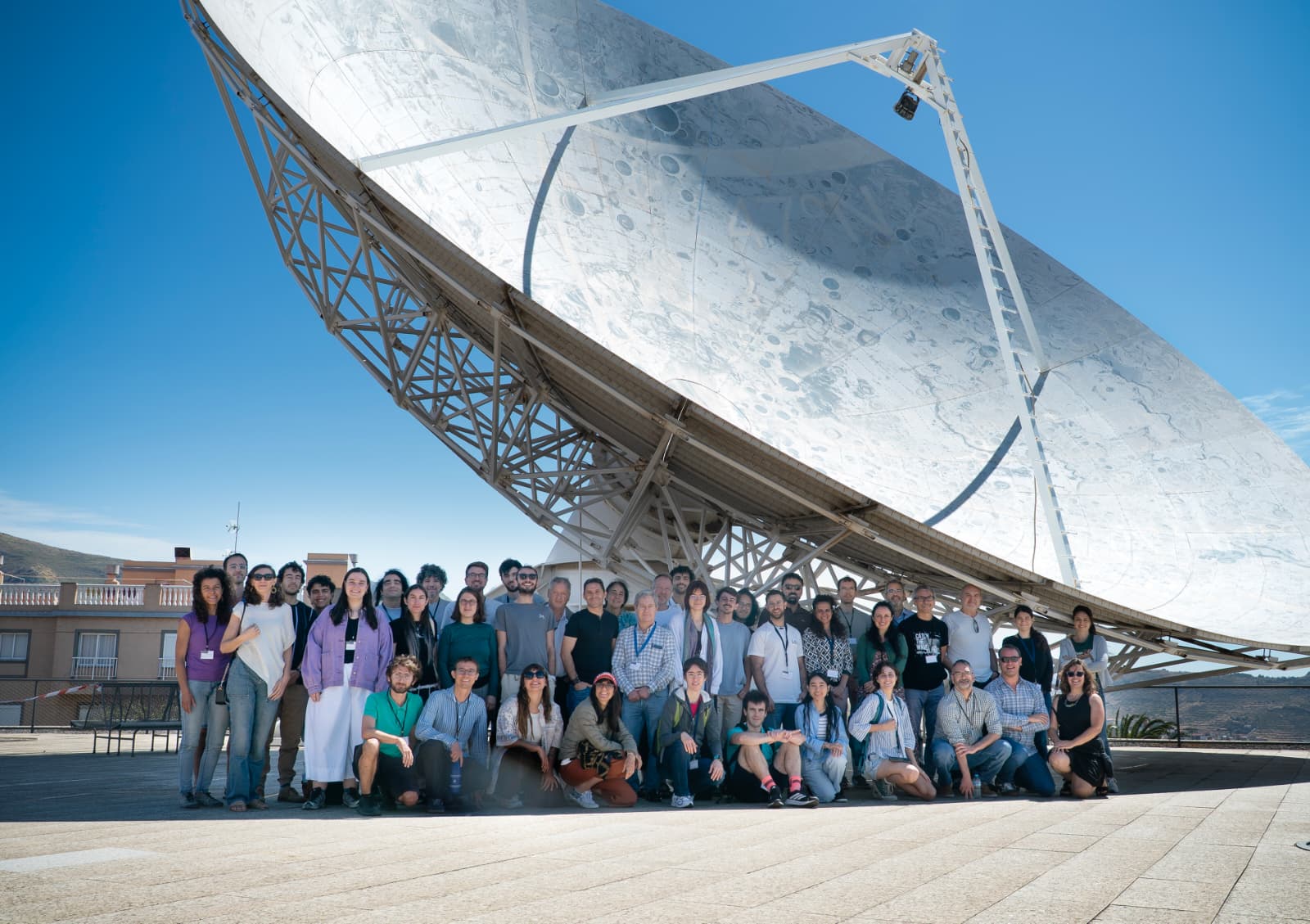
Researchers participating in the 23rd MultiDark Meeting gathered beneath the iconic radio telescope at the Museo de la Ciencia y el Cosmos, Tenerife.
Image and text: Raquel Conde Viera / UNDARK–IAC
Tenerife hosts the first Cosmos Award in Spain, bringing together science, literature and critical thinking
June 24, 2026
Communication activity of the EU-funded UNDARK project (Horizon Europe – WIDERA).
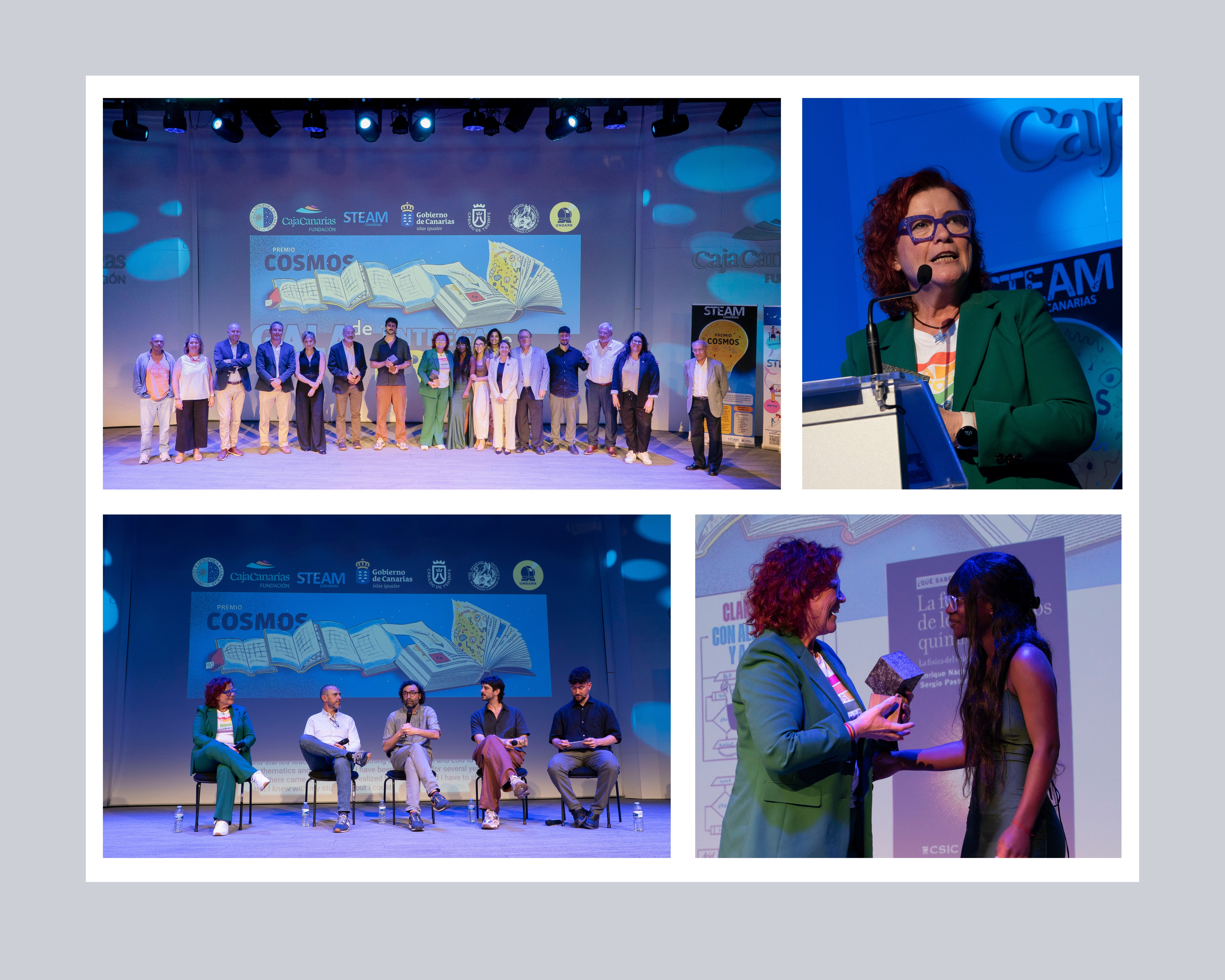
The 2026 Cosmos Award celebrated its first edition in Spain on 16 June at the Fundación CajaCanarias Auditorium in Santa Cruz de Tenerife. The international initiative promotes scientific culture, reading and critical thinking among secondary school students by encouraging them to read, discuss and evaluate some of the most outstanding popular science books published in Spanish.
The event was sponsored by Fundación CajaCanarias, with the support of the STEAM Area of the Department of Education, Vocational Training, Physical Activity and Sports of the Government of the Canary Islands, and the collaboration of the Real Academia Canaria de Ciencias (RACC).
The Spanish edition of the Cosmos Award is coordinated by Jorge Martín Camalich and Claudia Guerrero from the Instituto de Astrofísica de Canarias (IAC) through UNDARK – Unravelling the Dark Universe from the Canary Islands Observatories, a project funded by the European Union. Through UNDARK, the IAC extends its mission beyond frontier astrophysics research by promoting scientific outreach, scientific literacy and critical thinking among younger generations, strengthening the connection between science and society.
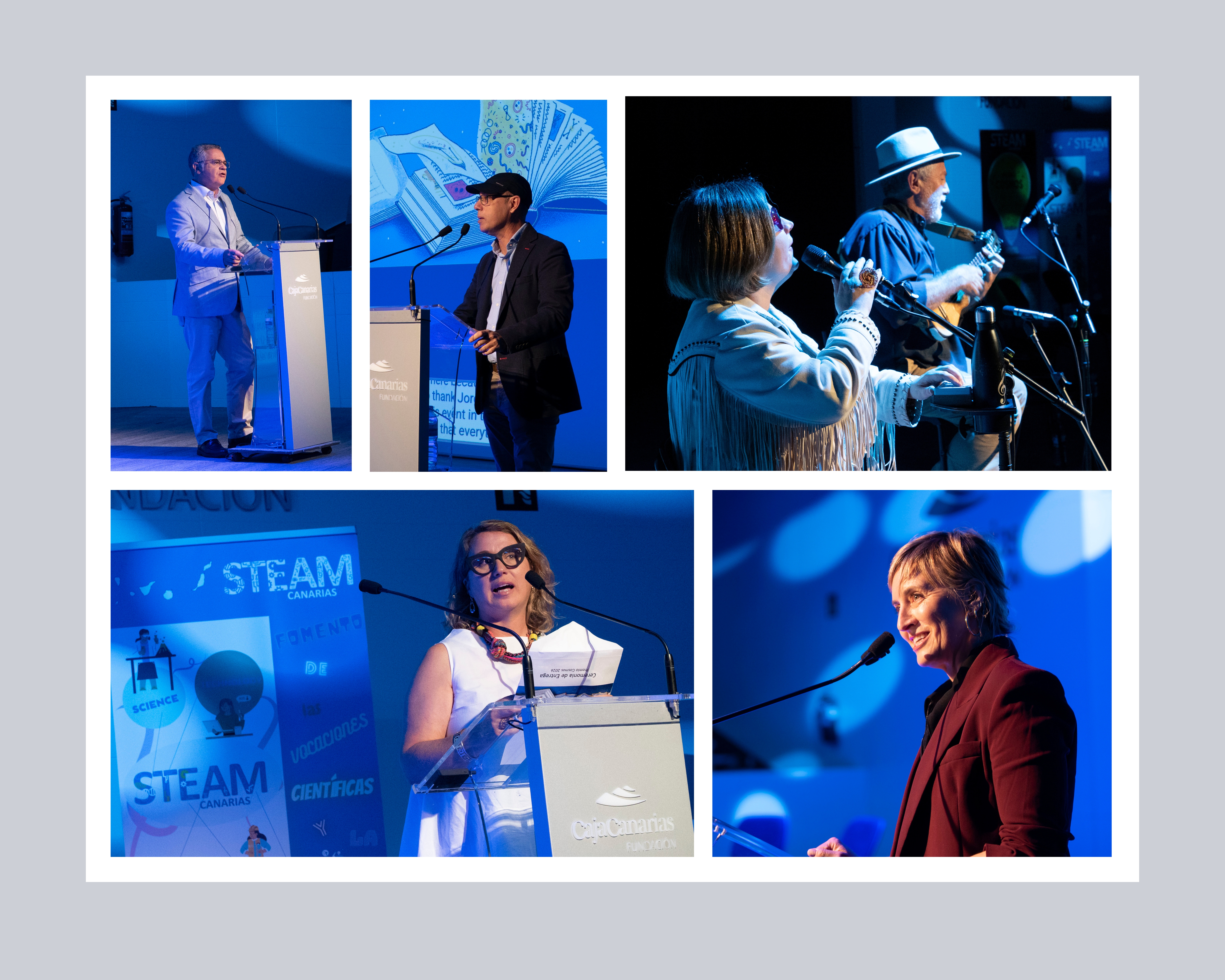
José Manuel Cabrera Delgado, Arcadio del Castillo, Montse Acosta, Eva Villaver, Fabiola Socas and Domingo Rodríguez "El Colorao" during the opening of the Cosmos Awards ceremony.
Originally launched in Italy and later expanded to France and the Netherlands, the Cosmos Award continues to grow internationally, with the Canary Islands becoming the first Spanish host of this prestigious initiative.
Throughout the academic year, hundreds of students became active members of the judging process, reading, analysing and debating the finalist books before selecting the winner of the Cosmos Students Award. Their participation transforms the award into a unique educational experience that places young readers at the centre of scientific culture while encouraging evidence-based reasoning and informed discussion.
The ceremony featured two public panel discussions bringing together leading scientists and science communicators. What Are We Made Of? Identity, Life and the Universe explored the origins of the chemical elements, genetics, evolution and the history of life on Earth. Critical Thinking Against Misinformation: How Does Science Know What It Knows? focused on scientific evidence, mathematics, algorithms and the role of critical thinking in an age increasingly shaped by misinformation and information overload.
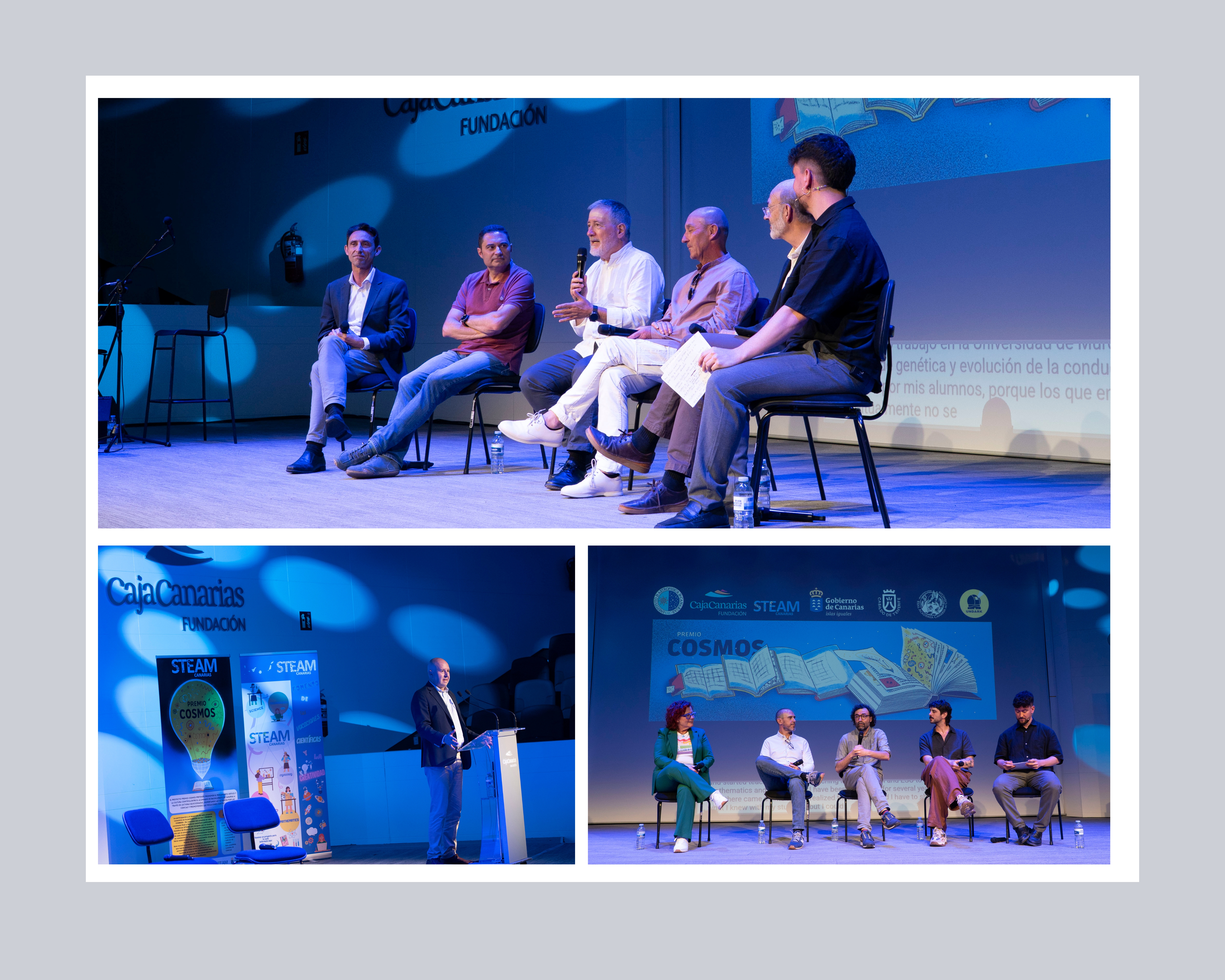
Round-table discussions on science, critical thinking and science communication, together with representatives of Fundación CajaCanarias, one of the main supporters of the 2026 Cosmos Award.
During three inspiring days in Tenerife, mathematician and science communicator Clara Grima took part in a series of activities that highlighted the power of science communication to bring mathematics closer to society. Her visit combined media outreach, scientific engagement and education, culminating in the Cosmos Prize 2026, where her book Con algoritmos y a lo loco (Algorithms Gone Wild) was chosen by hundreds of students as the year's best popular science book.
Music also formed part of the celebration, with performances by Domingo Rodríguez "El Colorao" and Fabiola Socas, highlighting the close relationship between science and culture.
This year's awards recognised outstanding contributions to science communication: • Cosmos Students Award: Con algoritmos y a lo loco, by Clara Grima. • Cosmos Award (Scientific Committee): La vida al borde del abismo, by José T. López Gómez. • Special Recognition (ex aequo): Las células errantes, by Lise Barnéoud.
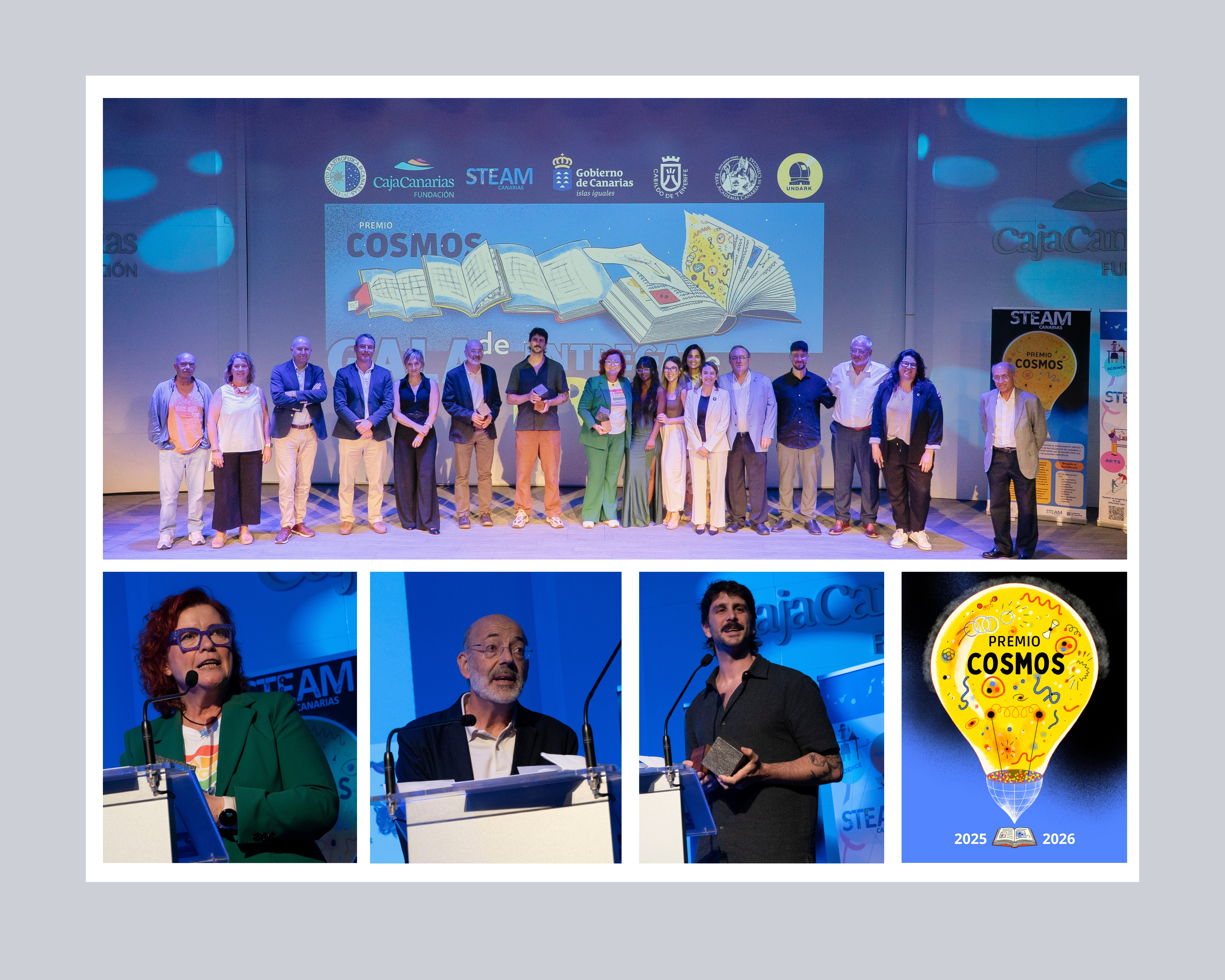
Award winners, organisers and institutional representatives at the 2026 Cosmos Awards ceremony.
One of the highlights of the programme was the participation of mathematician and science communicator Clara Grima, whose book was selected by hundreds of students as the winner of the Cosmos Students Award. During her visit to Tenerife, she also delivered a lecture at the Instituto de Astrofísica de Canarias (IAC), where she reflected on mathematics, education and the importance of science communication in overcoming stereotypes that often discourage children from engaging with mathematics from an early age.
By bringing together researchers, educators, authors, institutions and young readers, the Cosmos Award demonstrates how collaboration between science, education and culture can inspire curiosity, strengthen critical thinking and encourage the next generation to engage with scientific knowledge. Through initiatives such as this, UNDARK reinforces its commitment to bringing science closer to society and promoting scientific literacy across Europe.
Image and text: Raquel Conde Viera / UNDARK–IAC
Clara Grima Mathematics from the Radio Studio to the Instituto Astrofísico de Canarias and wins the Cosmos Prize 2026
June 23, 2026
Communication activity of the EU-funded UNDARK project (Horizon Europe – WIDERA).
During three inspiring days in Tenerife, mathematician and science communicator Clara Grima took part in a series of activities that highlighted the power of science communication to bring mathematics closer to society. Her visit combined media outreach, scientific engagement and education, culminating in the Cosmos Prize 2026, where her book Con algoritmos y a lo loco (Algorithms Gone Wild) was chosen by hundreds of students as the year's best popular science book.
Mathematics Begins Before Opening a Book
The visit started at the studios of Radio Canaria, where Clara Grima was interviewed for the programme Soñando Estrellas, hosted by Verónica Martín, Head of Communication at the Instituto de Astrofísica de Canarias (IAC). During the interview, she reflected on one of the greatest challenges in mathematics education: the prejudices that society passes on to children long before they have the opportunity to discover mathematics for themselves. "Most children already believe they are bad at mathematics before they even begin learning it," Grima explained, arguing that society must change its perception of a discipline that forms one of the fundamental pillars of critical thinking and technological development.

Clara Grima on "Soñando Estrellas", Radio Canaria.
A Talk at the IAC to Discover the Algorithms That Shape Our World
June 27, 2026
Communication activity of the EU-funded UNDARK project (Horizon Europe – WIDERA).
Grima then visited the Instituto de Astrofísica de Canarias, where she delivered the internal lecture "Con algoritmos y a lo loco" to researchers, engineers and technical staff. Rather than presenting algorithms simply as computing tools, the mathematician offered a fascinating historical journey through some of the ideas that have transformed the way we understand the world, from the pioneering work of Al-Khwarizmi to today's artificial intelligence. Her lecture demonstrated how algorithms are present in fields as diverse as navigation, space exploration, cinema, cryptography, artificial intelligence and social media, showing that they are deeply embedded in our everyday lives. Grima also highlighted the essential contributions made by many women mathematicians throughout history, whose achievements have often remained invisible, while emphasizing their role in shaping scientific and technological progress. With the humour, clarity and enthusiasm that define her outreach work, she showed that mathematics is far more than a collection of formulas: it is a way of thinking that allows us to solve problems, understand reality and build much of the technology we use every day.
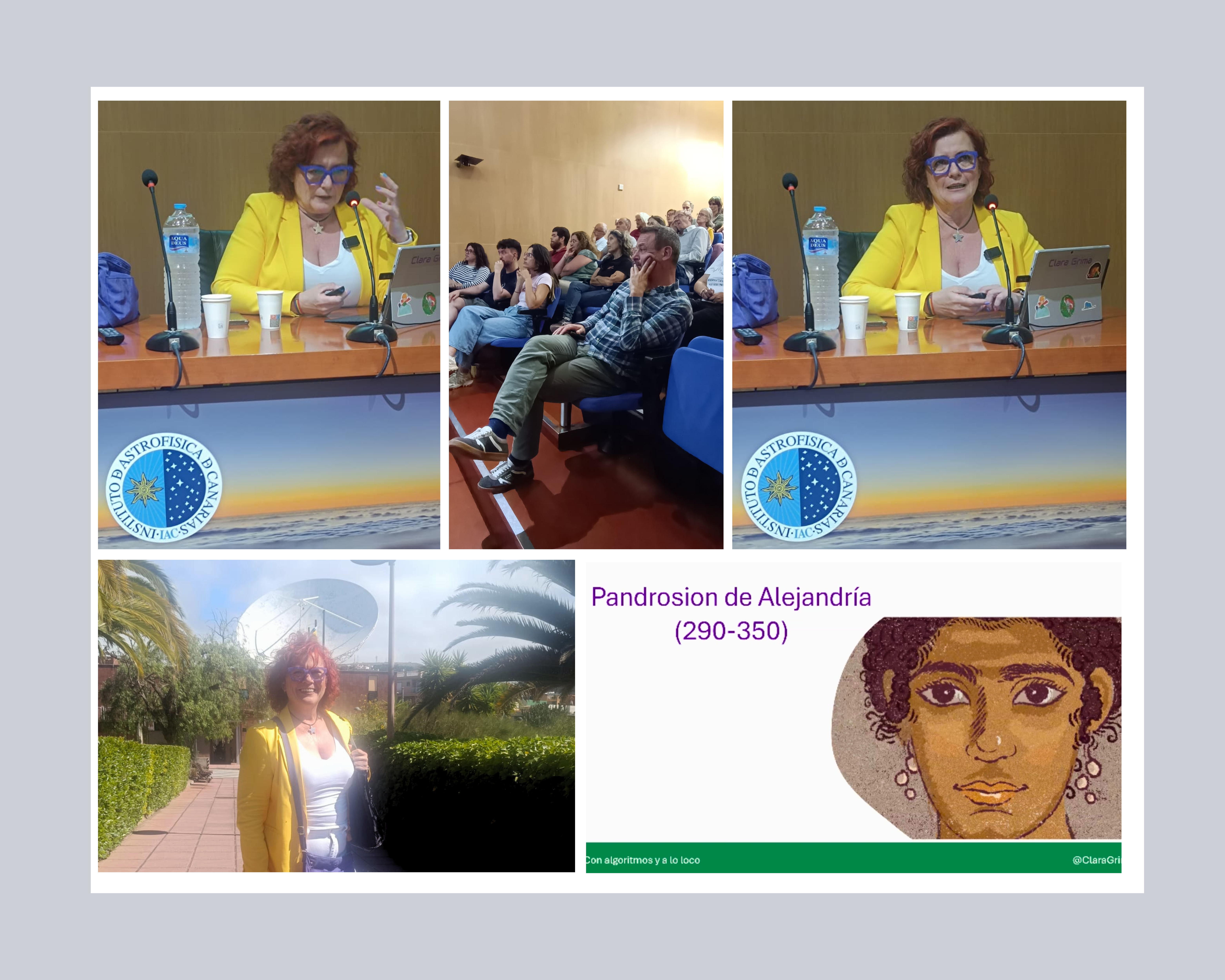
Clara Grima visiting the Instituto de Astrofísica de Canarias during her talk.
Image and text: Raquel Conde Viera / UNDARK–IAC
Recognition from Those Who Matter Most: The Students
Recognition from Those Who Matter Most: The Students
The visit concluded with the Cosmos Prize 2026 ceremony, where Con algoritmos y a lo loco was announced as the winning book following months of reading, discussion and evaluation by students participating in this international science outreach initiative. The award represents a recognition of the mission that has guided Clara Grima throughout her career: demonstrating that mathematics is accessible, useful and fascinating when communicated with curiosity, scientific rigour and a sense of humour. Her visit to Tenerife left the same message in every setting she visited—from the radio studio to the Instituto de Astrofísica de Canarias and finally the Cosmos Prize ceremony: mathematics is not a barrier, but a powerful tool for understanding the world and addressing the major scientific challenges of today and tomorrow.
The final decision of the Cosmos Prize 2026 will be announced soon during the official awards gala.
Clara Grima during the Cosmos Awards ceremony.
The Scientific Committee of the Cosmos Prize holds the deliberation for the 2026 edition in Madrid
May 27, 2026
Communication activity of the EU-funded UNDARK project (Horizon Europe – WIDERA).
The Instituto de Astrofísica de Canarias (IAC), through the UNDARK project, Unravelling the Dark Universe from the Canary Islands Observatories, funded by European Union, together with the Cabildo de Tenerife, the Government of the Canary Islands, the STEAM area of the Cabildo de Tenerife and Fundación CajaCanarias, promotes this initiative committed to scientific and cultural outreach, bringing science closer to society through education, literature and critical thinking.
In this context, the Royal Academy of Exact, Physical and Natural Sciences of Spain hosted on Monday, May 25, the meeting of the Scientific Committee of the Cosmos Prize 2026, an event in which specialists and representatives from the scientific and cultural fields carried out the evaluation of the finalist works for this edition.
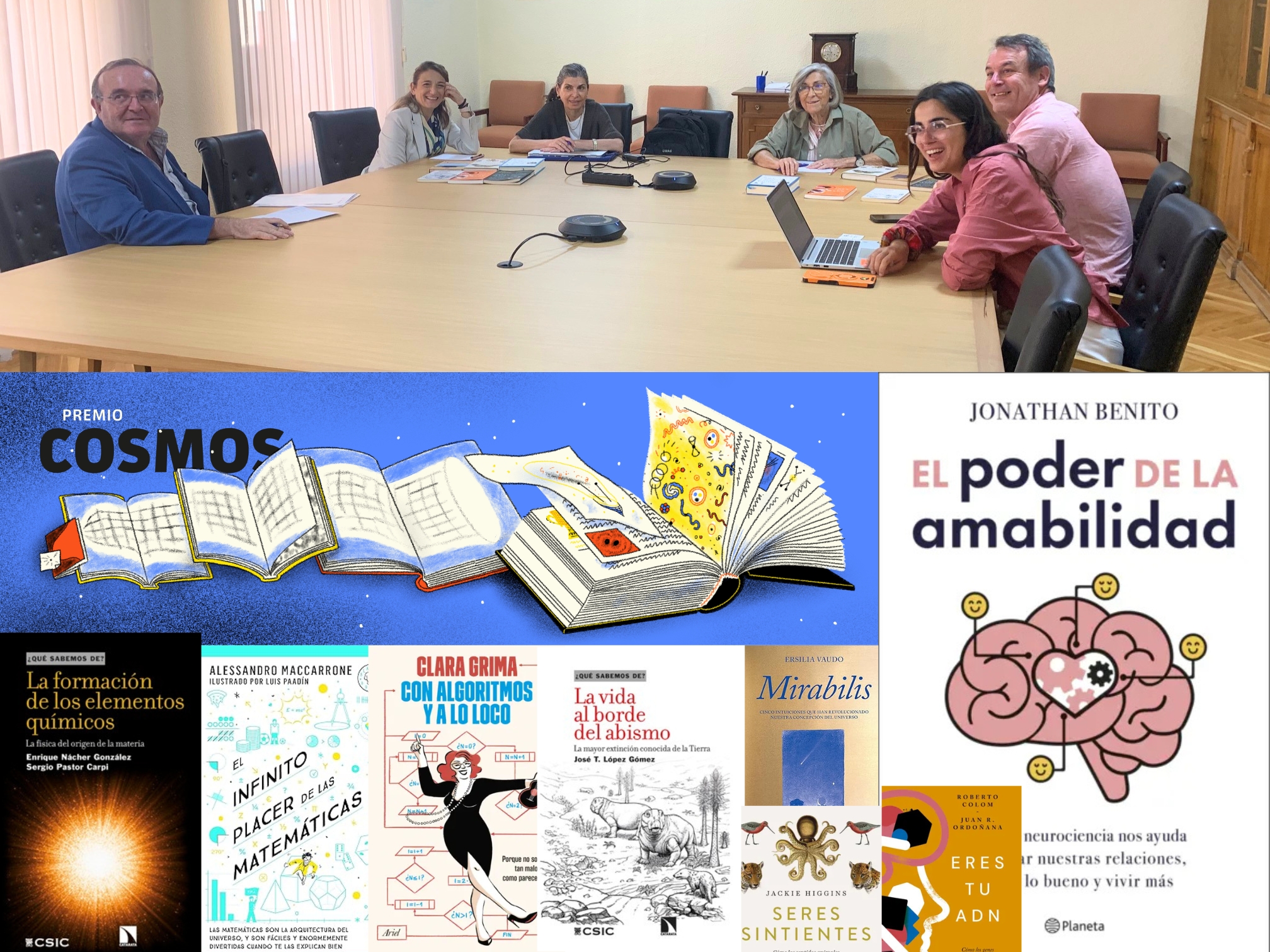
Members of the Scientific Evaluation Committee and books participating in the deliberation of the Cosmos Prize 2026.
During the session, held at the Academy’s headquarters, the committee analyzed and discussed the selected publications, all focused on science communication and contemporary knowledge across different disciplines ranging from mathematics and biology to astronomy, genetics and the exploration of life.
Among the works evaluated by the scientific jury were titles such as Mirabilis, by Ersilia Vaudo; Seres sintientes, by Jackie Higgins; La vida al borde del abismo; Los células errantes; Eres tu ADN and El infinito placer de las matemáticas, forming a diverse selection that reflects the richness and interdisciplinarity of contemporary science communication.
As part of the Scientific Evaluation Committee, those present included Juan Antonio Belmonte, researcher at the Instituto de Astrofísica de Canarias (IAC); Ana Crespo, president of the Royal Academy of Exact, Physical and Natural Sciences of Spain; Licia Verde, cosmologist and astrophysicist at the Institut de Ciències del Cosmos of the University of Barcelona; and Jorge Martín Camalich and Claudia Guerrero, representatives of the UNDARK project — Unravelling the Dark Universe from the Canary Islands Observatories — of the Instituto de Astrofísica de Canarias.
The deliberation brought together members of the scientific committee, institutional representatives, and participants linked to the Cosmos Prize in a day marked by the exchange of ideas and the commitment to promoting scientific culture through literature.
The Cosmos Prize continues to consolidate itself as an initiative that connects science, society, and critical thinking, bringing some of the most fascinating questions of contemporary knowledge closer to the general public through science communication works of great cultural and educational impact.
The final decision of the Cosmos Prize 2026 will be announced soon during the official awards gala.
Image and text: Raquel Conde Viera / UNDARK–IAC
The Student Committee of the Cosmos Prize selects the winning book during a day dedicated to science communication
May 21, 2026
Communication activity of the EU-funded UNDARK project (Horizon Europe – WIDERA).
From UNDARK — Unravelling the Dark Universe from the Canary Islands Observatories — at the Instituto de Astrofísica de Canarias (IAC), the Student Committee of the Cosmos Prize has selected the winning science book of this year’s edition. Thanks to the collaboration of the CajaCanarias Foundation and the support of the Directorate General for Educational Planning, Inclusion and Innovation of the Regional Ministry of Education, Vocational Training, Physical Activity and Sports of the Government of the Canary Islands, the participating students chose the work that inspired them the most for its ability to bring science and knowledge closer to younger generations.
The Cosmos Prize is an initiative that brings together science, literature, critical thinking and science communication through the active participation of Canary Islands students, especially those from disadvantaged backgrounds, through the reading and discussion of outstanding popular science works.
The students’ decision took place during an event held last Tuesday, March 19, at the CajaCanarias Cultural Space in Santa Cruz de Tenerife. The meeting highlighted the role of young people as active agents of science communication and the power of reading to spark curiosity, critical thinking and creativity. During the months leading up to the event, students explored the nominated books for the Cosmos Prize 2026 from scientific, audiovisual and communication perspectives, developing presentations, videos and debates around the selected works.
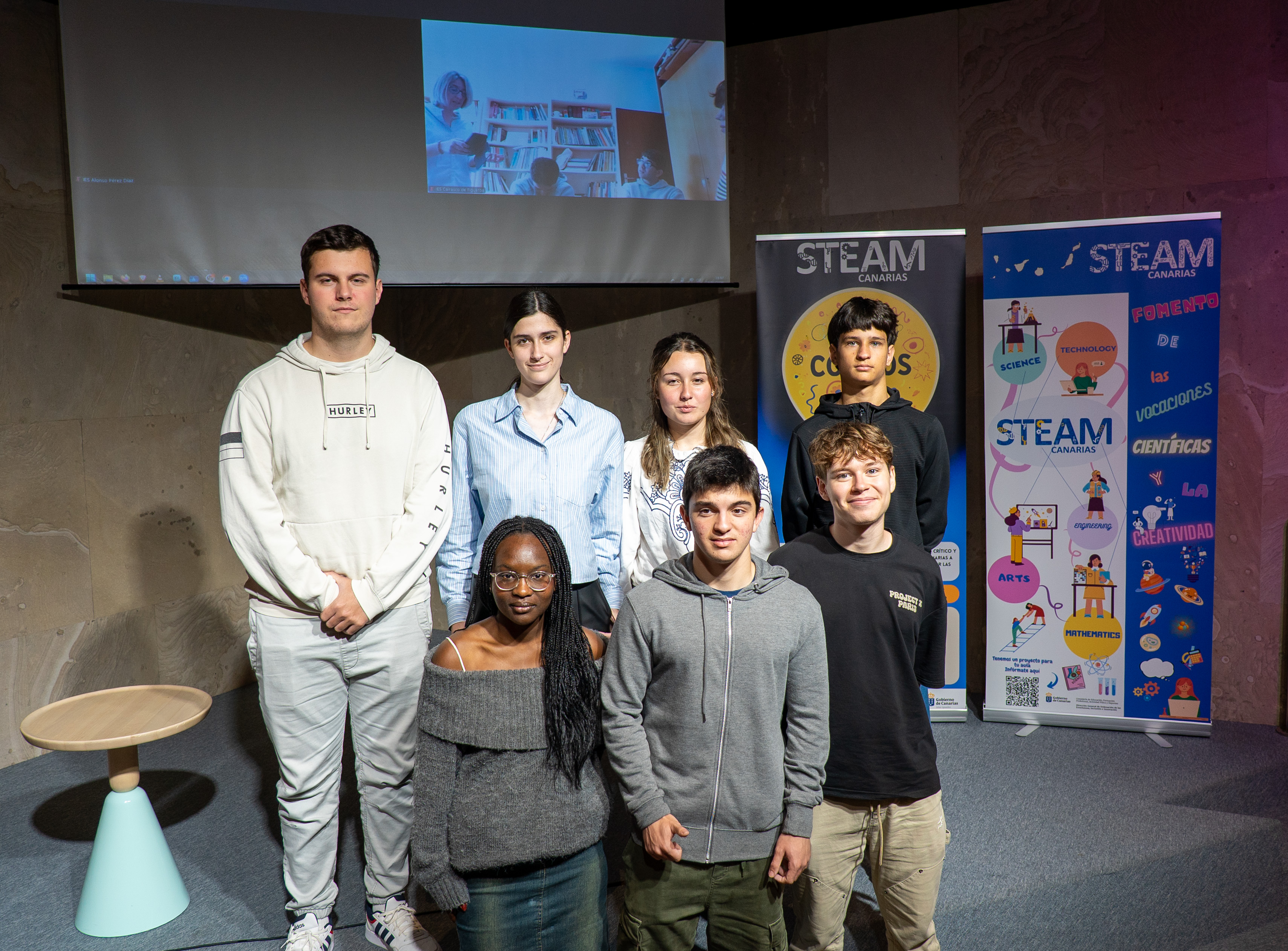
Students of the Cosmos Prize Student Committee.
Two prizes are awarded: one decided by a distinguished scientific committee and another by juries made up of secondary school students from participating countries. The project connects schools, educators and authors to inspire the next generation of scientists and foster a deeper public understanding of fundamental science. Between April and May, the student jury also took part in interviews with the authors of the books nominated for the Cosmos Students Prize: Jonathan Benito (The Power of Kindness), Clara Grima (Algorithms Gone Wild), Enrique Nácher and Sergio Pastor (The Formation of Chemical Elements), and Alain Riazuelo (Why the Earth Is Round).
Next week, the Scientific Committee will meet to decide the winner in its category, bringing to a close an edition that once again highlights science communication as a tool for inspiration, critical thinking and connection between science and society.
Organization
The organizing committee of the Prize is composed of Jorge Martín Camalich, director of the Cosmos Prize, researcher at the Instituto de Astrofísica de Canarias and scientific lead of UNDARK; and Claudia Guerrera, secretary of the committee, who summarized the spirit of the day as follows: “Today, science has won — and so have we all.” Among the committee members present were also Montse Delgado Cabrera, coordinator of the STEAM Area of the Directorate General for Educational Planning, Inclusion and Innovation of the Regional Ministry of Education, Vocational Training, Physical Activity and Sports of the Government of the Canary Islands; Rafael Sala Mayato, committee member and representative of the Physics Department of the University of La Laguna (ULL) and the University Institute for Advanced Studies (IUdEA); and Juan Francisco Hernández, Physics and Mathematics teacher at Colegio Hispano Inglés and science communicator.
During the event, special attention was given to the involvement of both students and teachers, as well as to the quality of the audiovisual projects presented by the different schools. Participants defended their proposals with maturity, creativity and analytical skills, demonstrating a deep understanding of the books they had read and a remarkable ability to transform scientific concepts into accessible and visual narratives.
Montse Delgado Cabrera highlighted the enormous educational value of the project. “I believe the Cosmos Prize is a magnificent initiative for promoting science education and science communication. It not only brings research closer to students, but also the ability to communicate science. Seeing students happy, enjoying themselves and interacting with one another has been truly moving,” she said, emphasizing how the initiative fosters essential skills such as critical reading, oral expression, dialogue, collaborative work and audiovisual creation.
Meanwhile, Aissata Toure, a second-year high school student at IES Marina Cebrián and member of the student selection committee, especially appreciated the welcoming atmosphere created during the event. “Even though we are a small group, it has been something very positive because everything felt more familiar and close. We were able to exchange ideas with students from other years and schools,” she said, adding that “initiatives like this could inspire more young people to participate.”
From Colegio Hispano Inglés, Héctor Castro described the gathering as “a celebration of science and science communication. This project proves that you do not need to be an expert to approach science, learn and awaken curiosity.”
The Cosmos Students Prize continues to establish itself as a meeting point between science, education and culture, promoting new ways of bringing scientific knowledge into classrooms through reading, creativity and the active participation of younger generations.
With this edition, the Cosmos Prize is now established in Spain from the Canary Islands, joining consolidated editions in Italy, France and the Netherlands, and supported by the International Decade of Sciences for Sustainable Development (2024–2033) led by UNESCO.
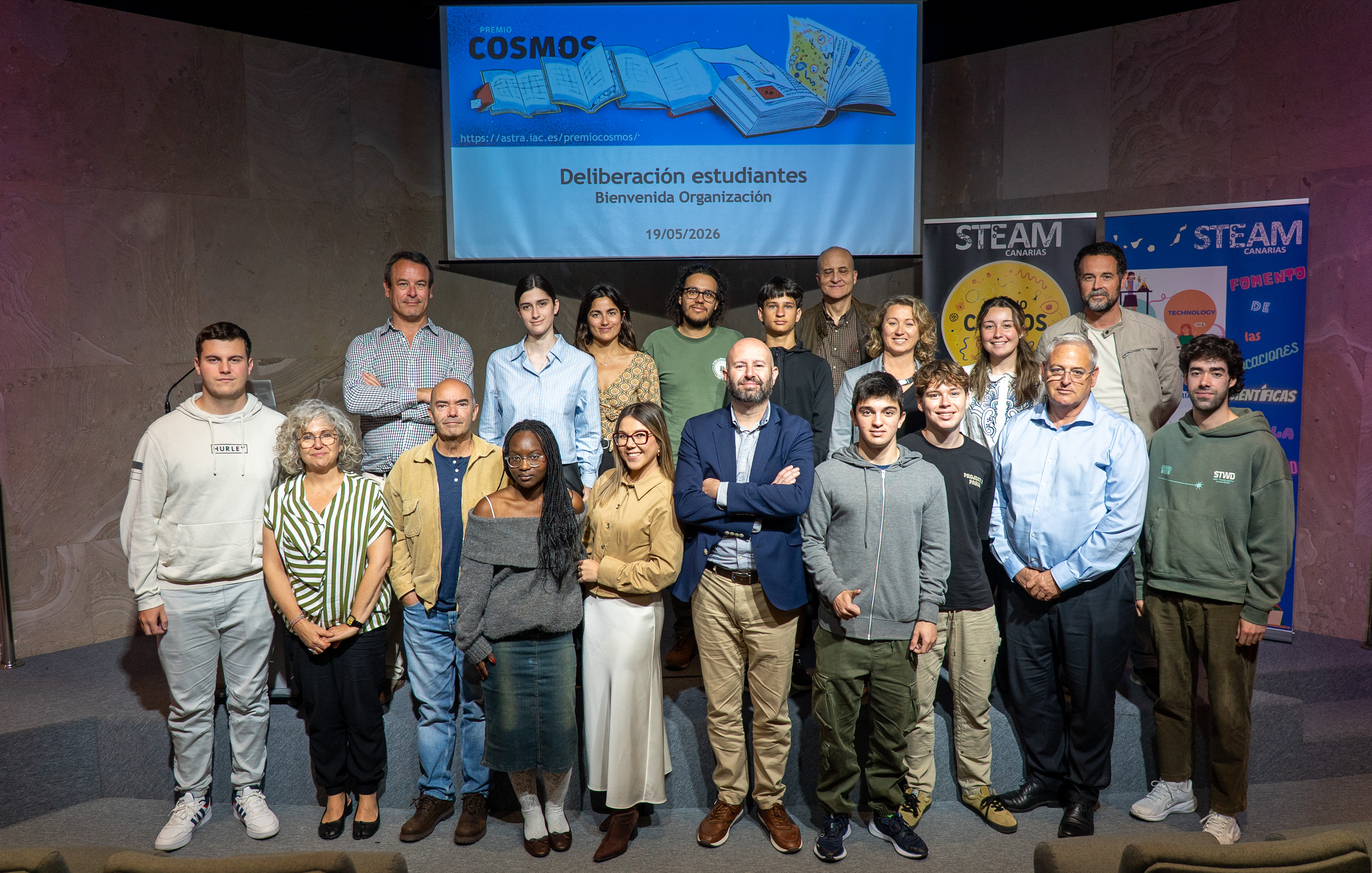
Authorities, teachers and students involved in the Cosmos Prize initiative.
Image and text: Raquel Conde Viera / UNDARK–IAC
UNDARK at SCALE 2026: exploring the dark side of the Universe
May 12, 2026
Communication activity of the EU-funded UNDARK project (Horizon Europe – WIDERA).
UNDARK — Unravelling the Dark Universe from the Canary Islands Observatories — continues to explore one of the greatest mysteries of modern science: the dark side of the Universe.
SCALE 2026 is coming up, one of the most important international conferences on fundamental physics and cosmology, organised by the IFT UAM–CSIC and the IAC. The conference, in which the UNDARK project—co-led from the IAC by Jorge Martín Camalich—will participate, will be held from 11 to 15 May in Tenerife.
The visible Universe is only a small part of the Cosmos: 82% of matter consists of mysterious dark matter. Furthermore, all existing matter accounts for barely 31% of the Universe’s total energy, whilst the rest belongs to the still-unknown dark energy.
SCALE 2026 will bring together some of the world’s most influential figures in cosmology, string theory and particle physics, including Andrei Linde, Wendy Freedman, Fernando Quevedo, Claudia de Rham, Gia Dvali and Lam Hui.
As Lam Hui states:
“The dark universe could hold the keys to a new revolution in fundamental physics.”
Over five days, some of the major challenges of contemporary cosmology will be discussed: the early universe, the cosmological constant, dark matter and dark energy, string theory, and the connections between theory and astronomical observations.
The programme will begin on Monday 11 May, exploring the early universe and the symmetries of space-time, and will conclude on Friday 15 May by linking fundamental physics with astronomical observations.
11–15 May 2026
Hotel Landmar Playa La Arena, Tenerife
Further information: https://meetings.iac.es/scale2026/pages/about-the-conference/outline.php
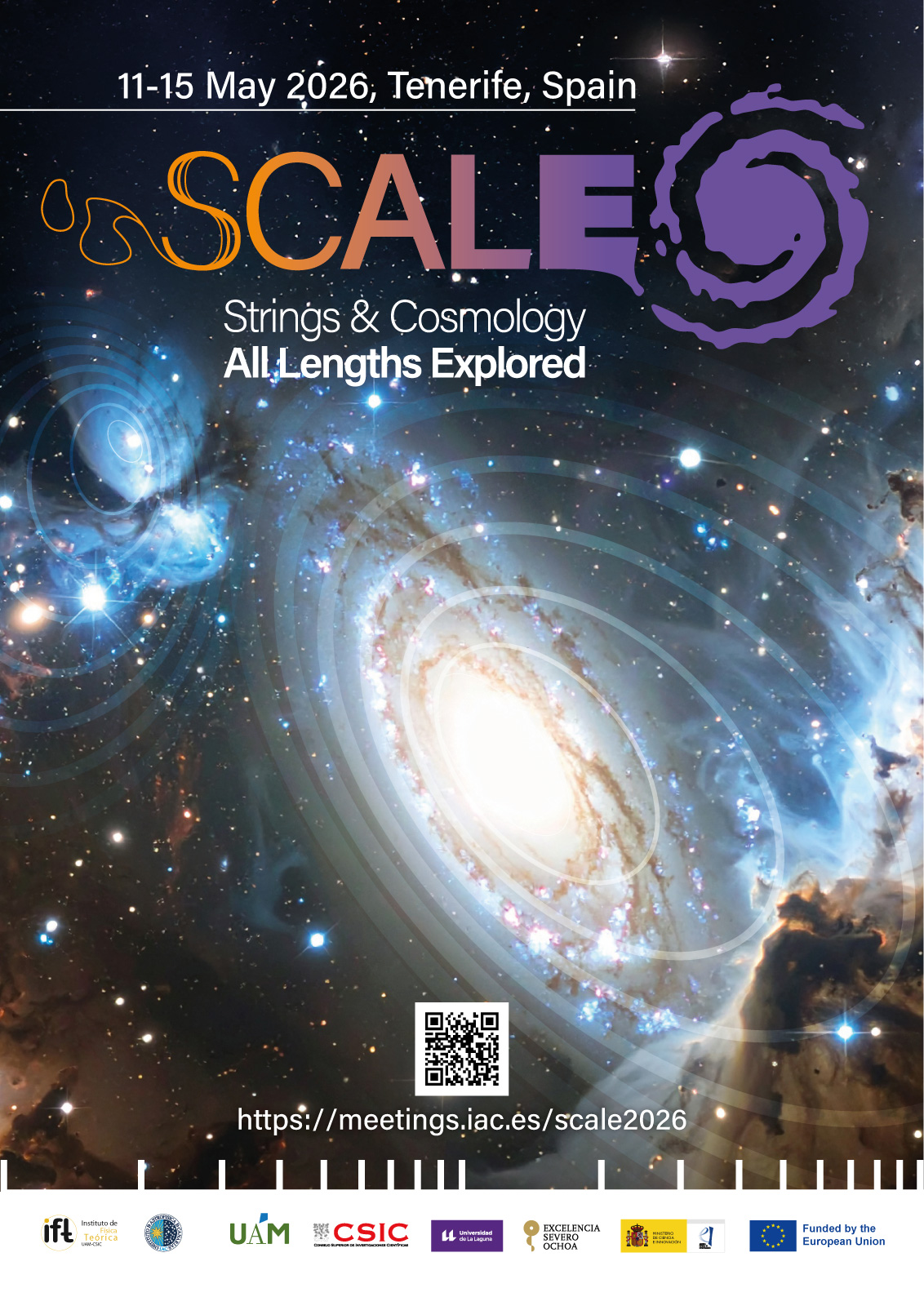
Image and text: Raquel Conde Viera / UNDARK–IAC
From astrophysics to deep tech unicorn
April 10, 2026
Communication activity of the EU-funded UNDARK project (Horizon Europe – WIDERA).
The University of La Laguna and the Canary Islands Institute of Astrophysics have been instrumental in the creation of one of the most promising technology companies currently operating in the Canary Islands: Wooptix. This was acknowledged by its CEO, José Manuel Rodríguez Ramos, during a lecture delivered on March 24 at the Royal Economic Society of Friends of the Country of Tenerife (RSEAPT), as part of the series “Tribute to Blas Cabrera on his 148th Anniversary.”
The talk, organized by IAC researcher Jorge Martin Camalich, was titled “Semiconductor Manufacturing Technology from the University and the Canary Islands,” and it illustrated how knowledge generated in astrophysics can be transformed into key industrial solutions in strategic sectors such as semiconductors.
The career of José Manuel Rodríguez Ramos, a researcher and professor at the University of La Laguna, exemplifies how knowledge generated in astrophysics can be transformed into key industrial solutions in strategic sectors such as semiconductors.
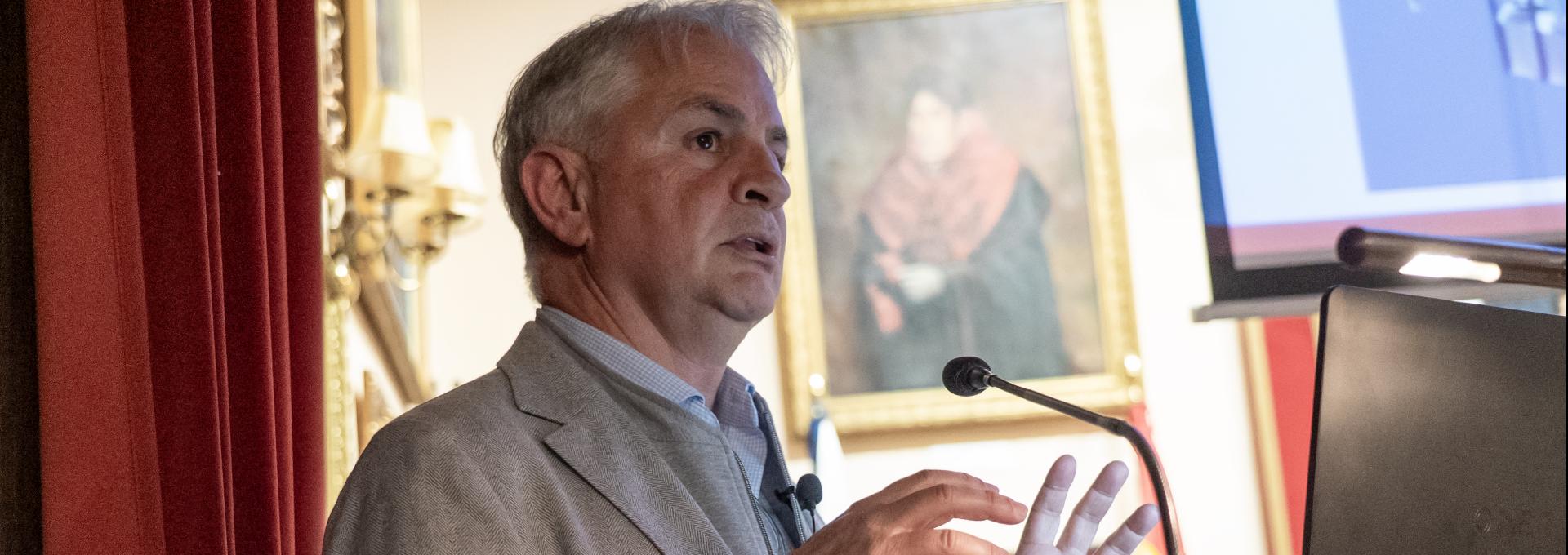
Jose Manuel Rodriguez Ramos during his intervention in RSEAPT.
From Basic Research to Global Industry
During his time at the ULL, Rodríguez Ramos spearheaded a multidisciplinary group that brought together electronic, computer, and mechanical engineering, leading to the development of a new technology based on light field capture and three-dimensional image reconstruction.
The key breakthrough was the development of a mathematical solution that eliminates the limitations of traditional wavefront sensors, allowing for the simultaneous measurement of light’s amplitude and phase with unprecedented resolution. This technological leap has opened the door to critical industrial applications, particularly in optical metrology for the semiconductor sector.
“The technology stems from adaptive optics and astrophysics. And the credit for that goes to Francisco Sánchez, for having established the Institute of Astrophysics here and surrounded himself not only with researchers but also with electronic, mechanical, and computer engineers. I completed my thesis on instrumentation within the engineering departments, and that knowledge has been key to developing this technology,” explains Rodríguez Ramos.
Wooptix: The University of La Laguna’s First Spin-off and a Deep Tech Leader
Wooptix, the University of La Laguna’s first spin-off, emerged from this research. The company has evolved from 3D imaging into the semiconductor industry, positioning itself as one of Spain’s most promising deep tech companies and a unique case in the Canary Islands, with high growth potential.
This advancement is based on the development of highly sophisticated electronics, essential for validating major scientific theories, such as the detection of gravitational waves. Beyond its impact on science, this technology finds applications in multiple fields, such as ophthalmology, microscopy, and endoscopy.
However, the company has chosen to strategically focus on semiconductors, in line with the demands of venture capital. This implies that other applications may be developed externally, with the challenge of not losing the innovative potential generated and ensuring that all the technology achieves its maximum impact.
The Canary Islands as an Emerging Technology Hub
Wooptix has chosen to remain in the Canary Islands, demonstrating that the archipelago can compete in advanced technology sectors thanks to advantages such as the Canary Islands Special Zone (ZEC), connectivity, and a robust scientific ecosystem, with highly qualified talent capable of driving cutting-edge technology without the need to relocate.
“One of our greatest advantages is the talent produced by the Canary Islands’ universities. They train highly skilled professionals who can now stay here, work with us, and even start their own companies. For me, that transfer of knowledge to society is the natural evolution of the university,” says José Manuel Rodríguez Ramos.
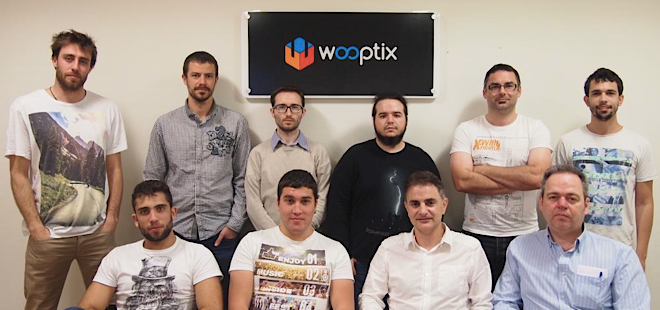
The Wooptix team alongside José Manuel Rodríguez Ramos and his young, talented team.
A Critical Perspective: From Publishing to Knowledge Transfer
One of the key messages emerging from this trajectory is the need to strengthen technology transfer within the Spanish scientific system. Beyond academic publishing, it is essential to protect knowledge and transform it into technology with real-world impact, in line with international models. This approach allows not only for progress in research but also for the generation of competitiveness and strategic value.
Since its inception, Rodríguez Ramos has championed this vision, bridging the gap between science and industry and opening up new career opportunities. In this context, knowledge transfer becomes a key driver for the Canary Islands, helping to retain and attract talent and fostering an ecosystem in which innovation, industry, and technological development advance hand in hand.
A model for the future of the Canary Islands and Europe
Wooptix demonstrates that the Canary Islands can position themselves as a key hub for deep tech innovation on a global scale, connecting science, industry, and knowledge transfer at a strategic moment for Europe.
At the heart of this breakthrough lies a departure from the current state of the art in light measurement. Faced with the limitations of traditional technologies, the company has developed a system capable of capturing information on a per-pixel basis, exponentially increasing resolution and enabling the precise recording of both the amplitude and phase of light.
This technological leap not only redefines scientific observation but also opens up new industrial opportunities, consolidating the Canary Islands as an active player in shaping Europe’s technological future.
José Manuel Rodríguez Ramos during a working session in the laboratory, alongside the Minister of Digital Transformation, Oscar López Agueda.
Support from scientific outreach organizations
The Royal Economic Society of Friends of the Country of Tenerife recently hosted a prominent talk by José Manuel Rodríguez Ramos, coordinated by scientist Jorge Martin Camalich, scientific coordinator of UNDARK.
The event brought the public closer to the advancements and impact of current scientific research, generating a very positive and inspiring response among attendees.
Such events are essential for expanding the reach of scientific and technological projects, fostering a culture of innovation and science in our society.
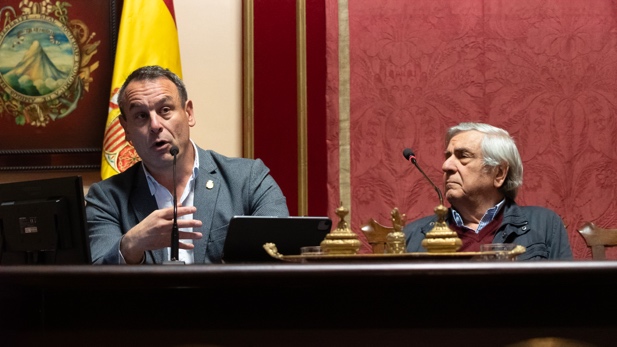
Jorge Martin Camalich, a researcher at the IAC and coordinator of these talks, along with Leandro Trujillo, a member of the RSEAPT.
Image and text: Raquel Conde Viera / UNDARK–IAC
UNDARK Project & IAC Collaborate with the Royal Economic Society of Tenerife to Highlight Innovation from the Canary Islands
March 18, 2026
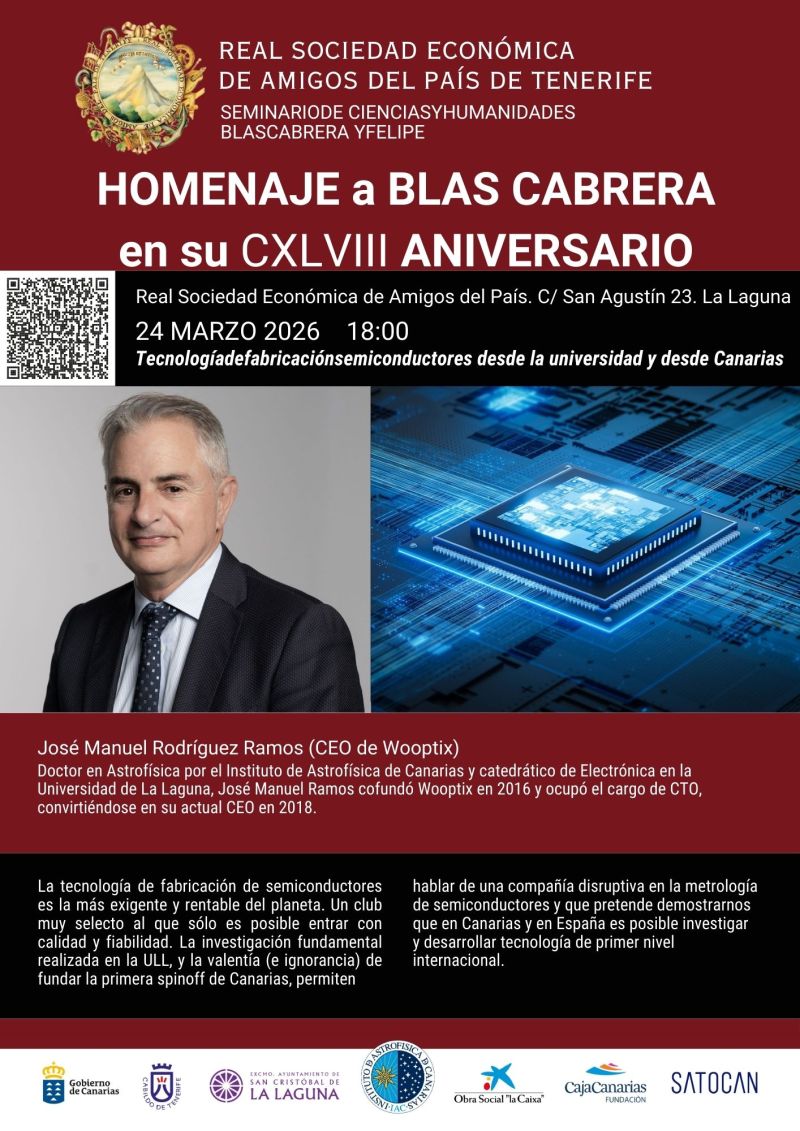
The Institute of Astrophysics of the Canary Islands (IAC) and the UNDARK project, represented by Jorge Martín Camalich, are collaborating with the Royal Economic Society of Friends of the Country of Tenerife (Real Sociedad Económica de Amigos del País de Tenerife) to bring a new perspective on innovation emerging from the Canary Islands.
As part of this initiative, the Society will host a public talk by José Manuel Ramos, CEO of Wooptix, on Tuesday, March 24 at 18:00 at its headquarters in Santa Cruz de Tenerife.
Dr. Ramos holds a PhD in Astrophysics from the IAC and is a professor at the University of La Laguna. His career exemplifies one of the defining strengths of the Canary Islands’ scientific ecosystem: the effective transfer of knowledge from fundamental astrophysics research to cutting-edge technological industry.
His work focuses on advanced optical technologies capable of analyzing light with exceptional precision. These tools are not only essential for scientific research and our understanding of the universe, but also increasingly important for industrial applications, reinforcing the Canary Islands’ growing reputation as a hub for technological innovation.
Founded in 2016, Wooptix is a university spin-off specializing in advanced semiconductor metrology. The company has rapidly gained international recognition and is emerging as a potential first Canary Islands “unicorn”, bringing high-impact semiconductor technologies from the Canary Islands to the global market.
During the talk, Dr. Ramos will discuss how knowledge generated in universities can evolve into industrial applications, innovation, and economic development, illustrating the pathway from scientific discovery to real-world technological impact.
The event is open to the public and will also be live-streamed on the RSEAPT’s YouTube channel . The talk will be conducted in Spanish.
No intermediate-mass blackhole in Omega Centauri?
December 9, 2024
Communication activity of the EU-funded UNDARK project (Horizon Europe – WIDERA).
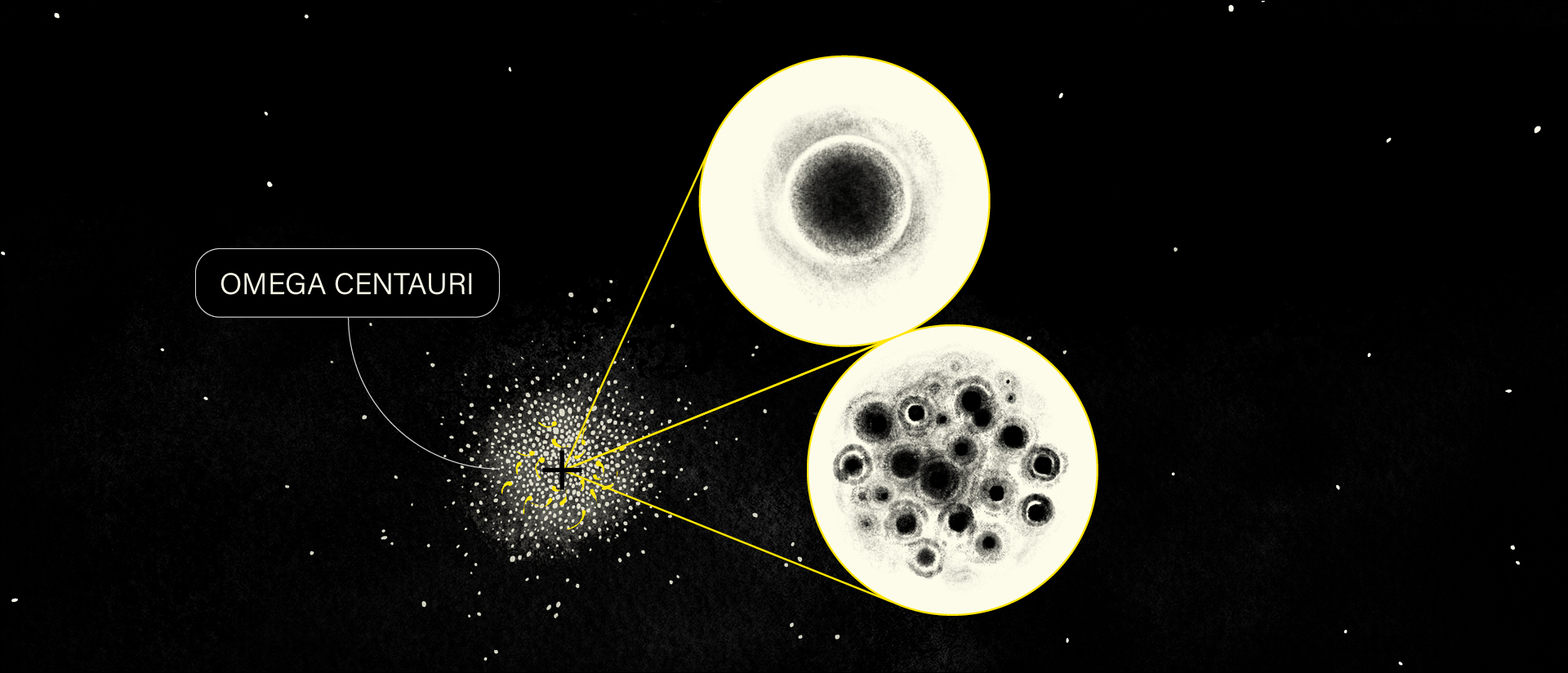
Credit: Ève Barlier
A recent study led by the IAC has revealed that the internal motions of stars in Omega Centauri, the largest globular cluster in the Milky Way, are primarily influenced by a population of stellar-mass black holes rather than a single intermediate-mass black hole, as previously theorized. This finding, published in Astronomy & Astrophysics and led by Andrés Bañares-Hernández, challenges earlier claims about the role of low-mass black holes in globular clusters. Using advanced kinematic modeling and incorporating data from pulsar accelerations, the team distinguished between competing theories regarding the cluster's dynamics. Their results have significant implications for understanding black hole populations, star cluster evolution, and the formation of systems like Omega Centauri, which is thought to be a remnant of a galaxy that merged with the Milky Way. News featured in the IAC's press office , Science News , Sky & Telescope and Space.com .
Prof. Diego Blas, UNDARK PI from IFAE, has been awarded an ERC Synergy Grant for 2024
November 5, 2024
Communication activity of the EU-funded UNDARK project (Horizon Europe – WIDERA).
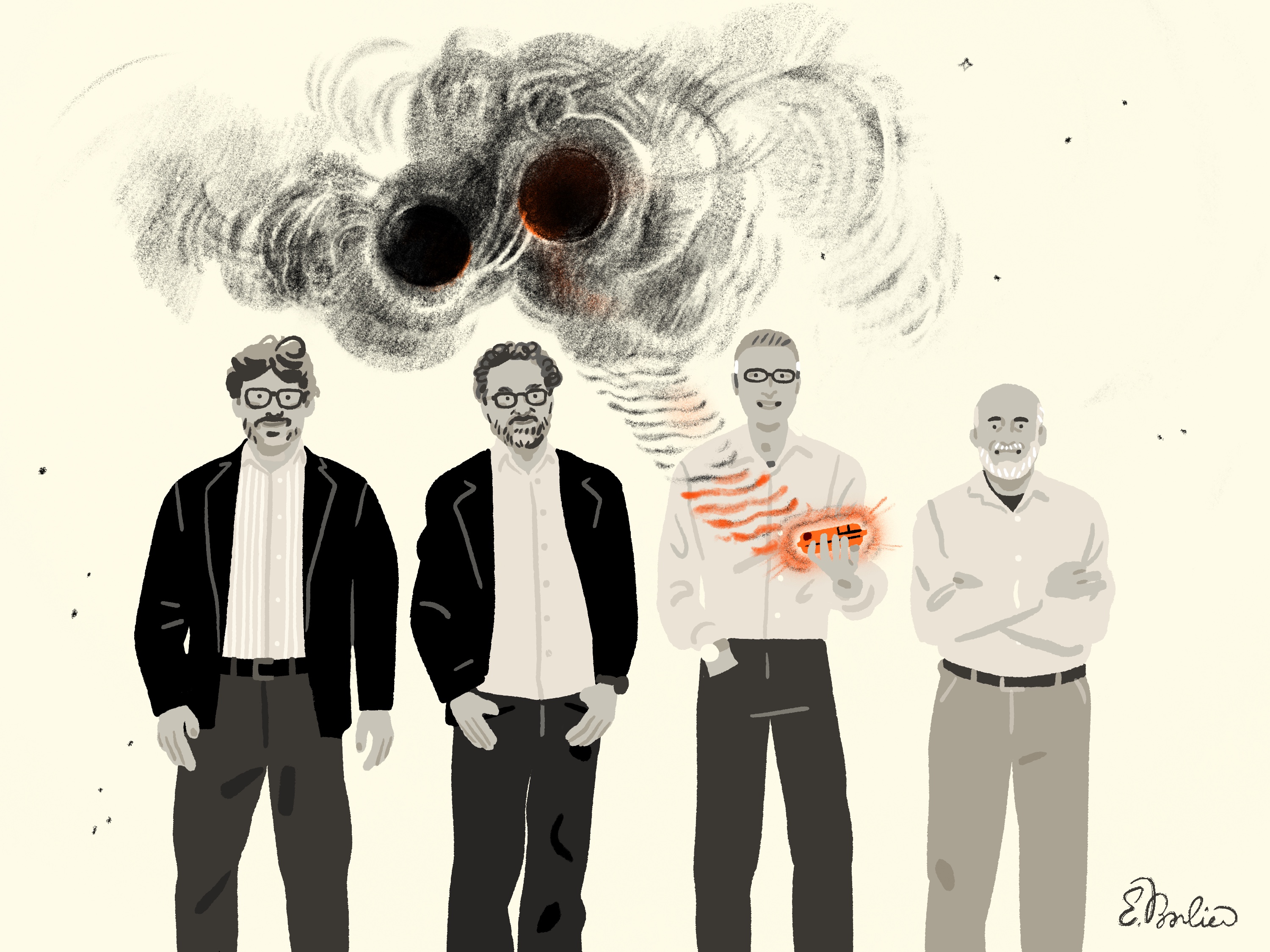
The project GravNet ("Global Network for the Search for High-Frequency Gravitational Waves") aims to develop a novel experimental platform to detect gravitational waves in the high-frequency range. This is a pioneering effort that could revolutionize the study of phenomena such as primordial black hole mergers and ultra-light dark matter. GravNet is a six-year project in collaboration between Prof. Matthias Schott, Rheinische Friedrich-Wilhelms-University, Bonn, Germany; Prof. Diego Blas, Instituto de Física de Altas Energías, Spain; Prof. Dmitry Budker, Johannes Gutenberg University, Mainz, Germany; and Dr. Claudio Gatti, National Institute for Nuclear Physics, Italy. For more information see press release at IFAE .