DIVERSITY and GENDER EQUALITY
At the heart of UNDARK is a strong commitment to fostering diversity, inclusion, and gender equality across all dimensions of our project. As we probe the mysteries of dark matter in astrophysics, we also work toward a more equitable scientific community—one where excellence is enriched by a range of perspectives and experiences.
Integrating Gender Equality into Research
UNDARK is guided by the gender equality plans of its partner institutions. In alignment with European Union directives and national legislation, we are implementing a tailored set of measures to promote equality throughout the project’s lifecycle—from recruitment and decision-making to dissemination and outreach. These efforts began with our kick-off meeting, during which coordination on gender aspects was established. Progress is continuously monitored through our Steering Committee (SC), ensuring accountability and transparency.
Our approach includes:
- Ensuring equal opportunities for participation in meetings and governance.
- Promoting a healthy work-life balance through equitable workload planning.
- Highlighting the contributions of women in STEM through our communication strategies.
- Making gender considerations a key factor in project decisions and public engagement.
IAC and Gender Equality in Astrophysics
As the coordinating institution of UNDARK, the Instituto de Astrofísica de Canarias (IAC) plays a crucial role in embedding gender equality and diversity across the project.
-
IAC has been working on gender equality since 2008, publishing its First Equality Plan in 2011. At the momento the Gender Equality Committee works actively to promote inclusive policies and ensure the effective implementation of gender equality measures.
- The current plan, Fourth Equality Plan was released in December 2024. It includes
Diagnosis
,
Action Plan
and
Protocol for action against sexual harassment, harassment based on sex and harassment based on sexual orientation and gender identity
. IAC’s plan aligns with both Spanish legislation and the European Union’s standards on equality and non-discrimination. Currently, its translation to English is a work in progress. Additionally in February 2025, the new IAC management reaffirmed its
Commitment to Equality and Diversity
.
- As a key partner in the GENERA Project (2015-2018), IAC contributed to the foundation of the ongoing
GENERA Network
(Gender Equality Network in Physics in the European Research Area) - a Europe-wide initiative to promote gender equality in physics and research institutions.
-
Weizmann Institute of Science
, and
Instituto de Astrofísica de Canarias
are members of the GENERA Network while
CERN
is a friend of the Network. Dr. Meytal Eran Jona from WIS has prepared the following literature review, highlighting several high-impact studies that examine how diversity drives better science. You can access it here:
How Diversity Drives Better Science - A Review of High-Impact Research
- From a more local perspective the Instituto de Astrofísica de Canarias (IAC) signed the
Tenerife Violeta Strategic Framework Agreement (METV)
in February 2025, joining the Island Network for Gender Equality (RIIGTV). This commitment places the IAC at the forefront of efforts to achieve effective gender equality on the island of Tenerife.
- The Scientific Culture and Communication Unit in IAC is also active in raising the visibility of women researchers, engineers and technologists through different events, media, and institutional communication. For example the project “Talk to Them: Women in Astronomy” , ongoing since 2020 organizes encounters with women astronomers for the educational community, seeking to create new professional references in science and technology, as well as to inspire new generations, especially girls, to follow in their footsteps.
UNDARK & Gender Equality
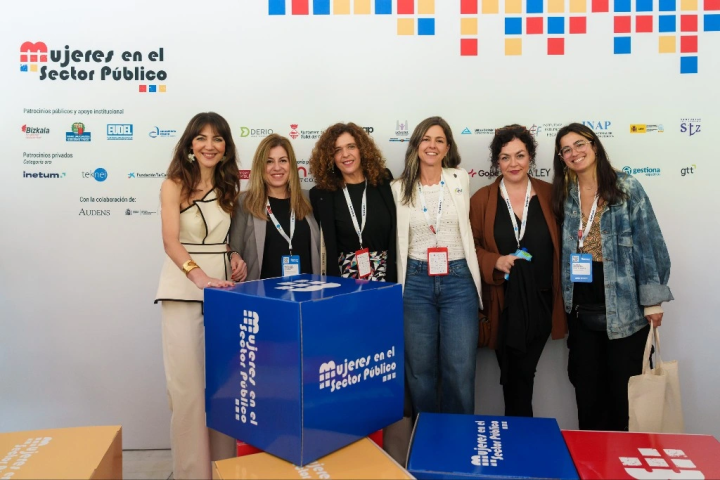
UNDARK actively supports diversity and gender equality within the scientific and academic communities. In alignment with these values, the project manager attended the annual event organized by the Association of Women in the Public Sector. Under the theme “Women Leaders in the Age of Artificial Intelligence,” the event addressed the challenges and opportunities AI presents for advancing gender equity in public service. Topics included ethical use of AI, algorithmic bias, inclusive leadership, and the need for women to actively shape the digital future. UNDARK’s involvement highlights its dedication to inclusive innovation, ethical policy-making, and building networks that promote equitable participation across the public and research sectors.