

Adaptive Optics Laboratory
Adaptive Optics (AO) has reached the maturity of a well-established technique, with applications spanning a wide range of disciplines — from ground-based astronomy and free-space optical communications to microscopy, vision science, and laser machining. In astronomy, adaptive optics remains the only technique capable of delivering spatial resolutions comparable to those of space-based telescopes, by actively correcting atmospheric distortions in real time.
At the Adaptive Optics Laboratory, our work is driven by a forward-looking vision: anticipating the future needs of the adaptive optics community and leading its evolution through pioneering research, technological development, and innovation.
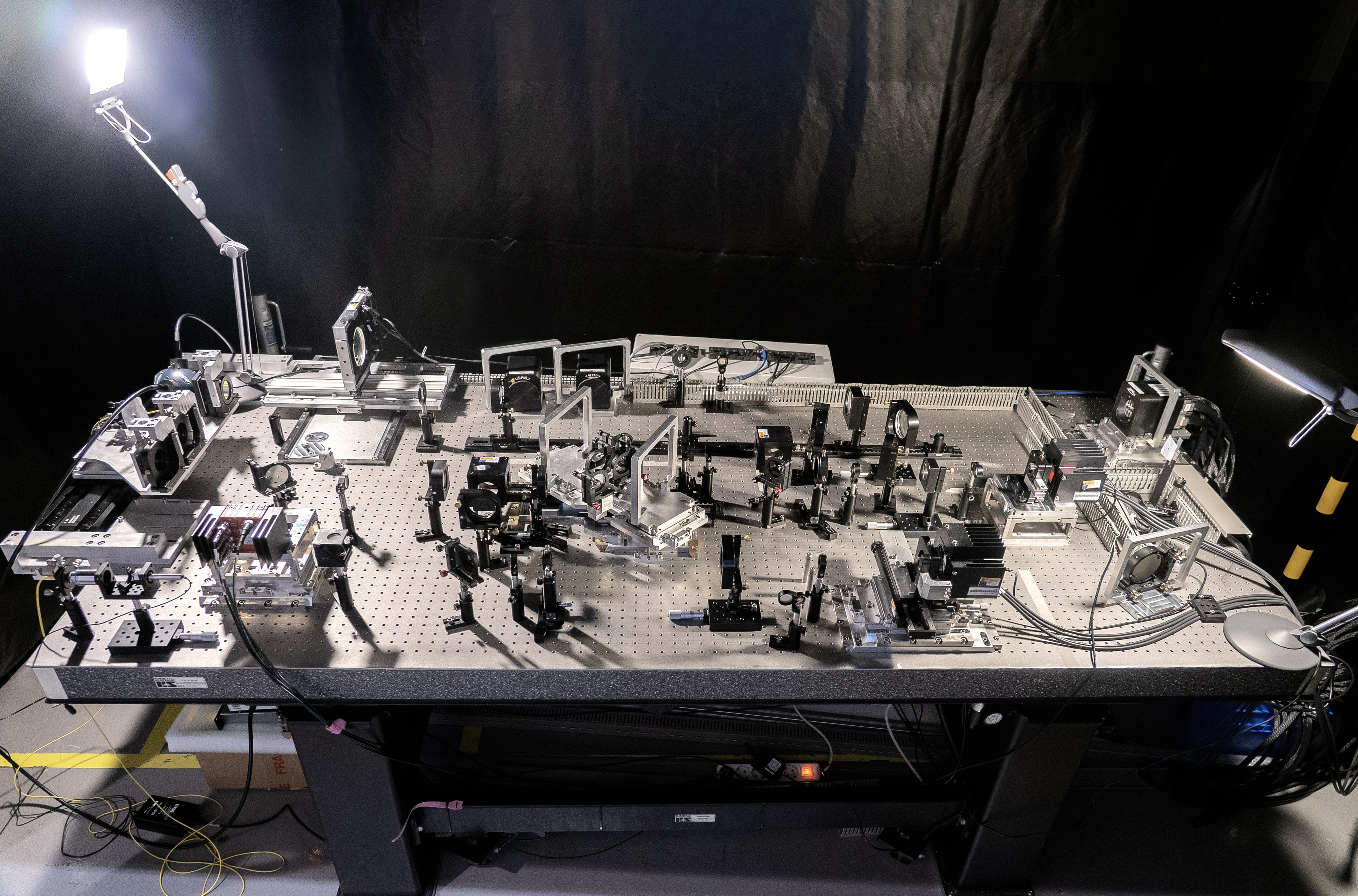
Research Lines
- Atmospheric turbulence and optical communications
We study the impact of strong atmospheric turbulence on AO-assisted free-space optical communication systems and develop strategies to mitigate its effects. - Extreme AO and co-phasing
We advance fine co-phasing techniques for extreme adaptive optics systems, as well as for next-generation segmented and sparse-aperture telescopes. - Wavefront sensing with extended sources
We explore innovative wavefront sensing (WFS) methods that operate with extended and non-point-like sources, expanding the applicability of AO systems. - Artificial intelligence and machine learning
We leverage AI and machine learning techniques for wavefront sensing, reconstruction, and co-phasing, enabling smarter, faster, and more robust AO control strategies.
Capabilities
The Adaptive Optics Laboratory provides a versatile environment for exploratory research and the development of adaptive optics systems aimed at the next generation of high-resolution astrophysical instrumentation.
The laboratory is fully equipped to:
- Design and prototype advanced adaptive optics concepts
- Develop and integrate complex AO subsystems
- Assemble, test, and deploy complete adaptive optics instruments
- Support forefront ground-based telescopes and experimental platforms
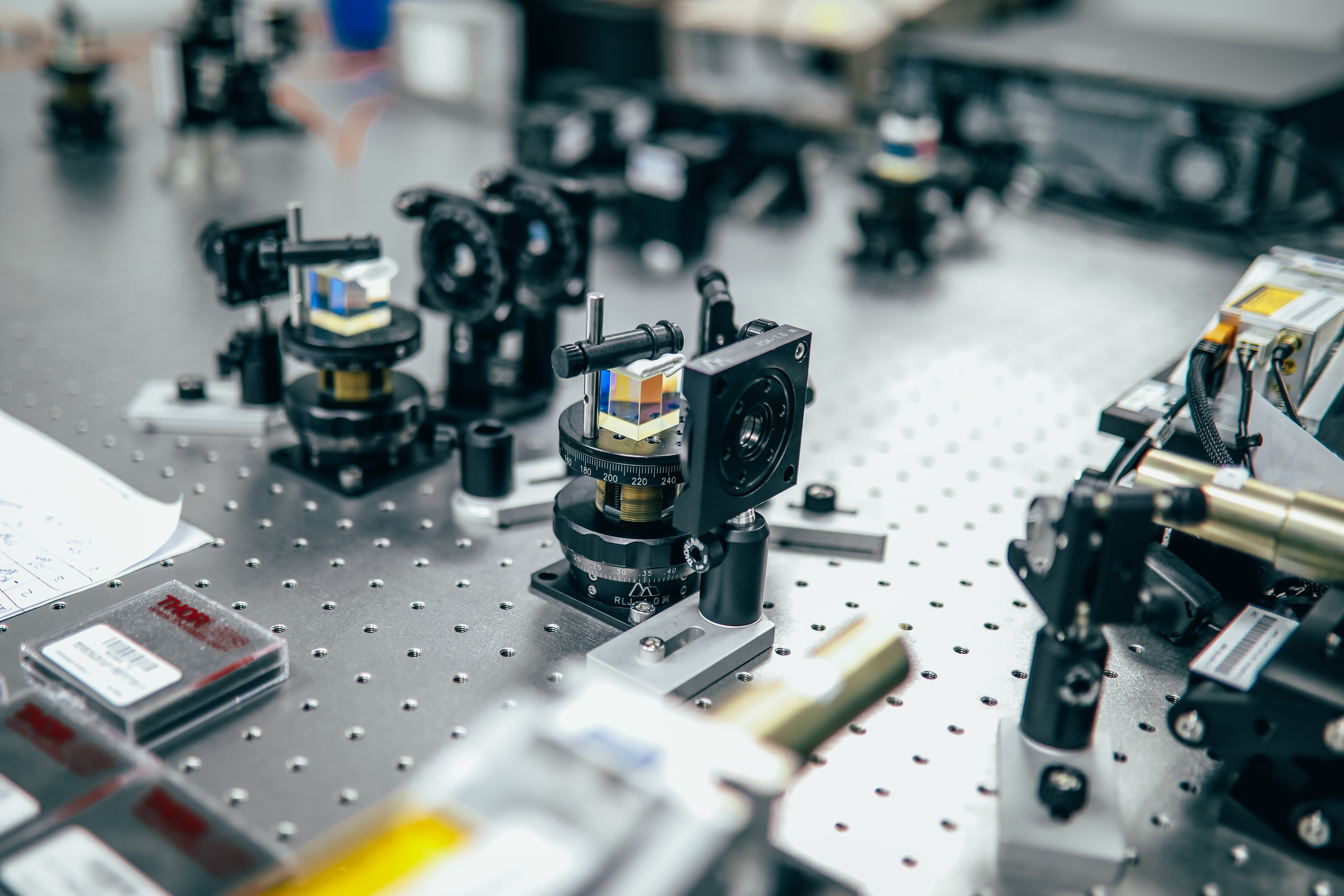
Through these capabilities, the laboratory contributes to pushing the boundaries of adaptive optics technology and enabling new scientific and technological breakthroughs.