

LIOM – Laboratory for Innovative Opto-Mechanics
The Laboratory for Innovative Opto-Mechanics (LIOM) is a core research laboratory of CELESTE, hosted at the Instituto de Astrofísica de Canarias (IAC), and dedicated to the development of disruptive optical and optomechanical technologies for the next generation of ground-based, space-based and lunar telescopes.
LIOM operates as a strategic hub where advanced optics, photonics, mechanical engineering and astronomical instrumentation converge to address scientific and technological challenges that cannot be solved with current remote sensing instruments and detector technologies.
SCIENTIFIC VISION
The overarching scientific goal of LIOM is to enable large optical systems capable of resolving and characterising extremely faint sources that remain inaccessible to existing observational platforms.
To achieve this ambition, the IAC sustains an ERA Chair in optics and photonics technologies, bringing together experimental physicists, astronomers, engineers and technicians devoted to the development of innovative optical and optomechanical solutions. Under the leadership of Prof. Jeffrey Kuhn, LIOM builds an international collaboration that contributes to shaping the technological foundations of the next 50 years of astronomical telescopes, whether deployed on Earth, in space or on the Moon.
FROM SELF TO ELF: VALIDATING FUTURE TELESCOPE TECHNOLOGIES
A central objective of LIOM is to create new research and innovation capacities at the IAC and in the Canary Islands for the development of novel optical architectures and tensegrity-based structures. These technologies are validated through the SELF (Small ExoLife Finder) telescope, a full-scale technological demonstrator developed within the laboratory.
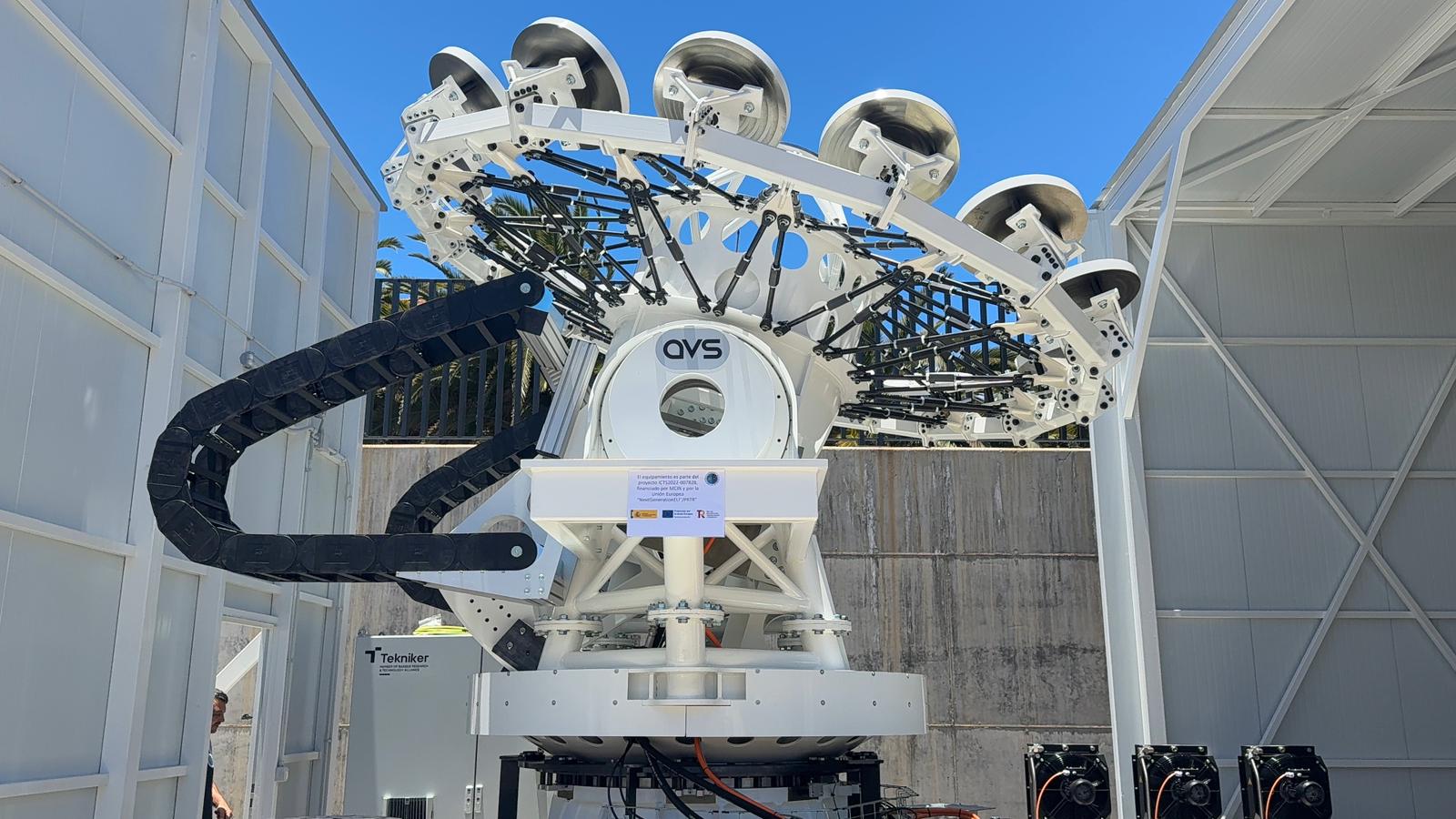
SELF acts as a key prototype for the future ELF (ExoLife Finder) telescope, a revolutionary concept designed for the direct imaging of exoplanets orbiting very bright stars, with the ultimate goal of enabling the detection of atmospheric biomarkers associated with life. Through SELF, LIOM validates ultra-light mirrors, pre-tensioned optomechanical structures, advanced wavefront control techniques and high-contrast imaging technologies at a realistic operational scale.
Beyond astrophysics, these same technologies have direct relevance for the observation and characterisation of artificial satellites in Earth orbit and in the cislunar environment, contributing to future space situational awareness capabilities and emerging commercial applications.

STRATEGIC AREAS OF ACTIVITY
LIOM follows a strategic, network-based approach structured around five complementary areas:
- A1 – Innovative Optomechanical Development: Advance research and modelling devoted to the creation of large, ultra-light and effectively stiff optomechanical structures, targeting an order-of-magnitude improvement in mass-to-stiffness ratios compared to current large telescopes.
- A2 – Laboratory Consolidation and Operation: Creation, consolidation and operation of the Laboratory for Innovative Opto-Mechanics, including the development of specialised human resources and production know-how for advanced optics such as filters, gratings, collimators and ultra-thin mirrors.
- A3 – International Networking: Expansion of cross-sectoral collaboration through partnerships with leading academic institutions and innovative technology companies across Europe, Canada and the United States.
- A4 – Structural Impact at IAC: Strengthening the IAC's position across the full research and innovation chain, ensuring long-term sustainability and excellence in advanced optical and optomechanical technologies.
- A5 – Scientific and Technological Output: Increased production of high-impact publications, European projects, patents, doctoral theses and market-oriented technological products.
INFRASTRUCTURE AND FACILITIES
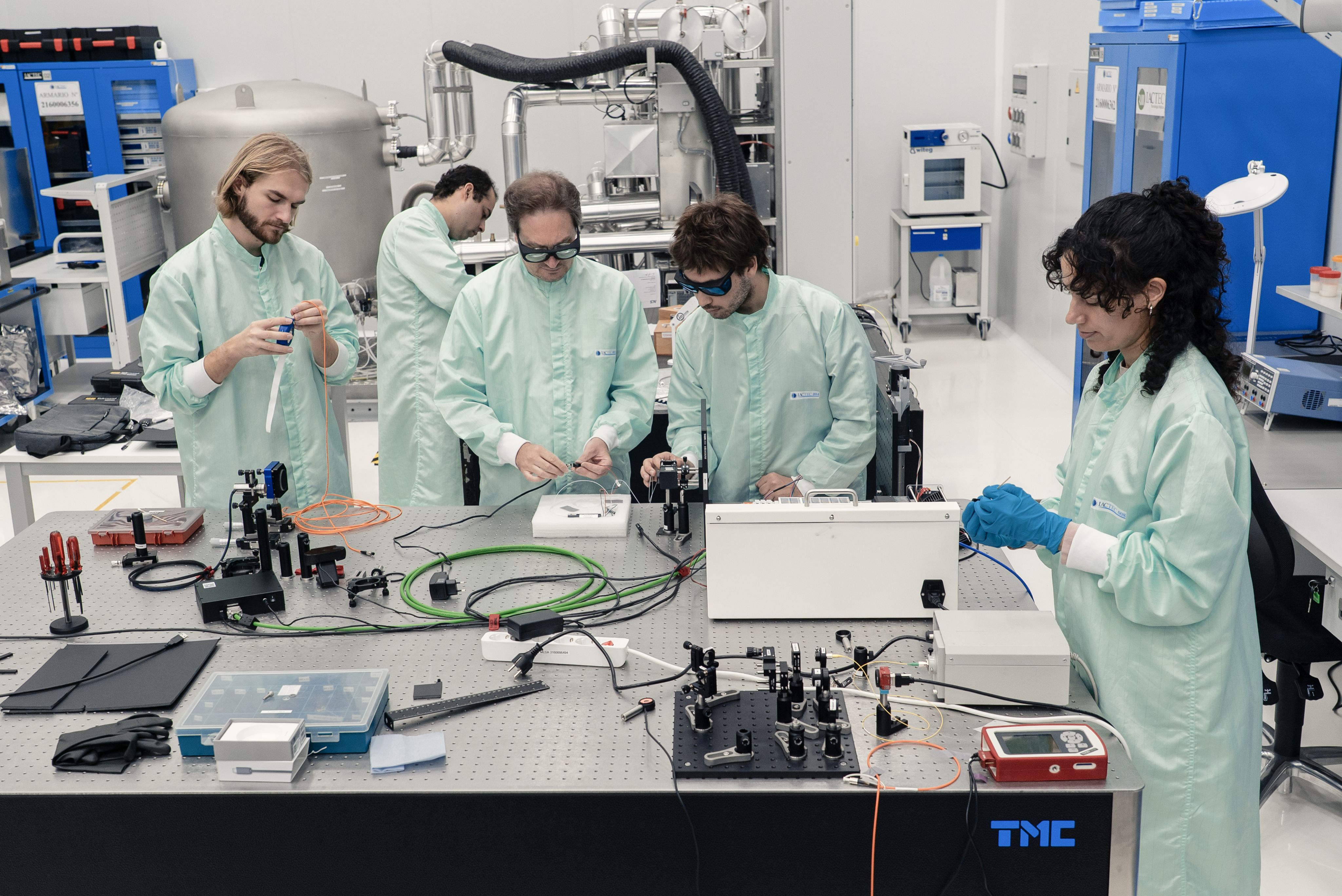
LIOM is fully integrated within the IAC ecosystem and operates from IACtec, the technological division of the Instituto de Astrofísica de Canarias located in La Laguna (Tenerife, Canary Islands). IACtec provides a dedicated environment for the design, integration and validation of advanced astronomical instrumentation and large scientific infrastructures.
The laboratory benefits from more than 200 m² of modern office and laboratory space, with access to additional high-bay, crane and clean-room facilities for large-scale demonstrator assembly and integration, including the construction phases of the SELF telescope.
The optomechanical laboratory is equipped with vibration-isolated optical tables, interferometric metrology systems, glass shaping and forming equipment, high-voltage electronics support, 3D printing capabilities and specialised optomechanical tooling. Advanced computing infrastructure is also available, including parallel GPU systems suitable for large-scale numerical simulations and neural network training. Ergonomic office areas and integrated teleconference facilities support both local work and international collaboration.
LIOM WITHIN CELESTE
LIOM is a fundamental pillar of CELESTE (Cutting Edge Leap to Excellence in Space and Optics Technologies), the European initiative led by the Instituto de Astrofísica de Canarias to consolidate a Centre of Excellence in advanced optical and New Space technologies.
Together with the other CELESTE laboratories, LIOM forms part of an integrated ecosystem that covers the full value chain, from fundamental research and technology development to system validation, innovation and knowledge transfer. Through CELESTE, LIOM reinforces international collaboration, drives technological leadership from the Canary Islands and delivers long-term scientific, technological and socio-economic impact at European and global levels.